How to Release an Electronic Parking Brake With a Dead Battery
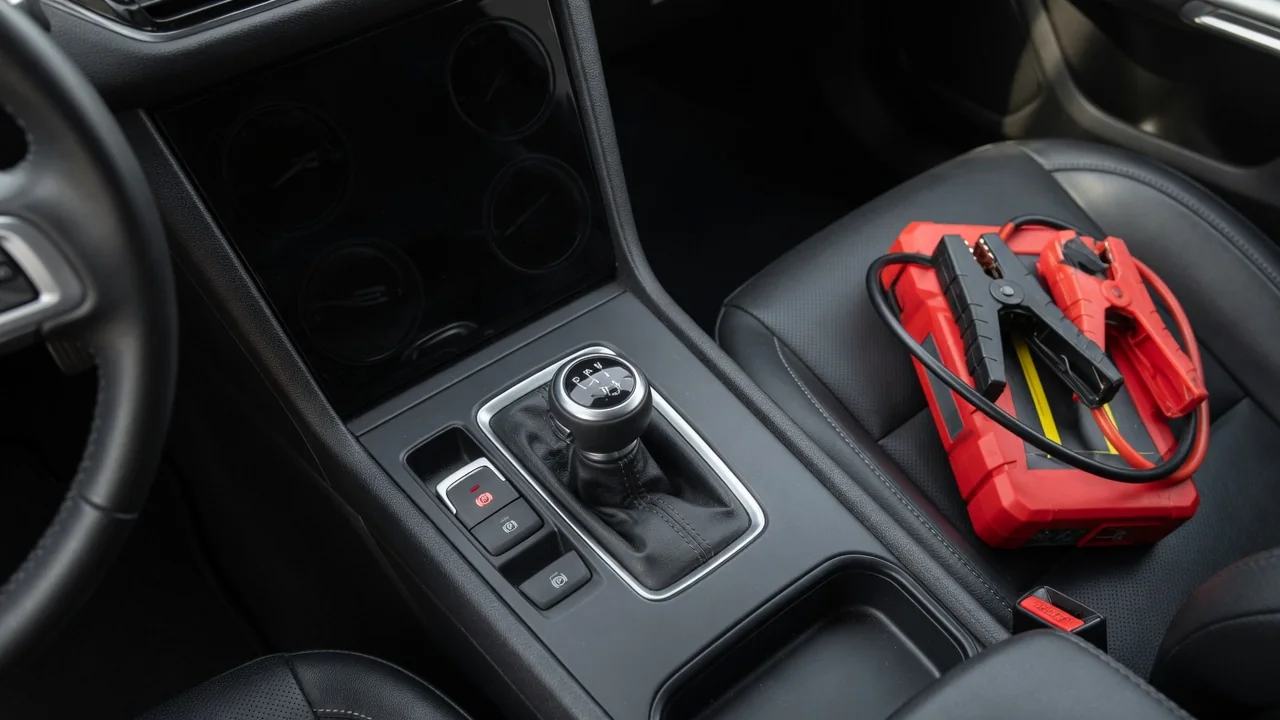
A dead battery is frustrating enough, but it becomes a bigger problem when the electronic parking brake is locked on and the car cannot be pushed or towed normally. Knowing how to disengage an electronic parking brake with a dead battery starts with understanding why it stays applied, how to restore power safely, and when the job belongs to roadside assistance or a technician.
Why an Electronic Parking Brake Stays Applied When the Battery Dies
Most electronic parking brake systems, often shortened to EPB, replace the hand lever and cable with small electric motors. On many vehicles a rear caliper motor on each side drives a mechanism that squeezes the pads against the disc, then runs in reverse to back them off. Because releasing takes the same electrical effort as applying, the system generally needs battery power to disengage. Once clamped, the mechanism holds without any current, a deliberate safe default that keeps a parked car from rolling if the battery fails.
A battery too weak to run those motors usually announces itself. The dash may be dim or completely dark, the electric parking brake switch may do nothing, or you may hear rapid clicking and see the parking brake warning light flicker as voltage collapses under load. Exactly how the system behaves at low battery voltage, and whether any backup release exists, differs by make, model and year. Reading the relevant section of the owner's manual before touching anything is the sensible first move.
Restoring Battery Power Safely So the Brake Can Release
For most vehicles, the answer to how to release an electronic parking brake with a dead battery is simply to give the system power again. A jump start from another vehicle, a portable jump starter or battery booster pack, or a battery charger can all do this. Use the connection points and the sequence shown in the owner's manual, confirm positive and negative before clamping anything, and keep sparks, cigarettes and open flames away from the battery, which can vent flammable gas.
Secure the car before the brake lets go. Level ground is best, wheel chocks should sit snugly against the tires, and an automatic transmission should be in Park. With voltage restored, switch the ignition on, press the brake pedal firmly and operate the parking brake switch as the manual describes; most systems refuse to release without the pedal applied. A deeply drained battery may need a period on charge before the control module wakes up and responds, so an immediate failure is not necessarily a fault.
Releasing the Parking Brake on an Audi With a Flat Battery
Owners searching for how to release an electronic parking brake with a dead battery on an Audi should start with the documentation for their exact model and year. The brand has used different parking brake designs and battery locations over time, so a procedure that suits one car cannot be assumed to suit another. In general, the expected first step is the same as elsewhere: restore power at the battery or at the jump-start terminals the manual designates, then operate the switch with the ignition on and the pedal pressed.
If the car remains unresponsive once it clearly has power, the battery may not be the whole story. A stored fault, a problem in the control electronics or a mechanical issue at the brake could be involved, and that calls for proper diagnosis rather than guesswork. When there is any doubt about the correct method, Audi roadside assistance or a dealer can confirm what applies to the specific vehicle. Improvising a release method on an unfamiliar system risks damage and an unsecured car.
Emergency or Manual Release Provisions: What to Look For
Some vehicles have a documented emergency release or a service procedure for retracting the parking brake, while many offer nothing an owner is meant to use. Only the manufacturer's documentation can confirm which case applies, so an online description of another car is not a reliable guide. Prying at, unbolting or forcing caliper motors and other brake parts is a poor substitute: it can break the actuator or damage the caliper, and it may leave the car with no means of holding itself afterward.
Any release carried out without power also removes the one thing keeping the vehicle stationary. The car may roll freely the instant the pads back off, so it should happen only with the wheels chocked and a qualified person in charge of the work. Before calling roadside assistance, have the VIN, model, year and drivetrain details ready. That information lets the operator look up the correct procedure and send the right equipment the first time, rather than discovering the problem at the roadside.
Moving a Car Whose Electronic Parking Brake Won't Release
Pulling or dragging a car with the rear wheels locked does real harm. Tires can be flat-spotted or torn, the pads and discs are scrubbed under load, and drivetrain components may be strained, particularly on all-wheel-drive vehicles. Flatbed towing or wheel dollies under the locked axle are often the safer choice because the stuck wheels never have to turn against the road. Tell the tow operator at the time of the call that the parking brake is stuck on, so the truck arrives prepared.
Until help arrives, leaving the car where it sits is usually wiser than forcing it to move. If it is stopped somewhere exposed, switch on the hazard lights if the battery can still power them, and wait in a safe place away from traffic. It is also worth checking what your roadside coverage includes and reading the towing guidance in the owner's manual, since the approved method differs between front-, rear- and all-wheel-drive layouts and the wrong one can cause expensive damage.
When the Brake Still Won't Release After Power Is Back
When the brake stays on even with a healthy power supply, careful observation helps the technician. Note whether the parking brake warning light remains lit, whether the instrument cluster shows a fault message, whether the motors can be heard running without the brake letting go, or whether only one side releases. A low voltage event can sometimes leave fault codes stored in the system. What those codes mean depends on the vehicle, and reading them requires a scan tool that supports that particular parking brake system.
A code is a pointer for further testing, not proof that a component has failed. A persistent fault might originate in the switch, the wiring, the control module or a caliper motor, and only methodical testing can separate them. If the battery keeps going flat, have the battery and charging system assessed professionally as well. A weak battery or a charging problem will bring the same parking brake trouble back, however many times the car is jump started.