How to Reduce Car Battery Theft Risk: Practical Prevention Steps
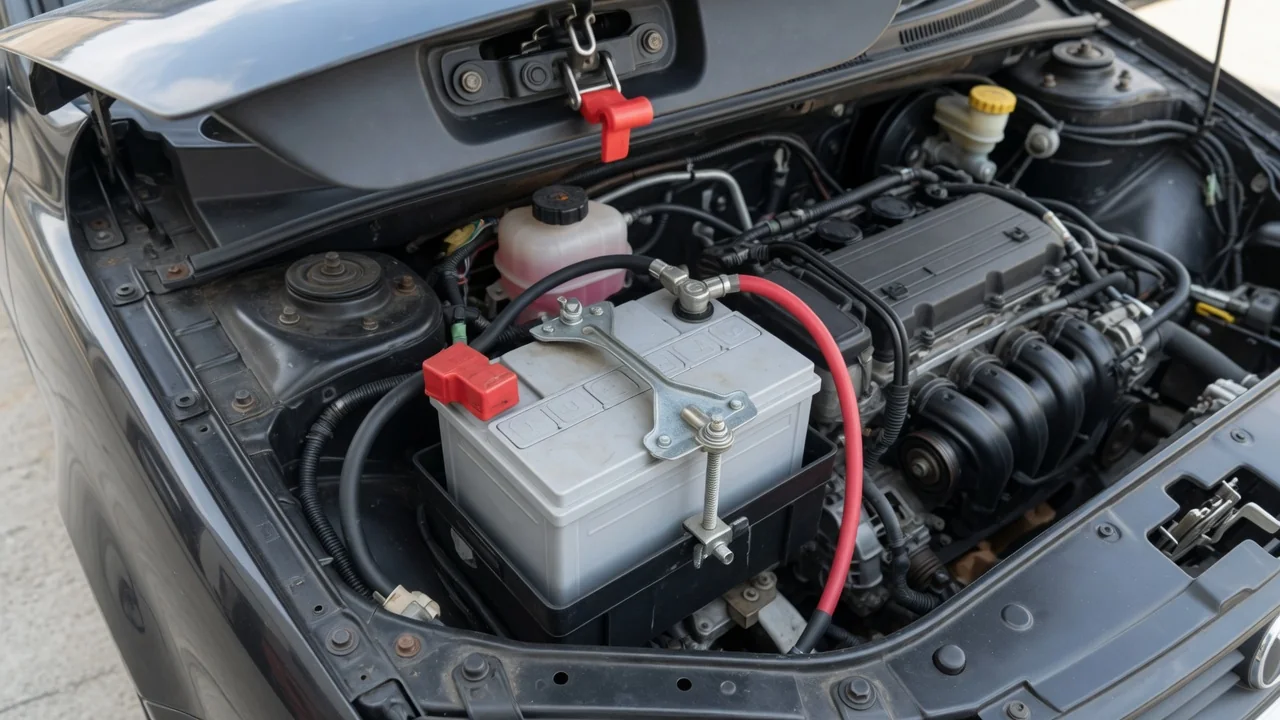
A 12-volt battery is one of the few valuable parts a thief can carry away in minutes, and losing it leaves you stranded with a dead car and possibly damaged cables. Car battery theft prevention comes down to layers: where you park, how hard the hood is to open, what alerts you, and how well you can document the loss afterward.
Why Thieves Target Car Batteries and What Makes a Vehicle Easier to Hit
A 12-volt battery appeals to thieves for simple reasons. On many vehicles it comes out with basic hand tools in a short time, it fits other cars so it can be resold without much scrutiny, and the lead inside gives it scrap value even when it is worn out. Exposure rises when the hood release is easy to reach or the cabin is left unlocked, when a car sits unattended for days, and when the parking spot is dark, remote or hidden from passersby.
Where the battery sits changes how exposed it is. Many vehicles carry it under the hood, but others place it in the trunk, under a seat or behind a trim panel, so check the owner's manual to find yours before choosing security measures. Hybrids and EVs usually still have a separate 12-volt battery that runs the accessories and control electronics. That small battery is the one this guide concerns; high-voltage packs and their cabling should never be handled by owners and are work for trained technicians only.
Car Battery Theft Prevention Through Smarter Parking Habits
Parking choices cost nothing and do much of the work. Pick well-lit parking in view of windows, foot traffic or an attendant, and use a garage or a secured lot where one is available, because a thief working under a raised hood needs time without being watched. Parking nose-to-wall, or with the front bumper close to a fence or another fixed object, can leave too little room to lift the hood or stand at the engine bay. Keep fire lanes and access routes clear and follow posted parking rules while doing so.
Long-term parking deserves extra thought, whether it is an airport lot, seasonal storage or an extended trip. A car that visibly has not moved signals that nobody will notice a problem soon, so ask a friend or neighbor to look it over, move it occasionally if possible, and avoid leaving it in the same isolated spot on a predictable schedule. At home, motion-sensing lights and a camera covering the driveway add deterrence and may capture useful footage, though neither can promise a theft will not happen.
Securing the Hood Release and Battery Hold-Down
Physical barriers target the two things a thief must do: open the hood and unbolt the battery. Aftermarket hood locks add a keyed or secondary latch, a locking hood release or lockable cover blocks the interior lever or cable, and a battery hold-down fitted with tamper-resistant fasteners resists ordinary wrenches and sockets. None of these products suits every vehicle. Latch designs, release cable routing and battery tray dimensions differ widely, so confirm fit for your exact make, model and year with the seller or a shop before buying.
Anything that requires drilling, wiring or modifying the hood latch is best left to a professional installer. The latch is a safety component, and a poorly fitted lock could prevent the hood from closing fully or let it lift while driving; it also must still open for routine service and emergencies. Keep expectations realistic as well. These devices add time, noise and effort, which makes your car less attractive than an easier one nearby, but a determined thief with tools and privacy can still defeat them.
Alarms, Hood Sensors and Trackers That Keep Working After the Battery Is Gone
An alarm that depends entirely on the main battery has an obvious weakness: once the cables are disconnected, a basic factory system may simply go silent. Behavior varies by manufacturer, so read the owner's manual or ask a dealer how your vehicle security system responds to an opened hood and to power loss. Aftermarket options fill the gaps. A hood pin sensor triggers the alarm when the hood lifts, a backup battery siren keeps sounding on its own power, and tilt or motion sensors react to jacking or heavy disturbance.
A GPS tracker with its own internal battery continues reporting after the vehicle's power is cut, which matters more if the whole car is taken, and some units send an alert when external power disappears. Review the privacy settings, who can see location data, and how notifications reach you so a warning is not missed. Have any electrical add-on installed by a qualified technician. Sloppy splices can cause faults in modern wiring networks, and a poorly chosen circuit can create parasitic drain that flattens the battery you set out to protect.
Marking Your Battery and Keeping Records for Police and Insurance
Documentation takes a few minutes and pays off only when you need it. Write down the battery's brand, group size, and serial number or date code, keep the purchase receipt, and take clear photos of the battery installed in the vehicle with its labels readable. A discreet identifying mark helps too, such as a paint-pen or ultraviolet marker mark in a spot that does not cover labels or warnings. Never mark with heat, drill or puncture the case, since the housing holds acid and damage can cause leaks.
Good records give a police report something concrete: a description officers can enter and a way to identify the battery if it turns up. They can also support an insurance claim by showing what was installed and what it cost, particularly if the hood, latch or wiring was damaged too. Whether a stolen battery is covered, and whether a claim makes sense against your deductible, depends on your policy terms, so check them. Store copies of everything on your phone, in cloud storage or at home, not in the glovebox.
Signs of Tampering and What to Do If Your Battery Is Stolen
Tampering often shows before you turn the key: a hood sitting ajar or bent at the edge, scratches around the latch or grille, cut or dangling cables, a missing hold-down, or a car that is completely dead with no lights or lock response. Do not touch damaged cables, corroded terminals or leaking fluid. Photograph the scene, file a police report and contact your insurer, then have a professional inspect the cable ends, tray and latch before a replacement goes in, since cut wiring can short when power returns.
Restoring power is not always the end of the job. Depending on the vehicle, the radio may ask for a code, the clock and one-touch windows may need resetting, and some electronics need to relearn settings or have the new battery registered; the owner's manual or a technician can confirm the process for your car. If warning lights stay on, the engine starts poorly or electrical faults linger after the replacement, arrange professional testing instead of assuming the new battery is defective, and add the prevention steps above before parking again.