How to Read Winter Tire Ratings and Rankings
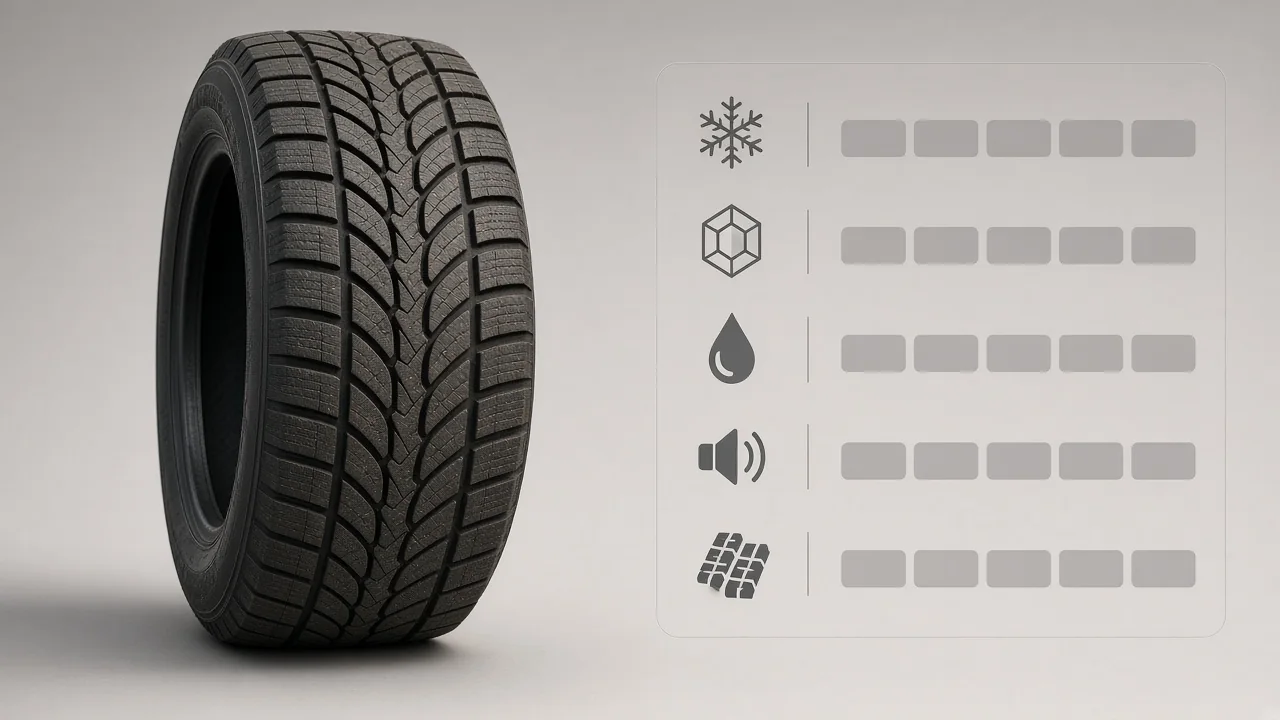
Winter tire ratings and rankings look decisive until you notice that every publisher weights snow traction, ice braking, wet braking, noise, and wear differently. Learning how to read those scores—and how they differ from the three-peak mountain snowflake mark—helps you judge premium winter tires against the roads you actually drive. Those winter snow tires ratings remain evidence to interpret, not a product listing.
What Winter Tire Ratings Actually Measure
A winter tires rating is assembled from several kinds of information that do not mean the same thing. Instrumented tests record distances, times, and grip under defined snow, ice, and wet conditions, so they are useful for comparing measured traction. Editorial scores add judgment about ride, noise, and how the tire felt on the test vehicle. Owner feedback can flag durability or cold-weather usability over months, but it is not a controlled ranking. An overall number therefore reflects that publisher's weighted scores, not a universal winter tire standard.
The three-peak mountain snowflake symbol is a qualifying mark for snow performance under a standardized test, not a complete winter/snow tires ratings package. It does not certify ice braking, wet-road stopping, road noise, or tread wear. Sidewall load index and speed rating are also separate from those performance scores: they describe how much load the tire is designed to carry and the speed capability marked for that construction. When you are rating winter tires, treat the snowflake as a snow-qualification filter and the load and speed markings as fitment requirements, not as a substitute for ice or wet results.
Read the Test Method Before Trusting the Ranking
Before trusting a ranking, read the test methodology. Note the tire size, the vehicle used, the surfaces, the temperatures, and the testing date when those details appear. A result on one size does not automatically transfer to every application, because construction, contact patch, and load can change with dimensions. Repeated runs under controlled conditions, plus a disclosed scoring method, make winter tires ratings more useful. Missing those details, or an undisclosed formula, limits confidence even if the headline ranking looks tidy.
Category weighting decides who wins when ranking winter tires. A publisher that emphasizes snow traction can lift a tire that is only average on ice braking, while heavy wet-braking weight can hide a weak packed-snow result. That is why a high overall winter tires rating can still leave a critical category thin. If ice is your daily surface, look at the ice numbers before the composite. If the method is incomplete, treat the order as a starting comparison rather than a verdict that applies to every size and vehicle you might fit.
Interpret Snow and Ice Results Separately
Snow tests answer different traction questions. Acceleration shows how well the tread and compound generate drive force from a stop or in a climb. Snow braking measures stopping distance under the same packed or loose surface. Handling and slalom work reveal whether that grip stays usable while steering, not only in a straight line. Those results describe snow traction on the surfaces used that day. They do not, by themselves, establish ice braking or ice cornering, because ice presents a smoother, lower-friction contact that winter snow tires ratings often report separately.
Packed snow, loose snow, and ice are distinct conditions, so check which surfaces the test actually used. A tire that bites packed snow can still struggle on glare ice, and a strong ice score does not describe deep, unconsolidated snow. Treat those columns independently when you interpret winter tires ratings. Strong laboratory or proving-ground numbers also do not guarantee grip on an untreated public road, where polish, temperature swings, and mixed debris change the surface. They never justify shorter following distances; extra space remains the practical margin when traction is uncertain.
Account for Wet Roads, Noise, and Tread Wear
Many winter routes include rain, meltwater, and wet asphalt between storms, so wet braking and water evacuation matter even when you are shopping from winter snow tires ratings. A siped winter tread can still hydroplane if channels cannot move water at speed. Slush performance is a separate consideration when a test reports it: slush is a mix of snow, water, and sometimes ice, and a wet-road score does not automatically describe that mixture. If slush is common on your commute, look for a dedicated slush result rather than inferring it from rain-wet stopping distances.
Cabin noise and ride assessments describe how the tire sounded and felt on that test vehicle and road surface, not a universal quietness ranking. A heavier vehicle, different insulation, or a coarse pavement can change what you hear even with the same tire. Tread wear projections and owner reports are similarly limited: inflation, alignment, driving style, winter mileage, and road grit all affect service life. Use those notes as comparative clues about road noise and wear character, not as a promised mileage figure, and keep them secondary to snow, ice, and wet results that match your routes.
Decide Whether Premium Winter Tire Pricing Fits Your Needs
A premium winter tires label or a higher price does not establish performance by itself. You still need relevant test evidence in the conditions you actually drive: snow traction if you climb unplowed streets, ice braking if you start on glare lots, wet braking if thaw cycles dominate. Frame the spending decision around documented results, your typical winter mileage, and the driving environment rather than around brand positioning. If the published winter tires ratings never tested ice, a premium sticker cannot fill that gap. Match the evidence to those surfaces before treating extra cost as an advantage.
Comfort, documented wear performance, and applicable warranty terms can inform value without promising savings or a fixed lifespan. A quieter ride on the test car may matter on long highway commutes; a stronger wear note may matter if you accumulate many cold-season miles. Include installation, seasonal changeovers, and storage in the budget so the true cost of a dedicated winter set is visible. Those extras do not change snow or ice capability, but they are part of owning a second set. Compare them with the documented winter tires rating in your frequent conditions, not an assumed payback.
Turn Test Results Into a Practical Buying Checklist
Turn the charts into a checklist by naming your usual winter surfaces first. If you spend most mornings on packed snow and salted wet pavement, prioritize snow traction and wet braking before an overall ranking. Ice-heavy lots call for ice braking and ice handling columns even if the composite looks average. Use the overall winter snow tires ratings only after those priorities are set, so a weighted score cannot bury a weak result you actually need. Record which categories were tested in a size close to yours, and which were skipped.
Then confirm the vehicle's specified tire size, load capacity, speed-rating requirements, and any approved winter fitment guidance in the owner's information. If ice performance was never tested, or results are unavailable for the intended size, write that down as an unresolved gap instead of guessing from a nearby dimension. Ask a qualified tire professional when load index, speed rating, or winter fitment is unclear. Do not attempt braking or traction tests on public roads to fill missing data; proving-ground winter tires ratings exist so you do not have to create that risk in traffic.