How to Read a Tire Pressure Label in a Car
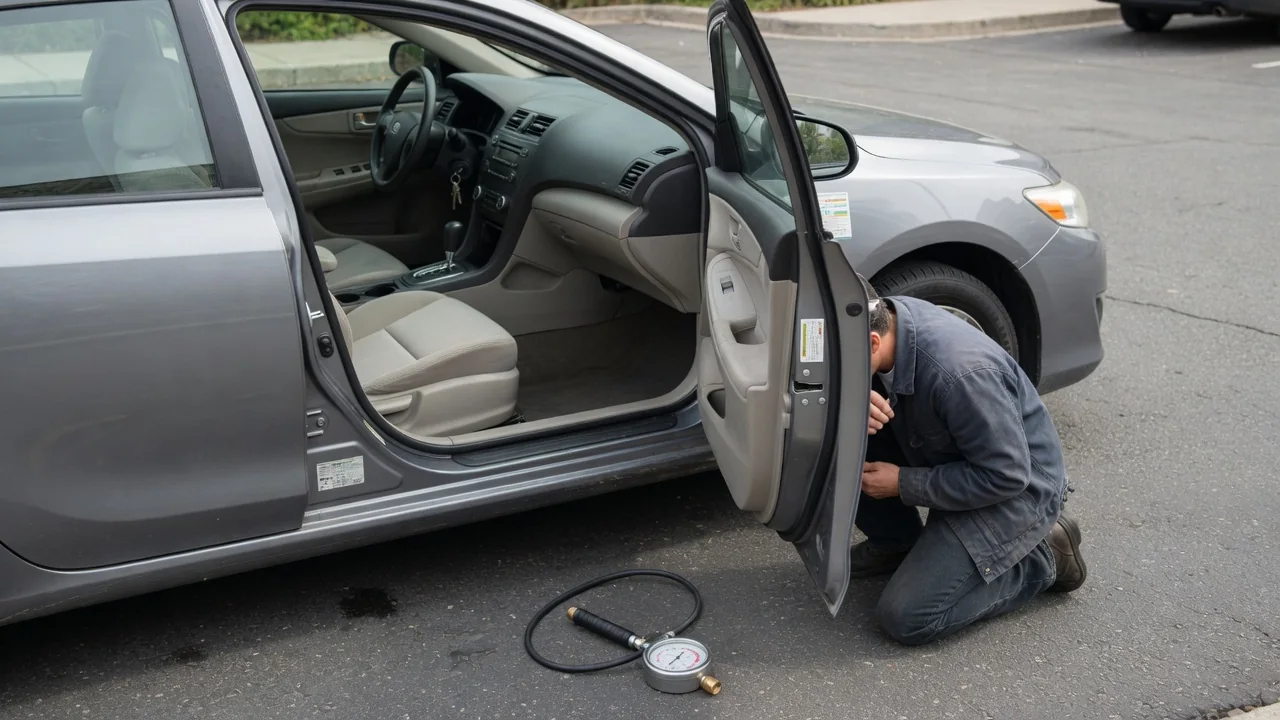
Learning how to read a tire pressure label in a car takes only a minute, yet it settles most questions about inflation. The placard lists the pressures the vehicle manufacturer chose for the original tire size, along with load information that tells you how much weight the vehicle is designed to carry. Understanding each line helps you inflate accurately and load the car sensibly.
Find the placard
On most passenger vehicles the tire and loading information placard is fixed to the driver's door jamb or the edge of the door itself, visible when the door is open. Some manufacturers place it elsewhere, such as inside the fuel filler flap, on the glovebox lid, or on the passenger side pillar. If you cannot spot it, the owner's manual normally identifies the location and repeats the same figures, which is helpful when a label has faded or been painted over after body repair.
Do not confuse the placard with other stickers nearby. A separate certification label often sits in the same area and lists axle weight ratings and the build date, while the tire placard is usually marked with a tire diagram and headings for size and cold pressure. Also avoid reading the pressure molded into the tire sidewall for this purpose. That number is the maximum the tire itself is rated to hold, not the pressure chosen for your vehicle's weight, handling and ride.
Front and rear values
The core of the label is a small grid showing the original tire size alongside recommended pressures for the front tires, the rear tires and, where fitted, the spare. Pressures are commonly shown in pounds per square inch, often with kilopascals beside them, and some labels add bar. Read the unit carefully before matching it to your gauge, because a figure in kilopascals looks nothing like its equivalent in psi, and inflating to the wrong scale produces a badly wrong result.
Front and rear values are sometimes identical and sometimes different, and the difference is intentional. Engineers set each axle's pressure around how weight is distributed, how the vehicle steers and how it behaves when loaded, so a car carrying its engine over the front wheels may be specified differently from a pickup expected to haul cargo over the rear. A compact temporary spare typically calls for a noticeably higher pressure than the road tires, which is why its line deserves a separate look.
Cold checks
The word cold on the placard matters as much as the numbers. It means the tires are at ambient temperature, generally after the vehicle has been parked for several hours or driven only a short distance at low speed. Driving flexes the tire and warms the air inside, which raises the pressure reading. A tire checked right after a highway run will therefore read higher than the label figure even when it was set correctly that morning.
Because of that, never bleed air from warm tires to bring them down to the placard number; once they cool, they will be underinflated. If you must add air at a gas station after driving, top up cautiously and recheck later when the tires have cooled. Seasonal temperature swings work the same way in reverse. A sharp drop in outside temperature lowers the reading, which is why a tire pressure warning light often appears on the first cold morning of fall.
Everyday Use and Observations
The label also carries the load notes. In the United States it usually states the seating capacity, split between front and rear, and a sentence giving the combined weight of occupants and cargo that should never be exceeded. That figure covers everything added to the vehicle, including passengers, luggage and accessories, and the downward weight of a trailer tongue counts against it as well. A family trip with a full trunk and roof box can approach the limit sooner than many drivers expect.
In daily use, treat the placard as the reference for regular checks and for a look before long journeys, using a gauge you trust rather than judging by eye. Modern radial tires can look normal while running well below specification. Low pressure tends to show up as heavier steering, shoulder wear on the tread and higher fuel consumption, while overinflation can bring a harsher ride and wear concentrated along the center. Some vehicles list a second, higher set of pressures for full load or sustained high speed.
Limits and Next Steps
The placard describes the vehicle as it left the factory. If the tires have been changed to a different size, load range or construction, such as heavier-duty light truck tires on a pickup, the printed pressures may no longer suit them, and a tire professional should work out the appropriate inflation from the tire maker's load data. The same caution applies when towing or carrying unusual loads, where the owner's manual may give additional guidance beyond what fits on the label.
A tire pressure monitoring system is a backup, not a substitute for reading the label. The warning generally triggers only after pressure has fallen meaningfully below the recommended value, so a tire can be somewhat low without any light showing. If a warning stays on after the tires are set to the cold placard pressures, or one tire keeps losing air, have the tire, valve and sensor inspected rather than assuming which part is at fault. A missing or illegible placard can usually be replaced through a dealer.