How to Read a Car-Care Product Label: Surfaces, Dilution and Safety
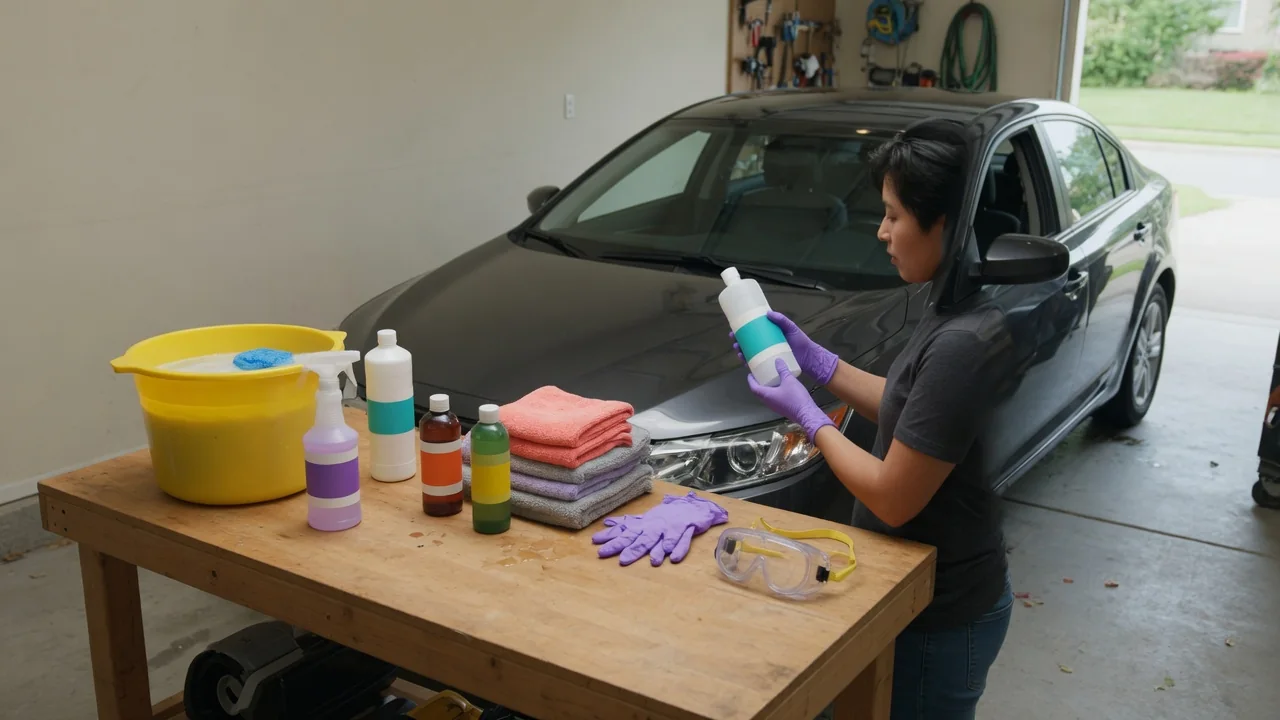
A car cleaning product label tells you which surfaces the formula is meant for, how strong the working solution should be, and what precautions protect you and the vehicle. Knowing how to read a car care product label helps you avoid streaks, stains and damaged trim, and it lets a bottle of concentrate last as long as intended. This guide covers the three parts of a label that matter most, then explains where labels stop being useful.
Material suitability
Start with the surface list. Most labels name the materials the product is intended for, such as clear-coated paint, glass, wheels, tires, plastic trim, rubber seals, vinyl, leather, carpet or upholstery. Read the exclusions just as carefully, because the "do not use on" line often matters more than the list of approved uses. Wheel cleaners commonly exclude polished, uncoated, anodized or chrome-plated finishes. Interior cleaners may exclude certain leathers, suede-type fabrics or unsealed surfaces. Some glass cleaners caution against use on aftermarket window film. If your surface appears in the exclusions, or is not mentioned at all, treat the product as unsuitable until you have more information.
Next, look for clues about the chemistry. Many labels describe a product as pH neutral, alkaline or acidic, even when no number is printed. Neutral car shampoos are generally the gentlest option for routine washing and are less likely to degrade wax or sealant layers. Alkaline cleaners and degreasers break down oils, road film and organic grime, but they can strip protection and may leave some plastics or rubber looking dry if left too long. Acidic products dissolve mineral deposits and some types of brake dust, and they are the formulas most likely to carry restrictions for sensitive metals. Solvent-based tar, adhesive or bug removers can soften or stain some plastics and rubber, so their surface warnings deserve close attention.
Be skeptical of broad phrases such as "safe on all surfaces" or "multi-surface." They are general marketing claims, and the fine print often narrows them. A line that says to test on an inconspicuous area first is a real instruction, not filler. It signals that results can vary with the finish, its age and its previous treatments.
Dilution
Concentrated products show their dilution as a ratio, an amount per gallon or a number of capfuls per bucket. A ratio such as 1:10 is usually read as one part product to ten parts water, but check how the label words it, because conventions vary. Many labels give different strengths for different jobs: a weaker mix for maintenance washing or light interior wipe-downs, a stronger one for heavy soil, and sometimes separate directions for a foam cannon, a pump sprayer or a wash bucket. Also check whether the product is a concentrate or ready to use. A ready-to-use spray is formulated at its working strength and is not meant to be thinned further.
Getting the strength right affects both results and risk. A mix that is too strong can leave residue, streak glass, rinse poorly, spot paint if it dries, strip protective coatings faster and raise the chance of staining sensitive trim. A mix that is too weak may not lift the dirt, which tempts you to scrub harder and adds friction that can cause fine marring on paint. Measure with marked containers or a measuring cup instead of pouring by eye, especially for strong degreasers and wheel cleaners, where small errors make a bigger difference.
Read the mixing details too. Some labels say to add product to water rather than the reverse, and some say how long a diluted solution remains effective. If the label gives a time limit, follow it. If it says nothing, mixing only what you need for the job is the cautious choice. When you refill a spray bottle with a diluted product, label the bottle with the product name and ratio so it is not mistaken for something else later.
Safety instructions
On consumer products sold in the US, the signal words Caution, Warning and Danger indicate increasing levels of hazard. The hazard statements that follow explain the reason, such as eye or skin irritation, flammability or harm if swallowed. Precautionary statements then tell you what to do about it: wear chemical-resistant gloves, protect your eyes, work with good ventilation, or keep the product away from heat and open flame. Read the first aid section before you start. It is far less useful when you are searching for it with product in your eyes.
Many safety lines also protect the vehicle. Common directions include applying the product to a cool surface out of direct sun, not letting it dry on the surface, not exceeding a stated dwell time and rinsing thoroughly. These limits exist because heat and evaporation concentrate the chemistry on the surface, which increases the chance of spotting or etching. A warning not to mix the product with other chemicals should be taken literally: combining cleaners can create harmful fumes or unpredictable reactions, and using two products one after the other without rinsing in between can have a similar effect on the surface.
Finally, check storage and disposal guidance. Labels may require keeping the product in its original container, protecting it from freezing, storing aerosols away from heat and keeping everything out of reach of children. Disposal and wash-water instructions often refer to local regulations, which vary by area. For complete hazard data, manufacturers typically make a Safety Data Sheet available. It goes into more detail than the label has room for.
Practical implications and limits
A label describes the product, not your car. It cannot know whether your paint is factory or refinished, whether the vehicle has a ceramic coating, paint protection film or a vinyl wrap, or what finish an aftermarket wheel actually has. Those details can add restrictions the label never mentions. The care section of your owner's manual and any guidance from a coating or film installer are worth checking alongside the product label. When the sources disagree, the more conservative instruction is the safer one to follow.
Labels are also condensed by necessity. A claim that a product is safe is the manufacturer's statement, not independent verification, and the absence of a warning is not permission. Formulas and directions can change between versions, so read the label on the bottle you are actually using rather than relying on memory or an older container. If something is unclear, ask the manufacturer or check the Safety Data Sheet before applying the product to a surface that would be expensive to repair.