How to Protect Car Paint While Parking Under Trees
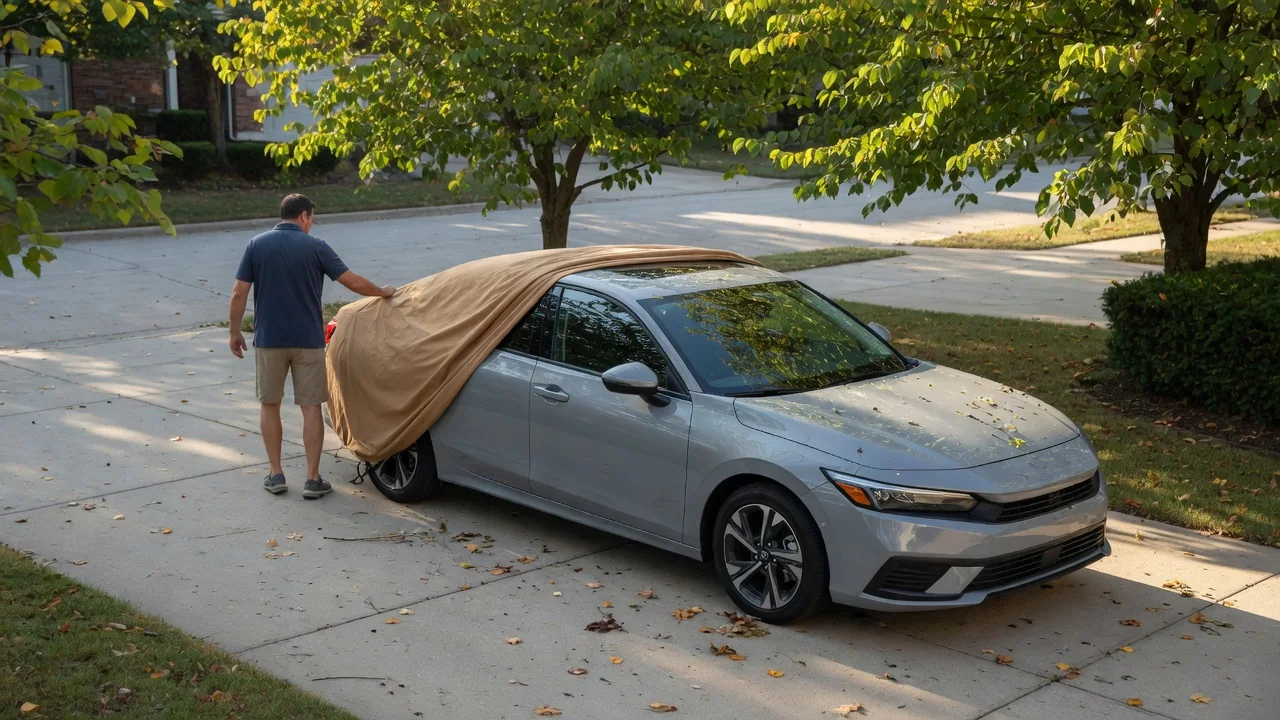
Shade keeps a cabin cooler and slows interior fading, but branches overhead bring sap, pollen, leaves, seed pods and bird droppings down onto the finish. Learning how to protect car paint while parking under trees comes down to three habits: picking the spot carefully, removing contamination before it bonds, and keeping the body's water channels clear of debris.
Choose spot
Not every shaded space carries the same risk. Pines, maples, lindens and fruiting trees tend to drop sticky residue, while trees hosting aphids release a fine mist called honeydew that coats panels in tiny tacky dots. Look at the pavement before pulling in. Dark speckles, glossy patches, crushed berries or a carpet of needles show what will land on the hood and roof within hours. A clean patch of ground beneath a broad-leafed tree usually signals a gentler location than one stained with drips.
Position matters as much as species. Parking at the outer edge of the canopy often provides afternoon shade without placing the car directly beneath heavy limbs where birds roost and dead wood can fall. Branches hanging low enough to brush the roof will scuff clear coat in wind, so leave vertical clearance. After storms, avoid trees with cracked or hanging limbs entirely. Where the same space is used daily, a breathable fitted cover is worth considering, provided the paint is clean before it goes on.
Remove contamination
Fresh sap is soft and comes away with relatively little effort, while sap baked by several days of sun hardens into an amber bead that grips the clear coat. Bird droppings and crushed berries are acidic and can leave dull etched outlines, especially on hot dark panels. The practical rule is to deal with spots as soon as they are noticed. Soaking a deposit with car wash solution or a quick detailer and lifting it with a soft microfiber towel prevents grit from being dragged across the surface.
Hardened sap usually needs a dedicated automotive tar and sap remover, applied to a towel and held against the spot until it softens, then followed by a wash to clear the solvent. Scraping with a fingernail, blade or dry cloth risks scratches that are harder to fix than the original mark. Leaves and needles should be lifted or rinsed off rather than wiped, since their stems and trapped dust act like abrasive. Wet leaves left sitting can also leave tannin stains on lighter colors.
Inspect drains
Tree debris affects more than the visible finish. Leaves, needles and seed pods collect in the cowl area at the base of the windshield, in sunroof channels, along the trunk or hatch gutters and in the lower door seams. These zones have small drain openings meant to route rainwater away. When they clog, water pools against painted seams and can find its way into the cabin, producing damp carpets, fogged glass or a musty smell that seems unrelated to where the car is parked.
A visual check is simple. Open the hood, doors and trunk and look for packed organic material in the gutters and corners, then clear loose debris by hand or with a soft brush. Water that drains slowly from the sunroof trough or sits in the cowl after rain suggests a restriction. Drain locations and routing differ considerably between vehicles, so the owner's manual or a service department is the right reference before probing any tube, since forcing a tool through can disconnect or puncture it.
Everyday Use and Observations
Cleaning frequency should follow what the car collects rather than a fixed calendar. A vehicle parked daily under a dripping tree in spring or summer may benefit from a weekly wash and a quick walkaround every day or two, while the same space in winter may demand far less. Running a clean hand inside a thin plastic bag across washed paint reveals bonded contamination as a gritty texture, an indication that a clay bar or chemical decontamination step is due before any protection is renewed.
A protective layer makes each of those washes easier. Wax, synthetic sealant or a ceramic coating gives sap and droppings a sacrificial surface to sit on, so they release with less effort and have more time before reaching the clear coat. Water beading that turns flat and sluggish shows the protection is wearing thin. Horizontal panels such as the hood, roof and trunk lid take the heaviest fallout and usually need attention first. Glass, wiper blades and rubber seals also gather residue and deserve a wipe during routine washes.
Limits and Next Steps
Protection reduces damage but does not make paint immune. A coating or film can still be marked by droppings left for days in strong heat, and no product stops a falling branch from denting a panel. Older single-stage finishes, repainted sections and soft clear coats may react differently to solvents, so any remover should be tried on a small hidden area first. Matte and satin finishes have their own care requirements and should not be polished or waxed with conventional products.
When a mark remains after proper washing, the surface itself has likely been etched or stained. Light etching often responds to machine polishing, but that removes a small amount of clear coat and is best judged by a detailer who can measure and assess the finish. Persistent interior dampness, water stains on the headliner or pooled water in the trunk well point to a drainage or seal problem that warrants a workshop inspection. If contamination keeps outpacing cleaning, changing the parking spot is the most effective remaining step.