How to Protect Car Door Panels From Muddy Gear
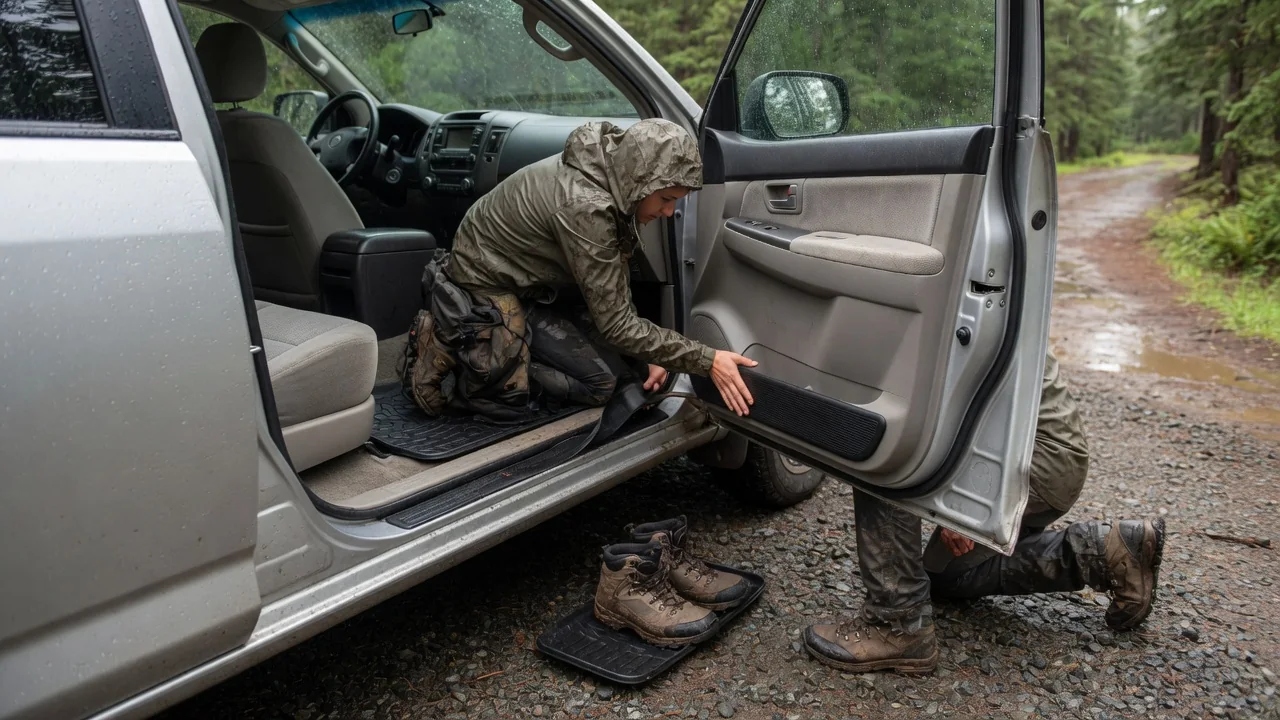
Boots, bike tires, wet dog leashes, and sports bags all end up brushing against the doors on the way in and out of a vehicle. Learning how to protect car door panels from muddy gear comes down to three habits: covering the spots that get hit, cleaning dirt off before it sets, and keeping dampness from lingering behind any protective layer.
Identify contact areas
Mud rarely lands evenly across a door. Most of it collects along the lower third of the panel, where boots swing past during entry and exit, and on the map pocket, which catches drips from anything set inside it. The armrest and pull handle pick up grime from dirty gloves, while the sill and kick area near the speaker grille take direct scuffs from heels, cleats, and the edges of hard-sided equipment cases being lifted across the opening.
A quick inspection after a muddy outing shows where your own routine leaves marks. Look for dried splatter patterns, dull scuff lines, and grit lodged in seams or switch surrounds. Rear doors often show different wear than front doors, especially when children, pets, or cargo ride in back. Panel materials differ widely between vehicles, with hard textured plastic, soft-touch vinyl, leather, and fabric inserts all possible on a single door, so note which surfaces sit in the path of contact before choosing a cover.
Wipe soon
Fresh mud is far easier to deal with than dried mud. While it is still damp, most of it lifts away with a soft microfiber cloth lightly moistened with water, leaving little behind. Once it dries, the soil hardens into the grain of textured plastic and the weave of fabric inserts, and the fine sand within it acts as an abrasive. Rubbing dried mud across a panel can leave faint scratches or shiny patches on matte finishes.
Keeping a couple of clean cloths and a small spray bottle of water in the cargo area makes a quick wipe realistic at the trailhead or field. Blot and lift rather than scrub, and fold the cloth often so trapped grit is not dragged back over the surface. For leather or cloth sections, use a cleaner intended for that interior material and test it somewhere inconspicuous first. Take care around window switches, speaker grilles, and door lock controls, where excess liquid can seep into electrical components.
Avoid trapped moisture
Removable protection works well only when the surface underneath stays dry. A cover, kick mat, or clear film placed over a damp panel holds that moisture against the material, and wet gear pressed against the door adds more. Over time, trapped dampness can lead to musty odors, mildew on fabric inserts, staining on leather, and weakened adhesive on some trim. Padding and sound-deadening material behind the panel can also hold water for a surprisingly long time.
After a wet trip, take removable covers off, let them dry separately, and wipe the panel beneath before refitting them. Empty the door pockets too, since a soaked glove or water bottle left inside keeps the area humid. Leaving the doors open for a while in a dry, shaded place or running the climate system with fresh air helps the cabin dry out. Persistent fogging on the windows or a stale smell suggests moisture is still present somewhere and deserves a closer look.
Everyday Use and Observations
Day to day, the simplest protection is a removable layer that matches how the vehicle is used. Hanging door guards that hook over the window opening suit pets that lean or paw at the panel, while fitted kick mats or wipeable covers shield the lower section from boots. Even an old towel draped over the sill during loading helps. Check that any cover leaves the door handle, window switches, and side airbag areas unobstructed, and that it does not interfere with the window glass or seals.
Loading habits matter as much as covers. Knocking mud off boots before climbing in, bagging dirty shoes, and placing wet equipment in a lidded bin or on a cargo liner keeps most of the mess away from the doors entirely. Watch how the protection performs over several outings. If mud keeps appearing above or beside the covered area, the guard may need repositioning or a different shape. Fit varies between vehicles because door contours, pocket shapes, and trim attachment points are not standardized.
Limits and Next Steps
No cover prevents every mark. Heavy or sharp-edged gear can gouge plastic through a thin guard, and repeated abrasion will eventually dull textured surfaces. Some stains, particularly from clay-rich soil or dye transfer on light-colored trim, may not come out completely with gentle cleaning. Harsh solvents, stiff brushes, and abrasive pads tend to make things worse by stripping coatings or changing the sheen, so it is better to accept a faint mark than to damage the finish chasing it.
When ordinary cleaning falls short, the owner's manual is the best guide to which products suit the interior materials in your vehicle. A professional detailer can address ground-in soil, lingering odors, or water marks on leather and fabric. If a panel has become loose, a switch behaves erratically after getting wet, or dampness keeps returning with no obvious source, have a qualified technician inspect the door, since blocked drains or worn seals may be letting water in from outside.