How to Protect a Stored Car From Dust
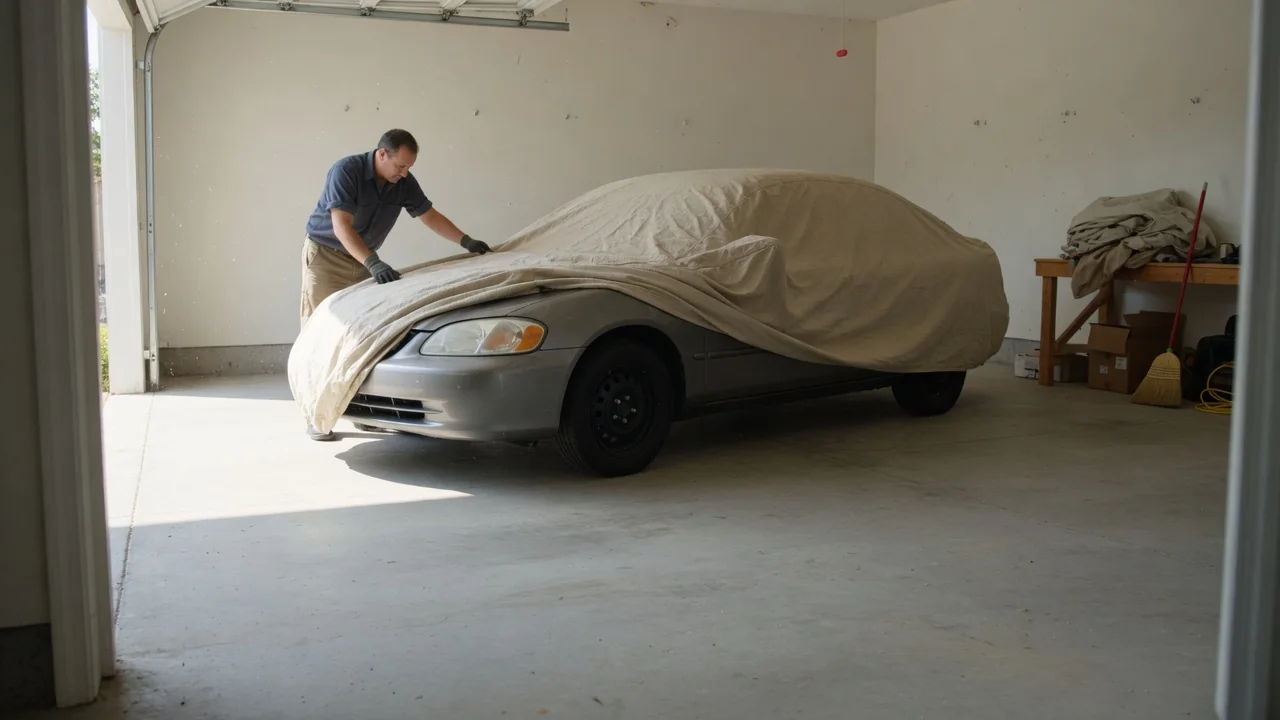
Dust on a stored car is more than a cosmetic problem. Fine particles can scratch paint when wiped off dry, settle into seals and vents, and dull interior surfaces over a long layup. Car storage dust protection comes down to three decisions: put the car away clean, choose a cover that keeps dust out without trapping moisture, and plan access so routine checks don't undo the protection.
Clean First: Why Protection Starts With a Washed Car
A cover placed over a dirty car traps grit against the paint. Even in a closed garage, a cover shifts slightly with air movement, temperature changes and handling, and any dirt underneath acts like a mild abrasive against the clear coat. Contaminants such as bird droppings, tree sap, insect residue and road film can also damage the finish if left in place for weeks or months. Before storage, wash the whole vehicle, including the lower panels, wheel wells, door jambs and the area around the fuel door, where grime tends to collect unnoticed.
Drying matters as much as washing. Water left in seams, behind trim, inside mirror housings and along door edges can leave spots or encourage mildew once the car is covered. Let the car dry fully, or use clean microfiber towels and compressed air to clear trapped water, before the cover goes on. A coat of wax or paint sealant is optional, but it adds a slick layer that makes dust easier to remove later. Follow the product's directions and let it cure before covering the car.
The interior and the storage space need attention too. Vacuum carpets and seats, remove food wrappers and trash that can attract pests, and make sure floor mats are dry. Close all windows and the sunroof fully so dust has fewer ways in. Finally, sweep or vacuum the garage floor and nearby shelves before parking. Settled dust in the space is easily stirred up later and ends up on the car or its cover.
Cover Choice: Breathable, Soft and Properly Fitted
For a car stored indoors, a dedicated indoor cover made from soft, breathable fabric is usually the best option. Breathability lets moisture vapor escape instead of condensing between the cover and the paint, which matters when temperature and humidity change over a season. Plastic sheeting and ordinary tarps do block dust, but they also trap moisture and often have rough surfaces that can mark the finish. A soft inner lining reduces the risk of fine scratches where the cover touches the paint.
Fit affects how well a cover keeps dust out. A fitted or semi-fitted cover with an elastic hem hugs the lower edges of the body, so less dust can get underneath and less loose fabric moves against the paint. Oversized universal covers can work, but extra material billows and shifts more easily, and gaps at the bottom let dust in. Mirror pockets and openings for fixed antennas, where applicable, help the cover sit evenly. Some vehicle makers offer accessory covers for their models, and the owner's manual or a dealer can confirm whether one exists.
The cover has to be clean as well. A cover kept in a dusty corner or dragged across the floor carries grit straight back onto the paint. Wash it according to the maker's instructions, store it folded with the inner side facing in, and keep it in a clean bag between uses. When fitting it, start at one end and unroll it along the car rather than pulling it across the panels.
Access: Planning Checks Without Undoing the Protection
Most stored cars still need occasional attention, such as checking tire pressure, looking for leaks or pest activity, and maintaining the battery. Each time the cover comes off, dust on its outer surface can fall onto the car, so it helps to plan access in advance. If a battery maintainer is used, route its lead so the cover can stay closed, for example under the hem at a point that doesn't leave a large gap. Keep keys, a tire gauge and a simple log of completed checks nearby so each visit is short and purposeful.
How the cover is removed makes a difference. Fold it in sections from the edges toward the center so the dusty outer surface folds onto itself, then lift it away instead of sliding it across the paint. Set it on a clean surface or back in its bag, never on the floor. Shaking the cover out next to the car only releases dust into the air, so if it needs a shake, do it outside and away from the vehicle.
The layout of the space around the car also affects access. Leave enough room to walk around the vehicle without brushing against dusty walls, shelves or stored equipment. Activities that generate airborne dust, such as sanding, sawing or sweeping, are best done away from the stored car or postponed until it is gone. Limiting how often the garage door is opened on windy, dusty days also reduces the amount of debris that enters the space.
Practical Implications and Limits
A good cover reduces dust exposure, but it does not make a car immune to the storage environment. Very fine dust can still work its way under a hem over time, and a cover does nothing about pests, persistent dampness or large temperature swings in the building. If the space itself is humid or poorly sealed, a breathable cover helps the paint cope, but the underlying conditions still need attention. Dust protection works best as one part of a broader storage plan rather than a single solution.
When the car comes out of storage, expect some dust anyway and remove it carefully. Dry-wiping with a rag or paper towel drags particles across the finish. A rinse followed by a normal wash is the safest approach for anything more than a light film, while a light layer can be lifted with a waterless wash product and clean microfiber towels. Cars stored outdoors face more dust and wind, so a well-secured outdoor-rated cover becomes more important, since loose fabric flapping in the wind can wear the paint.
Details vary by vehicle and finish. The storage section of the owner's manual may include manufacturer guidance worth following. Matte paint, vinyl wraps, convertible tops and certain trim materials can require specific cleaning products or methods, and some common products are not suitable for them. Check the care guidance for that particular finish before washing, waxing or covering the car.