How to Protect a Car's Paint During Road-Salt Season
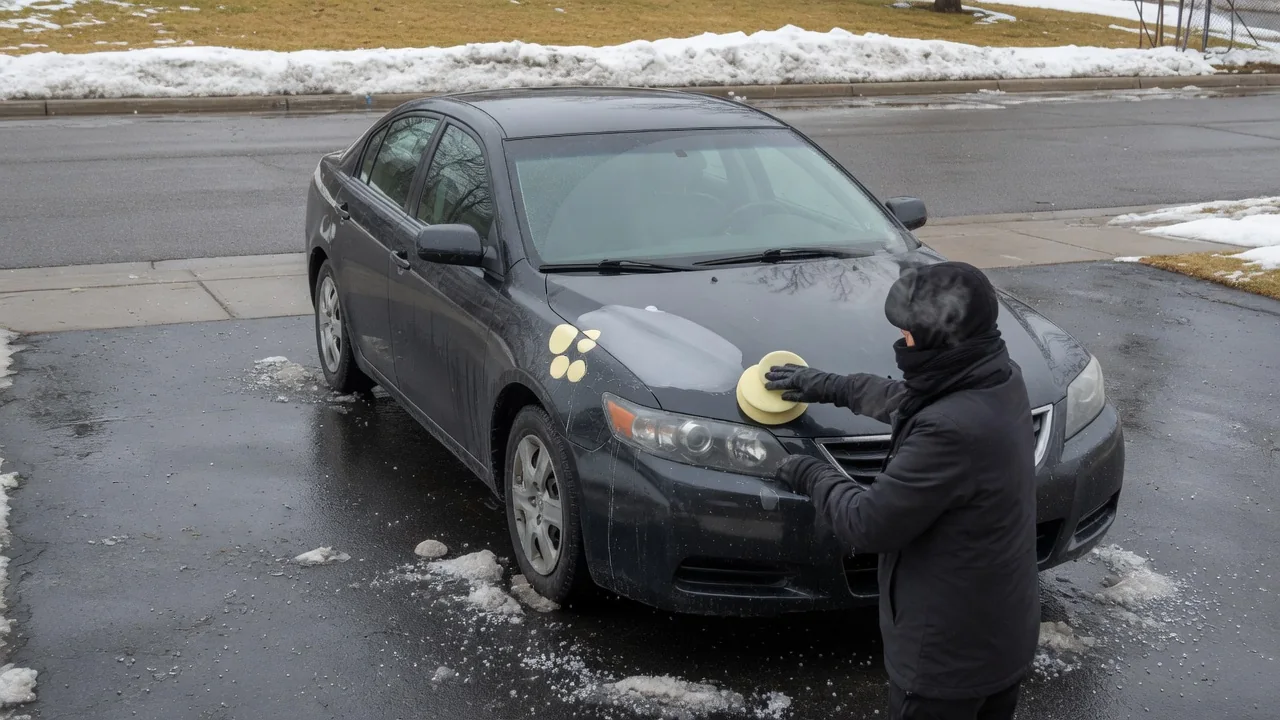
Winter roads treated with salt and brine keep traffic moving, but the residue they leave behind is hard on automotive finishes. Knowing how to protect a car's paint during road-salt season comes down to three habits: rinsing deposits before they sit, cleaning the seams where grime hides, and checking for chips that expose bare metal. Each one is simple, and together they slow corrosion considerably.
Rinse deposits
Road salt rarely stays as dry crystals. It dissolves in slush, sprays up from the tires, and dries into a gray-white film along the rocker panels, lower doors, rear bumper, and tailgate. That film holds moisture against the clear coat and carries grit that scratches when rubbed. A thorough rinse with plain water before any contact washing floats most of the residue away, so the wash mitt glides over a cleaner surface instead of dragging abrasive particles across the paint.
Start low and work methodically, because the heaviest buildup sits behind the wheels and along the bottom edges of the body. Wheel wells and the underbody deserve extra time, since liquid brine clings there and is harder to see than rock salt. Many automatic washes offer an undercarriage spray, though coverage differs between facilities. Vehicles with mud flaps, plastic cladding, or running boards trap deposits in different spots, so watch where the white crust forms on your own car after a storm.
Clean seams
Flat panels shed water quickly, but seams do not. Door jambs, the lip inside each wheel arch, the fuel filler pocket, the trunk or liftgate channel, and the gap around trim pieces all collect salty runoff that dries slowly. Because these areas stay damp and rarely see a wash mitt, corrosion often starts there first. Opening the doors after a wash and wiping the jambs and sills with a soft, damp microfiber towel removes residue that a rinse alone leaves behind.
Drain holes along the bottom of the doors and rocker panels matter as well, since packed dirt can keep salty water trapped inside the panel. A gentle stream of water and a soft detailing brush are usually enough to loosen grime around emblems, window trim, and bumper joints without marring the finish. Seam layout varies widely by body style; a pickup has bed rail and tailgate gaps, while a hatchback gathers spray around the rear glass and license plate recess.
Inspect chips
Paint protects steel only while it remains intact. Sand and gravel spread with winter treatments get thrown by traffic, and each impact can punch a small crater through the clear coat and color layers. Once primer or bare metal is exposed, salt water has a direct path to start rust, which can then creep under the surrounding finish. A clean, dry car in good light is the best time to look, because dirt easily hides fresh damage.
Check the leading edge of the hood, the front bumper, the mirror housings, the lower doors, and the area behind each wheel, where debris strikes most often. A chip showing a gray or dull metallic center is more urgent than a shallow scuff in the clear coat, and any orange-brown staining suggests corrosion has already begun. Touch-up paint matched to the vehicle's color code can seal small spots, although the code location and the correct product depend on the manufacturer.
Everyday Use and Observations
Daily driving habits shape how much salt a vehicle carries. Following closely behind other traffic or a spreader truck puts the front end in a constant spray, and deep slush packs the wheel wells. Parking in a heated garage feels kind to the car, yet warmth and melting snow keep salty moisture active, so a quick rinse beforehand is worthwhile. Washing on a milder day, when water will not freeze in door seals and locks, also makes the job easier.
A layer of wax, paint sealant, or ceramic coating applied before winter helps water bead and makes residue release more readily, though no product makes the finish immune. Pay attention to what the paint tells you between washes: a rough, gritty feel, a haze that returns within a day, or water that stops beading all suggest protection is wearing thin. How often to wash depends on local road treatment, mileage, and weather, so let visible buildup guide the schedule.
Limits and Next Steps
Careful washing slows corrosion, but it cannot reverse damage that has already taken hold. Bubbling under the paint, flaking along a wheel arch, or rust spreading from a seam means moisture has gotten beneath the finish, and surface cleaning will not stop it. Those signs call for evaluation by a body shop, which can judge whether a local repair is enough. Hidden areas such as frame rails and brake lines also corrode and are best inspected with the vehicle raised.
When the season ends, a full wash that includes the underbody, jambs, and wheel wells clears the last of the residue before warm, humid weather speeds up any reaction. It is also a sensible moment to renew protection and deal with chips noted over the winter. Owners considering rustproofing treatments or paint protection film should confirm what suits their vehicle, since factory coatings, drain designs, and warranty terms differ. The owner's manual often lists care guidance specific to the finish.