How to Prioritize Several Recommended Car Repairs
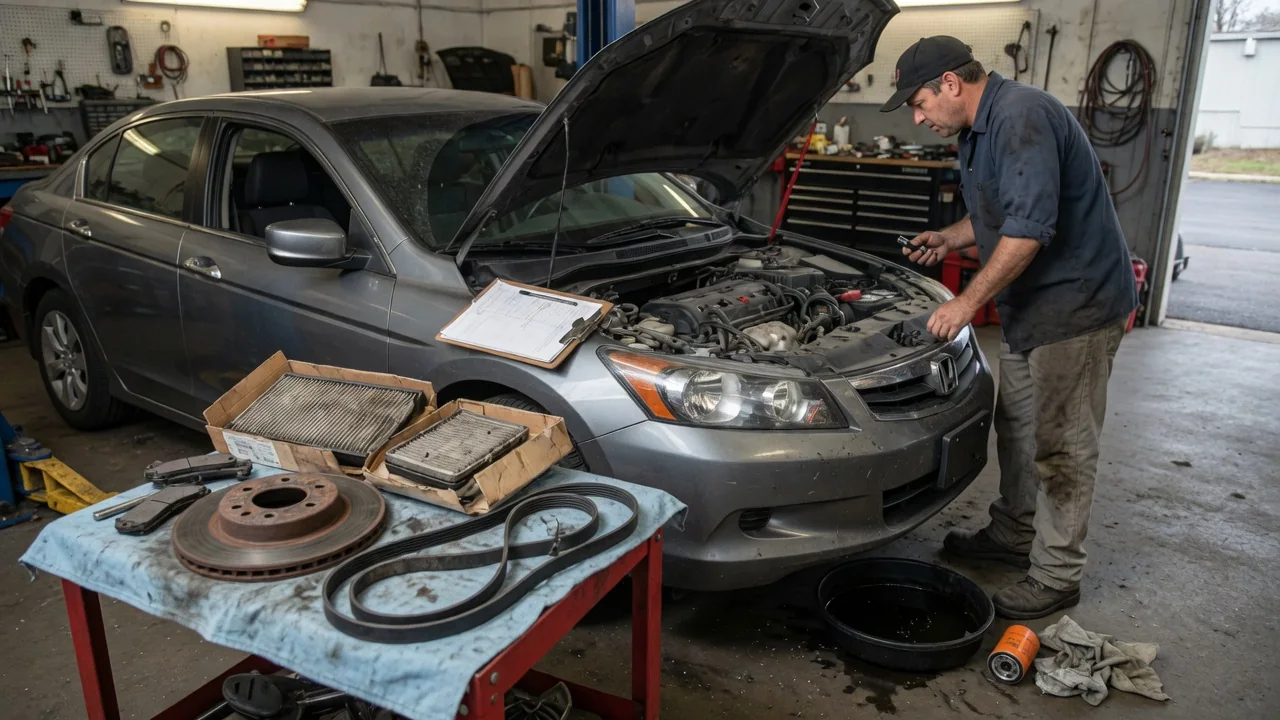
A repair estimate with five or six line items can feel like an all-or-nothing demand, but the items rarely carry equal weight. Learning how to prioritize several recommended car repairs comes down to three questions: does it affect safety, is it causing a symptom now, and when does the maintenance schedule actually call for it?
Separate urgent issues
Start by pulling out anything that affects your ability to stop, steer, see or stay on the road. Brake pads worn close to the backing plate, a leaking brake hose, a tire with exposed cords or a sidewall bulge, a loose ball joint or tie rod end, and failed exterior lights belong in this group. These faults can turn a routine drive into a loss of control, so they move to the top regardless of how the car feels today. Many of them give little warning before they become dangerous.
The second urgent group covers problems that can quickly destroy expensive components. A coolant leak that lets the engine run hot, a low oil level from an active leak, a flashing check engine light with a rough-running engine, or a timing belt well past its recommended replacement point can each lead to damage far larger than the original repair. By contrast, a slightly weeping valve cover gasket, a noisy cabin blower or a cosmetic trim issue usually tolerates a delay, provided someone keeps an eye on it.
Ask for evidence
A recommendation is easier to rank when you know what it is based on. Ask the shop to show you the worn part, a photo, or a measurement such as remaining brake pad thickness, tire tread depth or a battery test result. Numbers let you compare the finding against the limits published for your vehicle, which differ between manufacturers and even between trim levels. A phrase like getting low tells you much less than a measured figure and the specification it was judged against.
The same applies to warning lights and stored fault codes. A code points to a circuit or system that reported something outside its expected range; it does not prove that a specific part has failed. Some codes are manufacturer-specific and mean different things on different vehicles, so their interpretation needs to be confirmed for your exact model. Ask what further testing supported the diagnosis, and whether each item was found by inspection, by a test, or simply suggested because of mileage or age.
Plan schedule
Once the urgent work is identified, sort the remainder into a realistic timeline. A useful approach is three tiers: fix now, fix within the next few weeks or the next service visit, and monitor. Ask the shop to rank the list this way and to explain what would move an item up a tier. A seeping shock absorber or a serpentine belt showing early cracking might sit in the middle tier, while a fluid exchange suggested purely by mileage can often be aligned with the next scheduled visit.
Check time-based and mileage-based items against the maintenance schedule in your owner's manual rather than a generic shop menu. Intervals for fluids, spark plugs, filters and belts vary considerably between vehicles, and severe use such as towing, short trips or dusty roads can shorten them. It also pays to group work that shares labor. If one repair requires removing components that give access to another worn part, doing both together can avoid paying for the same disassembly twice.
Everyday Use and Observations
Your own observations help confirm or question the order on the estimate. Notice whether the brake pedal feels soft or sinks, whether the car pulls to one side, whether the steering wheel shakes at certain speeds, and whether new noises appear when braking, turning or driving over bumps. Grinding, a burning smell, a temperature gauge climbing above its normal position or a red warning light are signals to stop driving and have the car checked, not symptoms to wait out.
Slower changes matter too. Spots under the parked car, a fluid level that keeps dropping, uneven tire wear, longer cranking before the engine starts, or a gradual decline in fuel economy all suggest that a monitored item is progressing. Writing down when a symptom occurs, such as only when cold, only at highway speed or only with the air conditioning on, gives a technician far better information. How these signs present varies by vehicle design, so the pattern on your car matters more than general descriptions.
Limits and Next Steps
Prioritizing is not the same as declining. Deferred items remain real, and some worsen faster than expected, particularly leaks, worn suspension joints and brake components. Nobody can reliably judge the remaining life of a part from a description alone, and a list ranked without inspecting the car is only a rough guide. If you are told a vehicle is unsafe to drive, treat that seriously and ask exactly what was found before deciding to drive it away.
When the list is long or the reasoning is unclear, a second opinion from another qualified shop is a reasonable step, especially for costly work that produces no symptom you can detect. Keep the written estimate, note the date and mileage, and ask for a recheck of monitored items at the next oil change. On an older vehicle, weigh the total against the car's condition and your plans for it. Safety repairs still come first, but the rest can be scheduled deliberately instead of under pressure.