How to Prepare a Stored EV for Return to Driving
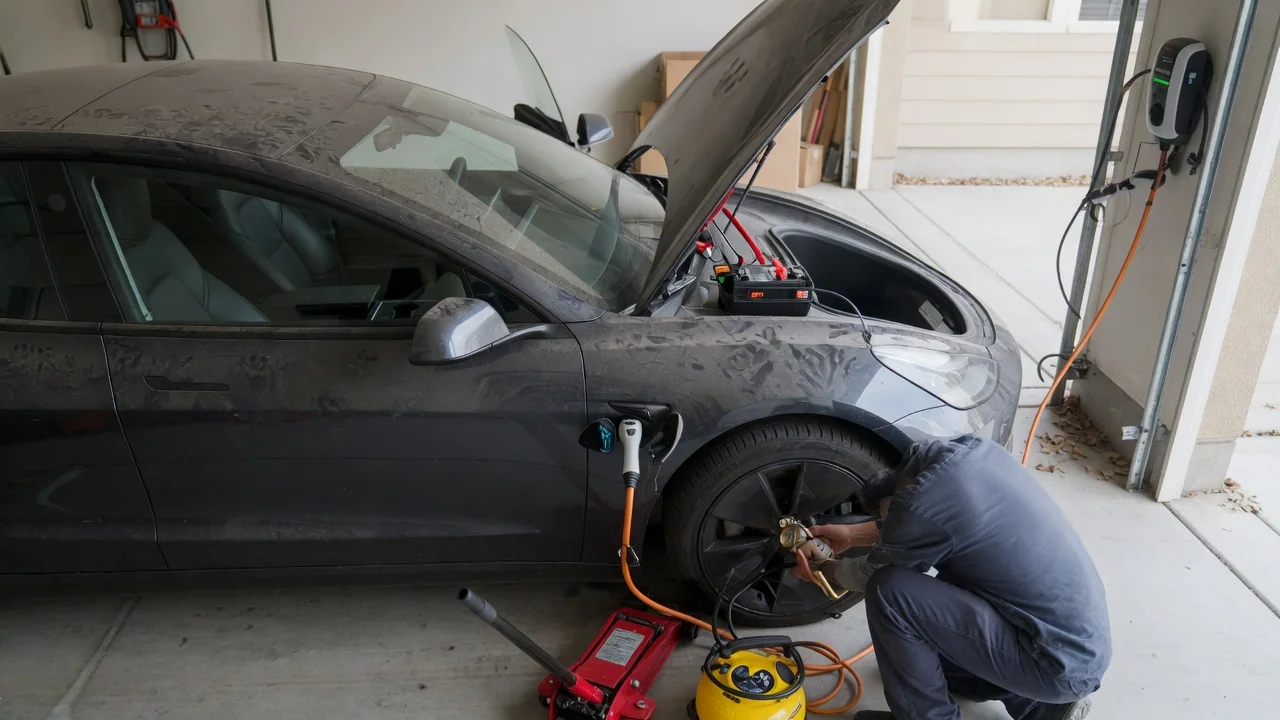
Bringing an electric vehicle back after weeks or months in a garage is usually simpler than reviving a stored gasoline car, since there is no fuel to go stale and no engine oil to circulate. Still, a stored EV return to service deserves a methodical check. The battery, the tires, and the charging setup all change quietly while a car sits. This guide explains how to prepare a stored EV for return to driving, focusing on what to check and why.
Battery state: traction pack and 12-volt battery
Start with the state of charge shown on the instrument display or companion app. A high-voltage traction battery loses some charge during storage through natural self-discharge and through small loads from the vehicle's electronics, such as telematics, alarm systems, and periodic battery management checks. How much charge disappears depends on the vehicle, the storage temperature, and which connected features remained active, so compare the current reading with the level you left it at rather than expecting a fixed figure. A modest drop is normal. A reading that has fallen sharply, or a pack that appears nearly empty, is worth noting before you plan any driving.
The 12-volt auxiliary battery deserves equal attention. Most EVs still use a conventional low-voltage battery to power the computers, door locks, and the contactors that connect the high-voltage pack. If that small battery is depleted, the car may refuse to wake up or switch into ready mode even when the traction battery holds plenty of charge. Whether the vehicle tops up the 12-volt battery from the main pack while parked varies by design, so a car that sat untouched can still arrive with a weak auxiliary battery. If the car does not respond normally, consult the owner's manual for the approved jump-start or charging points, since locations and procedures differ between models.
Once the car powers up, look for warning lights or battery-related messages. Many systems run self-checks on wake-up, and a message about the battery, the charging system, or the 12-volt supply should be resolved before driving rather than dismissed.
Tires: pressure, condition, and flat spots
Tires lose air gradually even when nothing is wrong, and a car that sat for a season can show noticeably lower pressures. Temperature also matters: air pressure drops as the surroundings cool, so a car stored in an unheated garage over winter may read low partly for that reason. Check each tire cold, before driving, and set it to the pressure listed on the placard in the driver's door jamb or in the owner's manual, not the maximum figure molded into the sidewall. EVs tend to be heavier than comparable combustion cars because of their battery packs, and correct inflation helps tires carry that load, wear evenly, and keep rolling resistance in check, which also affects range.
Next, inspect the tires visually. Look for cracking in the sidewalls or between tread blocks, bulges, embedded objects, and uneven wear. Rubber ages with time as well as use, so a tire with plenty of tread can still be unfit if it shows weathering. A tire that lost far more pressure than the others may have a slow leak and should be checked before a long trip.
Sitting in one position can also leave temporary flat spots where the tire rested against the floor. These often fade as the tires warm up over the first few miles of driving. If a vibration persists after the tires have warmed up, have the tires and wheel balance inspected rather than assuming it will resolve on its own.
Charging: equipment check and first charge
Before plugging in, examine the charging port, cable, and connector. Look for dust, insects, moisture, corrosion, or damage to the cable insulation. Garages used for storage can attract rodents, which may chew on cables, so inspect the full length of a home charging cable and any portable charging unit. If you see exposed conductors, cracked housings, or burn marks, do not use the equipment until it has been repaired or replaced. Also confirm that the circuit feeding a wall-mounted unit has not been switched off or tripped during storage.
For the first charge, plugging into your usual home charger is a practical choice because it lets you watch the car accept charge in a familiar setting. Charge to your normal everyday level unless you need full range right away. If the battery is cold, charging can be slower at first while the battery management system limits current or warms the pack; this is expected behavior, not a fault. Some vehicles also use charging sessions to balance individual cells, and the owner's manual may describe whether occasional higher charge levels are recommended for that purpose.
While the car is connected, review settings that may have changed or been forgotten: charge limits, scheduled charging times, and departure or preconditioning schedules. A vehicle that was offline for a long time may also have pending software updates once it reconnects. Install them according to the manufacturer's instructions at a time when the car will not be needed.
Practical implications and limits
In practice, the order of these checks matters. Confirming that the car powers up and the 12-volt system is healthy comes first, since nothing else works without it. Tire pressures should be corrected before the car moves, and charging comes next so the first drive starts with a known, adequate state of charge. Allowing time for a full charging session before you actually need the car avoids discovering a problem on the morning of a trip. Keep the first drive short and local, at moderate speeds, so you can notice unusual noises, vibrations, or warning messages close to home.
Expect the range estimate to look unusual at first. Many vehicles calculate predicted range partly from recent driving and energy use, and after a long pause that history may be stale or reset, while cold temperatures also reduce available range. The estimate typically settles after several normal drives, and a single low reading is not proof of battery degradation.
There are also limits to what an owner can verify. A dashboard state-of-charge reading and a successful charge show that the system is working, but they do not reveal detailed cell health or the condition of high-voltage components, which are not owner-serviceable. Storage recommendations and recovery procedures differ between manufacturers, so the owner's manual remains the authority for your specific vehicle. If the car will not charge, displays persistent high-voltage warnings, or a tire repeatedly loses pressure, the next step is a qualified service visit rather than further home troubleshooting.