How to Prepare a Car for a Ferry Crossing
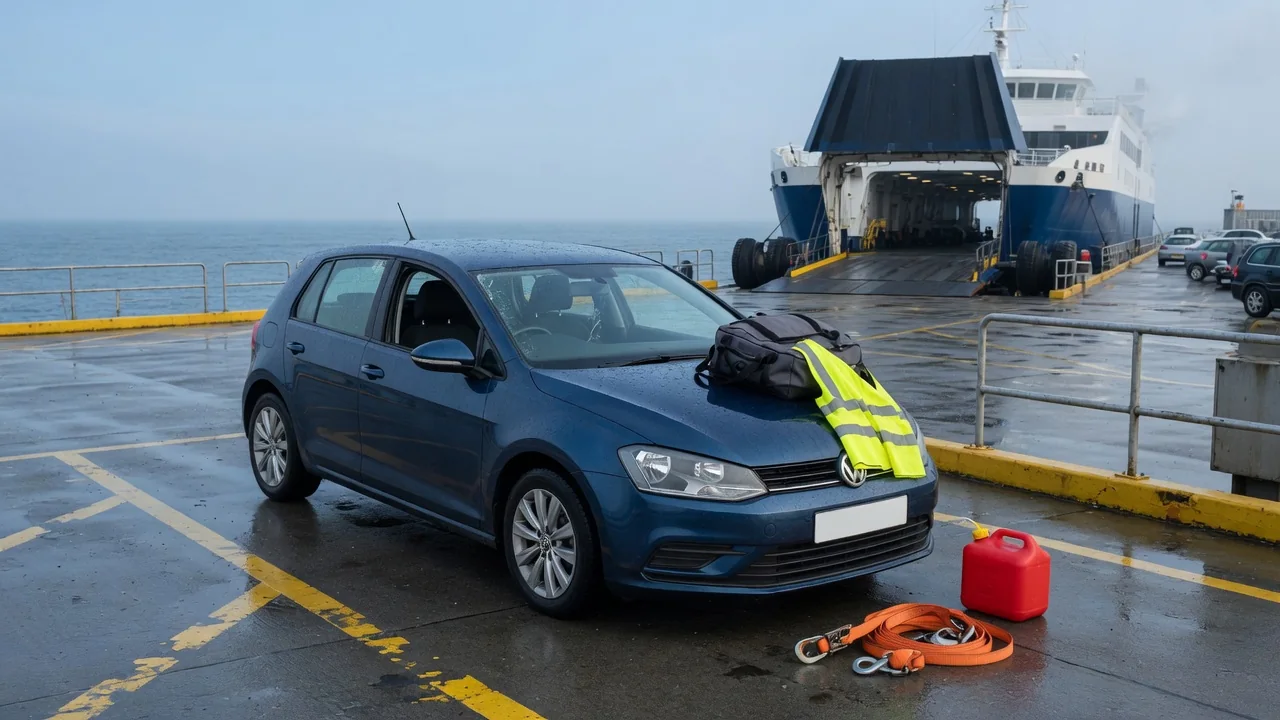
A ferry crossing adds a short, tightly managed stage to a road trip, and a little preparation keeps it smooth for you and for the deck crew. Car ferry trip preparation comes down to three things: arriving ready to board, organizing what you carry so you are not stuck without essentials, and putting the car into a safe, quiet state for the voyage. The guidance below applies broadly, but each operator sets its own rules.
Arrival instructions
Start with your booking confirmation, because it usually states the check-in window, the documents required and any vehicle declarations. Check-in deadlines are typically set well before departure, and arriving after the cutoff can mean losing your place on the sailing. Keep the booking reference, identification for every passenger and, for international routes, any travel documents within reach rather than packed in the trunk. Declare the vehicle accurately when booking: overall length and height change once a roof box, bike rack or trailer is added, and ferries often assign lanes and deck positions by size. Vehicles running on LPG or carrying fuel containers may face restrictions, so confirm the operator's rules in advance instead of at the gate.
At the terminal, follow the signs to vehicle check-in and then the directions of the lane marshals. Once in a lane, stay with the car, because boarding can begin with little notice. When you are waved forward, drive onto the ramp slowly and steadily; ramps and deck transitions can be steep, wet or uneven, and vehicles with low front spoilers or long overhangs may need extra care at the change in angle. Inside, the crew will guide you into a tight space, often close to the vehicles in front and beside you. Follow their hand signals rather than your parking sensors, which may sound constantly in such close quarters, and stop exactly where you are directed.
Secure belongings
On most ferries, passengers cannot stay on the vehicle deck during the crossing, and access back to the car is usually restricted until arrival. Before boarding, pack a small bag with everything you might need for the voyage and the time just after it: wallet, phone and charger, medications, snacks, water, warm layers, children's items and anything for motion sickness. Put that bag on a seat rather than in the trunk, so you can grab it quickly once parked; doors may only open partway beside neighboring cars. Note the stairway or deck reference where you parked, as vehicle decks can look very similar and you will need to find the car quickly at disembarkation.
Inside the car, assume the ship will move. Loose bottles, bags, umbrellas and tools on seats or in footwells can shift in rough water, so store them in closed compartments, under cargo covers or in the trunk. Check that roof box lids are latched and that bikes on a carrier are strapped tight, since vibration and wind on open decks can work fasteners loose. Keep valuables out of sight and take the most important ones with you, as a vehicle deck is not a supervised storage space. Pets are handled under operator policies that vary widely, from staying in the vehicle to dedicated kennels or pet-friendly cabins, so this needs to be settled at booking rather than on the day.
Vehicle settings
Once parked, shut the engine off promptly; exhaust fumes build up in enclosed decks, and crews generally ask drivers not to idle. Secure the car against movement: apply the parking brake firmly, and either select Park on an automatic or leave a manual in gear, following the owner's manual guidance for parking on a slope. Cars with an electronic parking brake often apply it automatically when switched off, but it is worth confirming the indicator. Close all windows and the sunroof, switch off headlights and interior lights, and unplug accessories so nothing drains the battery during the crossing. Folding the mirrors helps in narrow lanes and protects them from people walking past.
Alarm systems deserve particular attention. Many alarms include interior motion or tilt sensors, and the ship's movement can trigger them repeatedly while you are away. Operators commonly ask drivers to disable these sensors, and many vehicles provide a way to lock the doors while switching off interior monitoring or tilt detection. The method differs between manufacturers, so look it up in the owner's manual before the trip rather than searching for it on deck. Vehicles with adjustable air suspension, towing equipment or special transport modes may also have relevant settings described in the manual. Electric and plug-in hybrid vehicles can be subject to operator-specific rules about charge levels and onboard charging, so confirm these when you book.
Practical implications and limits
Preparation for a ferry is only partly in the driver's hands. Each operator sets its own check-in times, fuel and dimension rules, pet arrangements and deck-access policies, and these can differ between routes, ships and seasons. Weather can also delay sailings or change boarding procedures. Treat the booking confirmation and terminal staff as the final authority, and build slack into your itinerary so that a missed or rescheduled sailing does not unravel the rest of the road trip. Rental cars add another layer, because the rental agreement may restrict ferry travel or require notice, and the vehicle's alarm and parking-brake behavior may be unfamiliar.
Vehicle-specific behavior is the other limit. Advice to leave a car in gear, disable an alarm sensor or switch off an automatic feature reflects general mechanisms, but how a particular car implements them is defined in its owner's manual. A few minutes with the manual before departure is the most reliable way to avoid surprises. At the end of the crossing, return to the car only when announced, buckle up and wait for the crew's signal before starting the engine; restoring alarm or suspension settings can wait until you are clear of the terminal and parked safely.