How to Plan Stops When Traveling With a Dog by Car
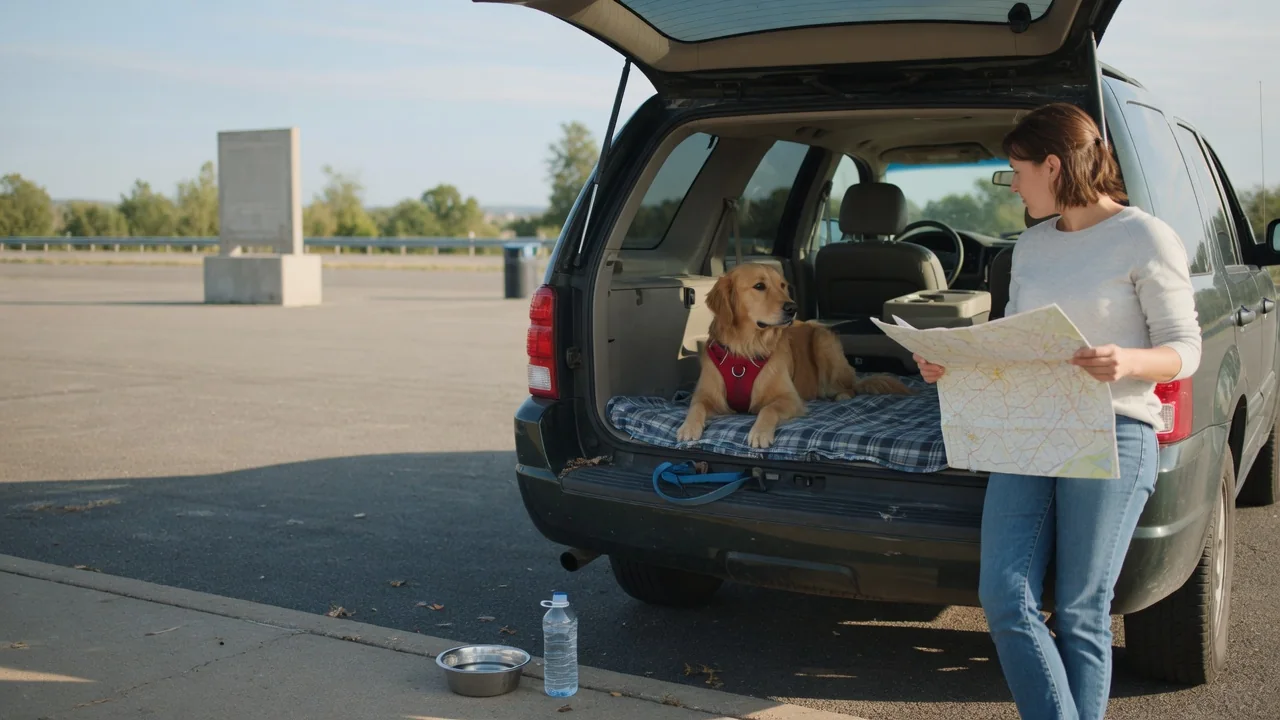
Knowing how to plan stops when traveling with a dog by car turns a long drive into a manageable routine for everyone in the cabin. Good planning covers where you pull over, how the dog rides between breaks, and how you keep the interior livable. The ideas below focus on practical preparation rather than veterinary advice.
Water and rest access
Water is easiest to manage when it travels within reach of the person handling the dog, not buried under luggage in the cargo area. A sealed jug and a collapsible bowl stored in a door pocket or seat-back organizer let you offer a drink within a minute of parking. Offering water outside the vehicle, on level ground, keeps spills off carpet and away from seat-track wiring and under-seat vents. Many owners find a break every couple of hours a workable starting rhythm, adjusted to how their own dog behaves.
Where you stop matters as much as how often. Highway rest areas often have grass strips set back from the travel lanes, while fuel stations may offer only pavement beside moving traffic. Looking at the route in advance and marking rest areas, parks, or quiet side streets gives you options before the dog becomes restless. Pavement and dark surfaces can get hot in direct sun, so shaded parking and a shaded walking area make the break more comfortable. Attach the leash before any door or liftgate opens.
Secure travel space
A dog that rides in a defined, restrained space makes every stop faster and safer. Common approaches include a crate strapped down in the cargo area, a harness that connects to the seat belt system, or a barrier behind the rear seats of a wagon or SUV. Each keeps the dog from moving into the driver's footwell or bolting when a door opens. The front passenger seat is generally a poor choice because of the airbag, and the owner's manual explains how that system behaves in your particular vehicle.
Vehicle layout shapes what works. Cargo tie-down points differ in location and strength, some rear seats fold flat while others leave a step, and sedans offer no open cargo floor at all. Check that a crate sits level, does not block the rear vents, and cannot slide under braking. Rear climate airflow varies widely, and some cargo areas receive little direct air, so feel for it with your hand while the system runs. Sunshades on the rear side glass help keep that space cooler between stops.
Clean up plan
Cleaning supplies deserve a fixed home in the car so they are reachable at a roadside stop. A small bin holding waste bags, paper towels, a spare towel, and an interior-safe cleaner fits in most cargo side pockets or under-floor compartments. Waste bags should go into a trash can at the stop instead of riding in the cabin, where odor builds quickly in a closed vehicle. A second leash and an old towel for wet or muddy paws save the upholstery after a rainy break.
Protecting surfaces before departure reduces the work later. A washable seat cover or a rubber cargo liner catches hair, drool, and dirt, and both come out for shaking off at a stop. Cloth seats hold moisture and odor longer than leather or vinyl, while perforated or ventilated seats can trap debris in the holes, so cover choice depends on your trim. Wipe door panels and window switches where noses and paws land, and check the cargo sill and bumper top, which scratch easily as a dog jumps in.
Everyday Use and Observations
The dog's behavior is the most useful guide to whether your schedule is working. Panting, whining, pacing, or repeated shifting in the crate often signals that a stop is overdue, while a dog that settles and sleeps is usually coping with the interval. Note how long your dog rode comfortably on the first leg and use that as the baseline for the rest of the trip. Anything that looks like real distress is a question for a veterinarian, not something to solve with route planning.
The car offers its own clues. Fogged rear glass suggests humidity is building and more fresh air is needed, and a cabin that feels warm in the back despite a cool dashboard reading points to weak rear airflow. Pairing dog breaks with fuel stops or charging sessions keeps the day efficient, though a charging stall beside a busy lot may not be a pleasant place to walk. Short trial drives before the trip reveal rattling crates, loose covers, and whether the dog tolerates the chosen spot.
Limits and Next Steps
Planning has limits that no checklist removes. A parked car heats up rapidly, even on a mild day with windows cracked, so the dog should not be left alone inside during a meal or errand. Some vehicles offer a climate-hold or pet mode, but its behavior, time limits, and battery conditions vary by manufacturer and should be confirmed in the owner's manual before you depend on it. Traffic delays and closed rest areas also happen, so carry more water than the schedule suggests.
Before a long trip, a few follow-up steps pay off. Confirm how your tie-down points, seat belts, and rear seat latches are meant to be used, and follow the instructions supplied with any crate or harness. Verify that the air conditioning cools well at idle, since a weak system is harder on a rear passenger with fur. Questions about motion sickness, anxiety, feeding times, or how long a particular dog can ride belong with a veterinarian. With those answers in hand, build the route around stops you have already chosen.