How to Plan Rest Stops With Children in the Car
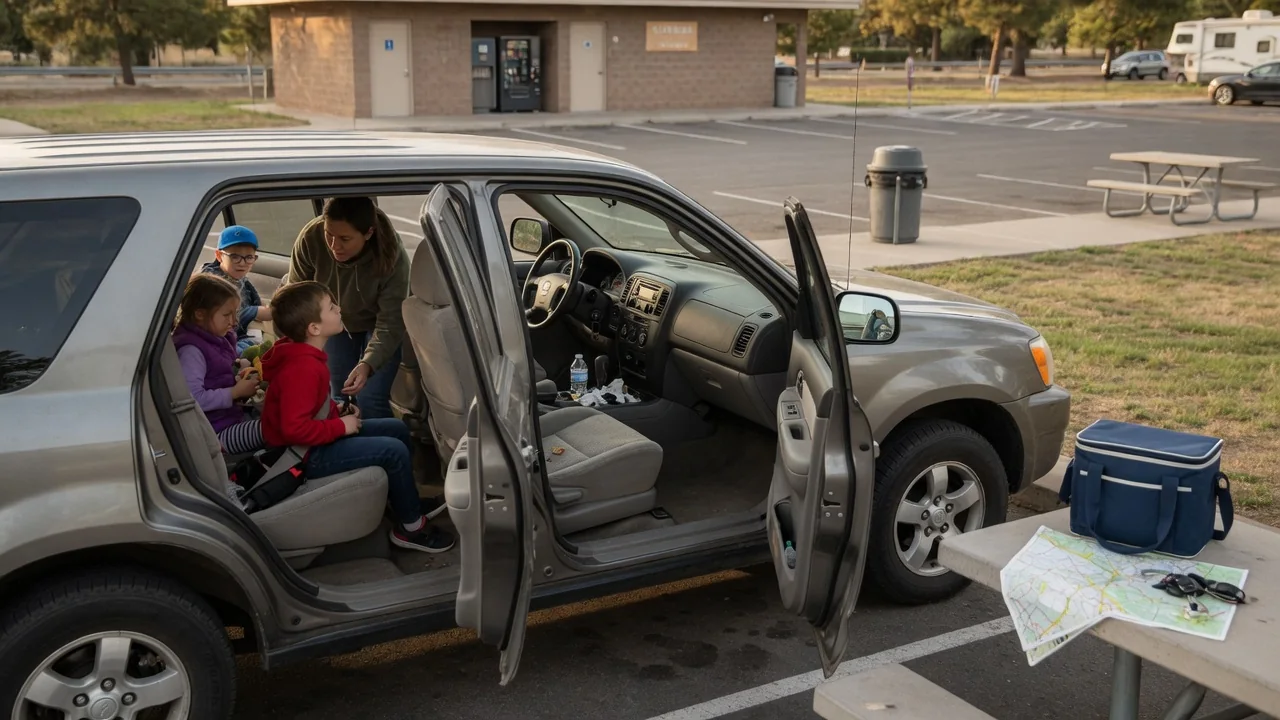
Learning how to plan rest stops with children in the car starts with accepting that the trip runs on the youngest passenger's clock, not the navigation estimate. A workable plan combines sensible break timing, supplies within reach, a route with options, and attention to what the cabin and the vehicle are telling you along the way.
Break timing
Most families find that children tolerate shorter driving stretches than adults, so it helps to build the schedule around their limits rather than the fuel range. A full tank may carry the car for many hours, yet a toddler in a harness seat may be restless long before the gauge moves much. Planning stops at regular, modest intervals, and pairing them with refueling or charging where possible, keeps the day predictable and avoids the pressure of an unplanned exit when patience has already run out.
Timing also depends on the vehicle. An electric car on a long highway leg may need charging sessions that naturally create a break long enough for a meal and a walk, while a fuel stop takes only a few minutes and may need to be stretched on purpose. Departure time matters too: leaving near a usual nap can buy a quiet first leg, whereas setting off right after a large meal may bring an early request to pull over. Add those minutes to the arrival estimate before leaving.
Accessible supplies
Supplies only help if someone can reach them without unbuckling. Items needed while moving, such as water bottles, simple snacks, wipes, tissues, and a spare layer, belong in door pockets, seatback organizers, or a small bag on the floor behind the front seats. Items needed only at a stop, including a change of clothes, a picnic blanket, or a ball, can ride in the cargo area, ideally packed last so they come out first without unloading luggage in a busy parking lot.
Cabin layouts vary widely, so check what your vehicle offers before packing. Some models have rear cupholders, seatback pockets, rear climate vents, and charging ports within reach of the second row, while others leave rear passengers dependent on the front seat for everything. Three-row vehicles may have limited storage near the rearmost seats. Keep loose, heavy objects out of the cabin, because anything unsecured can move during hard braking. A trash bag and a spill-resistant container make the next stop quicker to tidy.
Flexible routing
A route with choices is more useful than a route with a single perfect stop. Before leaving, look along the planned road for several candidate places in each stretch, such as highway rest areas, service plazas, town parks just off an exit, or large stores with restrooms. If a child falls asleep as the first option approaches, you can continue to the next one. If a need arises early, you already know what lies a short distance ahead instead of searching while driving.
Flexibility also means reading the road itself. Long rural sections may have wide gaps between services, so a stop taken slightly early is wiser than gambling on the next one. Congestion, construction, and weather can turn a short leg into a long one, and a navigation system's live traffic view can help a passenger suggest an alternative. Consider the stop's quality as well: a place with open grass, shade, and room to walk away from traffic does more for a restless child than a crowded fuel forecourt.
Everyday Use and Observations
On the road, small signs usually arrive before a full protest. Fidgeting, repeated questions about arrival, dropped toys, kicked seatbacks, or a sudden quiet spell can all suggest that a break is due sooner than scheduled. Cabin conditions deserve the same attention. Sun through a side window can make one seat far warmer than the driver's position, and rear vents, where fitted, may be set differently from the front. Window shades and an adjusted temperature often settle things before a stop becomes urgent.
Stops are also a convenient moment to look over the car. A quick walk around lets you glance at the tires, check that nothing has shifted in the cargo area, and confirm that harness straps and seat belts still sit flat and snug after children climb back in. Park away from moving traffic where possible, and have children exit on the curb side. Many vehicles have rear door child locks and window lockouts, and their controls differ by model, so the owner's manual is the reference.
Limits and Next Steps
No plan removes every difficulty, and a schedule that works for one family or one trip may not suit another. Ages, temperaments, the number of passengers, and the vehicle's range and seating all change the picture. This kind of planning covers logistics and comfort only. Questions about motion sickness, health conditions, feeding, or how long an infant should remain in a seat belong with a pediatrician or other qualified professional, and car seat fitting questions belong with the seat's instructions and a certified technician.
A practical next step is a short trial drive before a long journey. An hour or two on a local highway shows which supplies were actually used, which were out of reach, and how long the children stayed comfortable. Afterward, adjust the packing and the interval between breaks, and note which kinds of stops worked best. Confirm the vehicle is ready as well, with tire pressures, fluids, and fuel or charge checked beforehand, so the stops you make are the ones you chose.