How to Plan Fuel Stops on a Long Drive
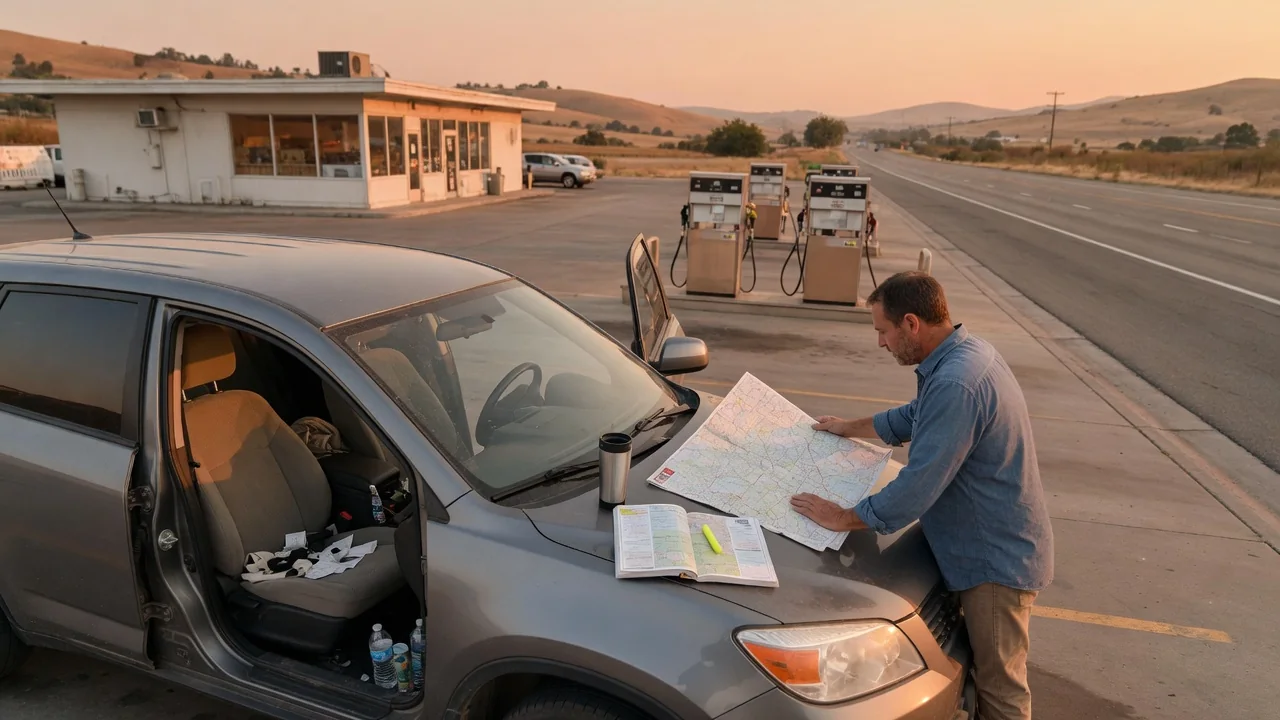
Knowing how to plan fuel stops on a long drive is less about memorizing a distance and more about treating the range estimate as a moving input. The figure on the dashboard reflects recent driving, not the road ahead. A good plan combines that estimate with route knowledge, a sensible reserve, and a willingness to adjust as conditions change along the way.
Estimate usable range
The range display, often labeled distance to empty, is a calculation rather than a measurement. The vehicle combines the fuel level sensor reading with recent average consumption and projects how far the remaining fuel might carry it. Because that average comes from recent driving, a tank filled after a week of city errands may show a lower projection than the same tank after steady highway travel. Treat the number as a starting point that describes the past, then judge how the coming road differs.
Usable range is smaller than the total the display suggests. Loads, roof boxes, trailers, headwinds, long grades, cold weather, and higher cruising speeds all raise consumption, and the estimate only catches up after the engine has already burned the extra fuel. Gauges also behave differently between vehicles; some drop slowly through the top half and faster near the bottom because of tank shape and sender design. Comparing the trip computer's average with your own fill-up records over a few tanks shows how optimistic or cautious your particular vehicle tends to be.
Leave margin
A margin protects against the things a range estimate cannot foresee: a closed station, a detour, a traffic jam that keeps the engine idling, or pumps that are out of service. Rather than planning to arrive at each stop with the low fuel warning lit, plan to refuel while a comfortable portion of the tank remains. Many drivers use a simple gauge-based rule, such as looking for fuel once the needle reaches a chosen mark, because it works regardless of the distance figure displayed.
The size of that margin should grow with uncertainty. On a busy interstate corridor with frequent exits, a smaller reserve carries little risk. Across rural stretches, mountain passes, or desert highways where stations are widely spaced and may close overnight, a larger reserve is prudent. Running a tank very low also has mechanical downsides in many vehicles, since the in-tank fuel pump relies on surrounding fuel for cooling, and diesel systems can be troublesome to restart after running dry. The owner's manual describes how your model's low fuel warning behaves.
Reassess along route
A plan made at home is a draft. Each time you pass a likely stop, compare the remaining range estimate against the distance to the next dependable station, not just the destination. If the projected range has been falling faster than the distance covered, consumption is higher than the computer assumed, and the planned stop should move earlier. Watching the instantaneous or average consumption readout over a long climb or into a strong headwind makes this drift visible before it becomes a problem.
Navigation systems and phone map apps can show stations ahead, but listings are not guarantees of open pumps or of the fuel grade you need. Vehicles that require diesel, premium gasoline, or a specific ethanol blend have fewer options, so confirm availability before committing to a distant stop. Combining fuel with rest breaks is a practical way to reassess: a pause for food or a driver change is a natural moment to check the gauge, review the next leg, and top off if the road ahead looks sparse.
Everyday Use and Observations
Ordinary driving is the best place to learn how your vehicle's estimate behaves. Notice how much the projected range changes between a commute in stop-and-go traffic and a steady highway run, and how quickly it recovers or drops after a fill-up. Resetting a trip meter at each fill and noting how far you travel before the warning light appears builds a personal reference. Those observations matter more than published economy ratings, which are produced under standardized test conditions that rarely match a loaded vehicle on a road trip.
Vehicle type changes what you observe. Hybrids may show strong economy in town and less advantage at sustained highway speeds, while a turbocharged engine can consume noticeably more when pulling weight or climbing. Pickup trucks towing a trailer often see range shrink substantially compared with unladen driving, and the display may take a while to reflect it. Air conditioning, tire pressure, and winter fuel blends also nudge consumption. Knowing these tendencies before departure lets you interpret the dashboard figure with appropriate skepticism instead of taking it at face value.
Limits and Next Steps
No planning method removes uncertainty. The range estimate cannot predict weather, traffic, or road closures, and the gauge itself has tolerances; the amount of fuel left when the display reads zero differs between manufacturers and should not be counted on. A sudden change in consumption without an obvious cause, a gauge that behaves erratically, or a fuel smell deserves attention from a qualified technician rather than a recalculated schedule, because the planning assumes the vehicle is operating normally.
Before a long trip, a few preparations make the plan sturdier. Check tire pressures against the placard, remove unneeded roof cargo, and start with a full tank so the first leg is unhurried. Sketch likely stops with at least one alternative for each sparse segment, and note which stations suit your fuel type. Then hold the plan loosely: the goal is not to hit predetermined stops but to always know that the next reliable fuel is comfortably within the range your vehicle is realistically showing.