How to Plan Charging Stops When the Weather Changes
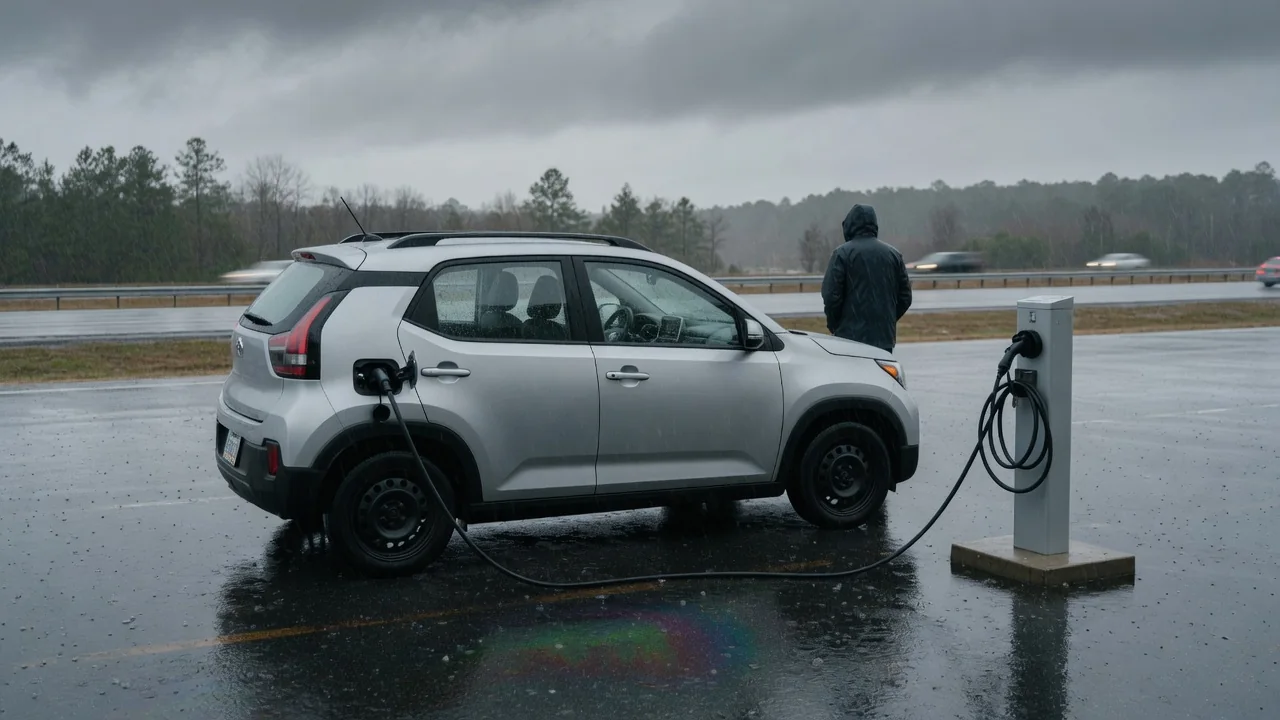
Knowing how to plan charging stops when the weather changes keeps an electric road trip predictable. Cold, heat, wind and rain all alter how much energy the car uses per mile, so a route that worked last month may need different stops today. The approach is simple: estimate the extra consumption, hold a reserve margin, and keep alternative chargers in mind before you need them.
Estimate energy impact
Weather changes range through several separate mechanisms. Cold air is denser, which raises aerodynamic drag at highway speed, and a cold battery pack accepts and delivers energy less efficiently until it warms. Cabin heating draws from the same pack that moves the car, and vehicles with a resistance heater typically use more energy for this than those with a heat pump. Hot weather adds air conditioning and battery cooling loads, though usually with a smaller penalty than deep cold.
Wind and precipitation matter as much as temperature. A steady headwind acts like driving faster, while standing water or slush on the road increases rolling resistance. Rather than trusting the rated range, compare the consumption figure on your trip display with what you normally see on the same kind of road. If the car is using noticeably more energy per mile in the first twenty minutes, shorten the planned leg accordingly. The size of the penalty varies with the vehicle, tire choice and speed.
Choose backups
A backup is only useful if you can reach it with the energy you have, so choose alternatives before departure rather than at a low state of charge. For each planned stop, identify one charger earlier on the route and one beyond it. The earlier site is your fallback if consumption runs high; the later one lets you skip ahead if conditions turn out milder than forecast. On rural stretches with wide gaps between stations, this may mean leaving the previous stop with more charge than usual.
Look at what each alternative actually offers. A site with several fast-charging stalls is a safer bet than a single unit that may be occupied or out of service, and the connector type must match your vehicle or an adapter you carry. In winter storms, consider whether the location is likely to be plowed and lit. A slower Level 2 charger at a hotel or restaurant can still serve as a last resort, provided you accept a longer wait. Charging network apps often show live stall status, which is worth checking en route.
Monitor arrival
The most useful number during the drive is the predicted state of charge at arrival, not the range remaining. Most electric vehicles display this estimate when a charger is set as the navigation destination, and it updates as actual consumption comes in. Watch its trend: an estimate that holds steady means the plan is working, while one that drops a few points every several miles signals that weather is costing more than the car anticipated. How quickly the estimate adapts differs between manufacturers.
Decide in advance what arrival figure you are comfortable with, and act when the prediction falls below it. Many drivers keep a larger buffer in cold or stormy conditions than in mild weather, because a closed road or a broken charger costs more when the cabin must stay heated. Slowing down modestly is the quickest correction, since drag rises sharply with speed. If the estimate keeps sliding despite that, divert to the earlier backup while it is still comfortably within reach.
Everyday Use and Observations
Ordinary commuting is the best place to learn how your own car responds to weather. Note the consumption on a familiar route on a mild day, then again on a freezing morning, a wet evening and a hot afternoon. Short trips often look worst in winter because the cabin and pack are warmed from cold each time and the energy is spread over few miles. Longer drives usually show a smaller percentage penalty once everything reaches operating temperature.
Charging behavior changes with temperature too. A cold battery typically charges more slowly at a fast charger, so a stop planned for a short break may run longer. Many vehicles can precondition the pack when a fast charger is entered as the destination, though the feature and how it is triggered depend on the model, so the owner's manual is the place to confirm. Preheating the cabin while still plugged in at home moves that energy use to the grid and preserves range for the road.
Limits and Next Steps
No estimate removes uncertainty. Forecasts miss, wind shifts direction along a route, and elevation changes consume energy that is only partly recovered on the descent. Regenerative braking may also be reduced when the pack is cold or nearly full, which some cars indicate on the power display. Route planners, whether built in or third-party, rely on assumptions about temperature, speed and payload that may not match your day. Treat their output as a starting point and let observed consumption overrule it.
After each trip in unfamiliar conditions, compare what the planner predicted with what you actually arrived with, and adjust your reserve margin for next time. A roof box, winter tires, a full load of passengers or a trailer each deserve their own allowance. If range seems to fall far more than weather alone would explain, or a warning appears on the dash, have the vehicle checked by a qualified technician rather than assuming the season is to blame. Battery age also affects usable capacity, and that varies from car to car.