How to Plan a Safe Place to Stop on a Long Drive
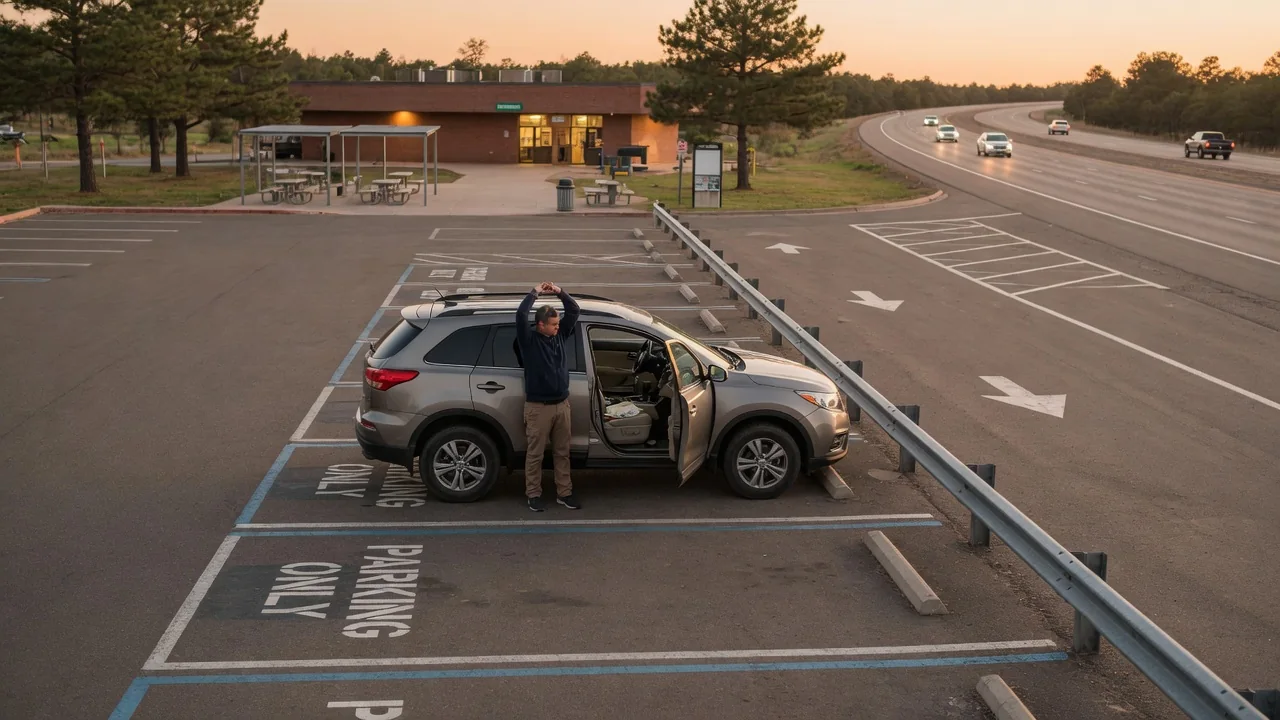
Knowing how to plan a safe place to stop on a long drive starts before the engine does. Fuel range, driver fatigue, weather and daylight all change over hundreds of miles, and the best stopping points are chosen while there is still time to choose. This guide explains how to pick stops, keep a reserve, share the route and adjust as conditions shift.
Identify stops
Start by tracing the route and marking places that offer more than a patch of pavement. Staffed rest areas, travel plazas and well-lit fuel stations near highway exits give you lighting, restrooms, other people and a clear path back onto the road. A highway shoulder is for emergencies, not planned breaks, because passing traffic leaves little room for error. Note which stops operate around the clock, since a station that closes in the evening looks very different at midnight than it did on the map.
Space your stops around both the vehicle and the driver. Many people find a break roughly every couple of hours keeps attention sharp, while fuel range depends on tank size, load, speed and terrain, so it varies widely between vehicles. Electric vehicle drivers should confirm that chargers along the route match their connector and are reported as working, and anyone towing a trailer needs lots with pull-through parking. Mark a primary stop and a backup in each stretch so a closed exit never forces a hurried decision.
Maintain margin
Margin means arriving at each stop with something left in reserve. Treat the last quarter of the tank as a buffer rather than usable range, because the distance-to-empty display is an estimate based on recent driving and can fall quickly with headwinds, steep grades, heavy cargo or cold temperatures. On rural stretches where stations sit far apart, refuel earlier than feels necessary. Electric vehicles deserve the same caution, since cabin heating, speed and elevation gain all reduce the range the dashboard predicted at departure.
Time and energy need a cushion as well. Build slack into the schedule so a construction delay or a slow meal does not tempt you to skip a rest break and press on tired. Heavy eyelids, drifting within the lane, missed exits and frequent yawning are signs to pull into the next safe location rather than the one you had planned. Daylight is another reserve worth protecting, so arranging the longest unfamiliar stretches before dusk leaves easier, better-lit miles for the evening hours.
Communicate plan
Share the plan with someone who is not in the car. Give them the route, the stops you expect to use and approximate arrival times, then agree on when you will check in. If you run late without a message, that person knows roughly where to start looking. Location sharing through a phone can help, but coverage fades in mountains and remote areas, so a spoken or written itinerary still matters. Update your contact whenever weather or traffic changes the route in a meaningful way.
Passengers belong in the conversation too. Agree before leaving that anyone may ask for a break, and that the driver will say so honestly when concentration slips. When two people share the driving, plan swaps at scheduled stops rather than at the roadside. A passenger can also watch the fuel gauge, read upcoming exit signs and check forecasts so the driver's eyes stay on the road. Keep a paper note of key stops in the glovebox in case a phone battery dies or the navigation loses its signal.
Everyday Use and Observations
On the road, the vehicle and its surroundings supply steady information. Watch how fast the fuel gauge or battery percentage falls compared with the miles covered, and notice the blue highway signs that show services at upcoming exits, including the distance to the next rest area. A low-fuel warning light means the reserve is already being used, though how much remains differs by vehicle and is described in the owner's manual. Tire pressure and temperature warnings are also reasons to stop sooner at a safe, level spot.
When you arrive, take a moment to judge the stop itself. Choose a space under lighting, near the building and within view of other travelers, and avoid parking beside large trucks that block sight lines. Lock the doors, keep valuables hidden and trust your instincts if a place feels wrong, since moving on to the next exit costs only a few minutes. A short walk around the car is useful as well, giving you a chance to glance at the tires, lights and any fluid beneath the vehicle.
Limits and Next Steps
No plan survives every mile unchanged. Storms, wildfire smoke, crashes and road closures can make a chosen stop unreachable or unwise, and rest areas sometimes close for maintenance without much notice. Rules on overnight parking also vary by state and by property, so a lot that welcomes a short nap may not permit sleeping until morning. A brief rest helps with drowsiness, yet it does not replace real sleep, and booking a room is the better answer when fatigue returns soon after a break.
Before the next trip, check the forecast along the whole route, confirm the hours of the stops you depend on and download offline maps for areas with weak coverage. Make sure the vehicle is ready by reviewing tire condition, fluid levels and the spare or inflator kit, following the guidance in the owner's manual for your model. Pack water, a phone charger, a flashlight and warm layers so an unplanned wait is manageable. Afterward, note which stops worked well so the next plan begins with experience.