How to Plan a Route With Limited Gas Stations
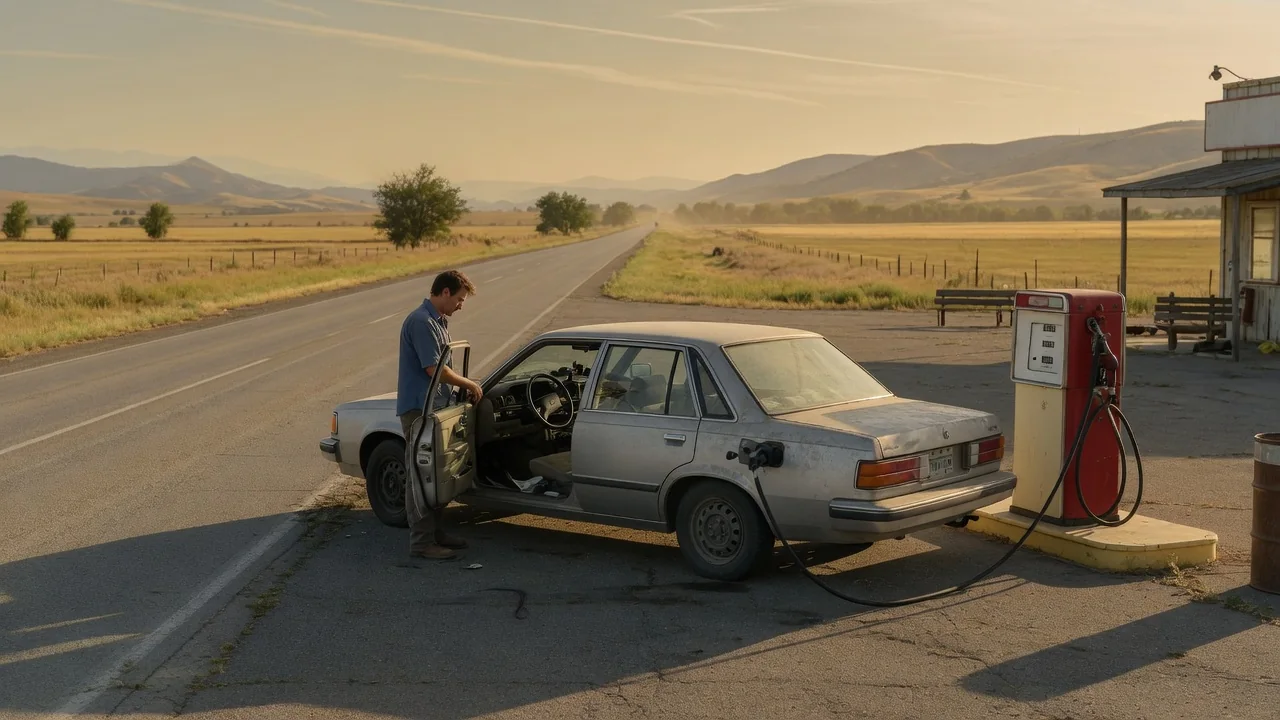
Learning how to plan a route with limited gas stations comes down to two habits: knowing how far your vehicle can realistically travel on the fuel it carries, and never depending on a single stop. With a sensible fuel margin and a backup station identified for each long stretch, remote highways become a matter of arithmetic rather than luck.
Know range
Start with the distance your vehicle actually covers on a tank, not the figure printed on a window sticker. The most reliable method is to fill up, reset the trip odometer, drive normally, then divide the miles traveled by the gallons added at the next fill. Repeating this over several tanks gives a working fuel economy number. Multiply it by the usable tank capacity listed in your owner's manual, and you have a baseline range that reflects your own driving rather than a laboratory test cycle.
That baseline shrinks under the conditions common on remote roads. Sustained high speeds, headwinds, long grades, roof cargo, a loaded bed, a trailer, and heavy air conditioning use all raise consumption, sometimes sharply. Towing in particular can cut range by a large fraction. A prudent planning range therefore sits well below the calculated maximum, with a reserve held back that you do not intend to use. Many drivers treat the last quarter of the tank as that reserve, though the right margin depends on the vehicle and the terrain.
Mark stations
With a planning range in hand, lay out the fuel stops along the route and measure the gaps between them. Any gap that approaches your planning range deserves attention, because that is where a closed station becomes a real problem. For each long stretch, identify a primary stop and a backup, ideally one before the gap and one that could be reached by a short detour. Knowing the distance to the alternative matters as much as knowing it exists, since a backup beyond your reserve is no backup at all.
A marker on a map does not guarantee working pumps. Small rural stations may keep limited hours, close seasonally, run out of a particular grade, or have card readers that fail when the attendant has gone home. Check hours ahead of time where possible, and confirm that the station sells what your vehicle requires, whether that is diesel, premium gasoline, or a specific ethanol blend. Vehicles that need diesel exhaust fluid add another item to verify. Saving the stops offline protects the plan when cell coverage disappears.
Reassess en route
A plan made at home is an estimate, and the drive itself supplies better data. At each stop, compare the miles covered against the fuel used and see whether consumption matches what you assumed. If a headwind or a climb has pushed fuel use higher than expected, the gap ahead is effectively longer than it looked on the map. Catching that at a station costs a few minutes of thought; discovering it halfway across an empty stretch leaves far fewer options and none of them comfortable.
The simplest rule in sparse country is to fill up whenever a station is available before a long gap, even if the tank is still more than half full. Passing a working pump to save time trades a certain refill for an uncertain one. If conditions worsen between stops, easing off the speed is the most effective way to stretch fuel, since aerodynamic drag climbs steeply as speed rises. Decide at the last reliable station whether to continue, because turning back becomes costlier with every mile.
Everyday Use and Observations
The instruments give useful information, but each has quirks. A distance-to-empty readout is calculated from recent consumption, so it can look generous after gentle driving and then fall quickly once the road turns uphill or the wind picks up. Fuel gauges are not always linear either; on many vehicles the needle lingers near full and then drops faster through the lower half. The amount of fuel remaining when the low fuel light comes on differs by model, so the owner's manual is the place to confirm it.
Ordinary driving before the trip is the best chance to learn these behaviors. Notice how many miles pass before the gauge leaves the full mark, how the range estimate reacts to highway speeds versus town driving, and how much fuel the tank accepts when the warning light has just appeared. Comparing that fill quantity with the listed tank capacity shows roughly what reserve the light represents on your vehicle. These observations turn vague impressions into numbers you can use when the next station is a long way off.
Limits and Next Steps
Even careful planning has limits. Stations close without notice, roads are rerouted, and weather can add hours of idling or slow travel that no estimate anticipated. Running the tank very low also carries mechanical risk on many vehicles, because the in-tank fuel pump relies on surrounding fuel for cooling, and diesel engines may need the fuel system primed after running dry. Treat the reserve as protection against the unexpected rather than as extra range to be spent on the planned route.
For stretches that truly exceed a comfortable range, extra fuel is an option, but only in containers approved for the purpose, secured upright outside the passenger compartment where possible, and filled according to the container's instructions. Beyond fuel, carry water, share your route and expected arrival time with someone, and know how you would summon help where phones do not work. If the numbers still do not add up after all of this, choosing a different route with better fuel availability is the sound decision.