How to Plan a Road Trip With Several Short Stops
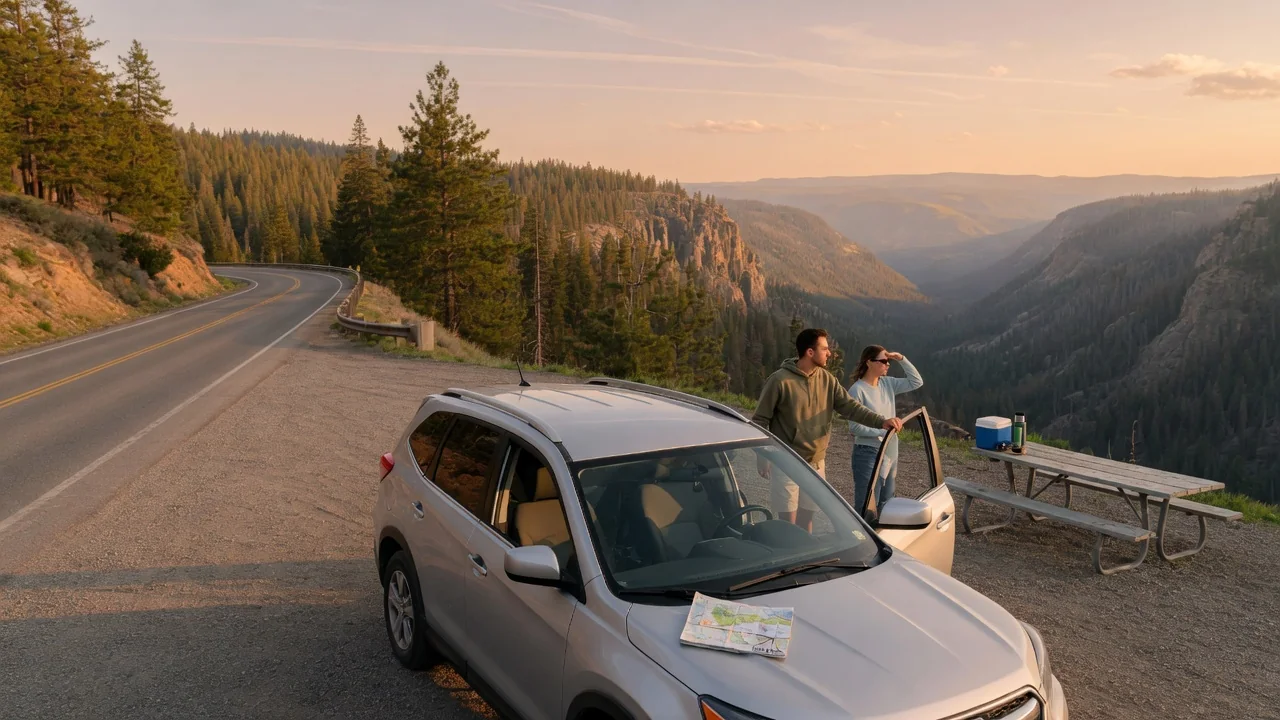
A road trip with several short stops looks simple on a map, but each stop adds parking, walking, waiting and merging back into traffic. Small delays compound, and a plan that works on paper can fall apart by midafternoon. Good multi stop car trip planning comes down to three decisions: the order of the stops, where you will add fuel or charge, and how much time margin you leave. This guide explains how to plan a road trip with several short stops around those three decisions.
Stop order
Begin with the stops that cannot move. A pickup at a set time, a business with limited opening hours, a reservation or an appointment works as an anchor, and everything else fits around it. Once the anchors are on the map, add the flexible stops in the gaps between them. Many navigation apps can reorder destinations for the shortest distance or drive time, which is useful, but they usually do not know when a shop closes or when someone is waiting for you. Treat an automatic reordering as a suggestion and check it against your fixed times before accepting it.
Next, look at geography. A common source of wasted time on a multi-stop trip is backtracking: driving past a place, continuing to the next stop, then returning. Group stops that sit along the same stretch of road and sequence them so you keep moving in one general direction. Pay attention to how each stop is reached. A stop just off a highway exit is quick; one that requires leaving a divided highway, working through town traffic and finding a way back on can take far longer than the map distance suggests. Stops in busy town centers are usually easier outside commuting hours, when traffic and parking pressure tend to be lower.
Finally, consider what each stop is for. Meal and restroom breaks fit best where the driver would naturally need a rest anyway. Pickups of perishable food, medication or anything sensitive to heat or cold are better placed late in the route so the items spend less time in a parked car. Stops whose length is hard to predict, such as visiting someone or browsing a market, work best right before a flexible part of the day rather than right before an anchor.
Fuel or charge
With a gasoline or diesel vehicle, refueling is usually quick and stations are common along major routes, but they can be sparse on rural roads and some are closed late at night. The simplest approach is to combine refueling with a stop you already planned instead of adding a separate one. Watch the range estimate on the dashboard, but remember that it is calculated from recent driving and changes with speed, terrain, load, wind and climate-control use. Before a long stretch with few services, refuel even if the gauge is not low, and keep a reserve you are comfortable with rather than planning to arrive near empty.
With an electric vehicle, charging time and charger location shape the plan much more. Look for chargers at or near the stops you already intend to make, so the battery fills while you eat, shop or rest. On many EVs, DC fast charging is quickest at a lower state of charge and slows as the battery fills, so two shorter sessions can sometimes take less total time than one long one. The exact charging behavior depends on the vehicle, the battery temperature and the charger, so the owner's manual and the vehicle's own route planner are the best guides. Some vehicles can precondition the battery for fast charging when a charger is set as the navigation destination. Chargers can also be occupied or out of service, so note a backup option near each planned charging stop.
Frequent short stops affect energy use in both cases. Idling with the air conditioning or heater running burns fuel in a combustion vehicle, and keeping the cabin conditioned while parked draws from an EV battery. Neither is usually large for a brief stop, but across a full day of stops it is worth including in your range expectations.
Time margin
A short stop is rarely as short as the activity itself. It includes slowing down and leaving the road, finding a parking space, walking to the door, the task, walking back, settling everyone into the car and merging back into traffic. When estimating each stop, add these pieces rather than counting only the minutes you expect to spend inside. Remember too that a navigation app's arrival time reflects driving only, unless you build stop durations into the plan yourself.
Delays add up with every stop, so the more stops you have, the more margin you need. Place buffer time before each anchor rather than leaving all of it for the end of the day; a margin that only appears after your last appointment cannot help you reach the earlier ones. It also helps to decide in advance which flexible stop you will drop if the day runs late, so the choice is made calmly rather than at the roadside.
Driver fatigue belongs in the time budget as well. Short errand stops can double as breaks, but a rushed stop is not always restful. If the route is long, schedule at least some real pauses, and aim to reach the final destination while you are still alert and, where it matters, before dark or before check-in closes.
Practical implications and limits
Any plan is an estimate. Traffic, weather, road work and closed businesses can change the day after you leave, so the goal is a plan that bends rather than one that must be followed exactly. Multi-stop features in navigation apps differ, and some limit how many stops a single route can hold, so a long list may need to be split into segments. In areas with weak mobile coverage, downloading offline maps before departure keeps the route available.
Vehicle-specific factors set real limits on general advice. Range, fuel economy and charging speed vary between models and change with load, towing, roof cargo, tire condition and temperature, so treat any rule of thumb as a starting point and rely on the owner's manual for details such as recommended fuel and tire pressure for a loaded vehicle. Frequent parking also raises a safety point that no schedule should override: never leave children or pets in a parked car, and keep heat-sensitive items out of a closed cabin in warm weather.
Before setting out, a short written outline is usually enough: the anchors with their times, the planned fuel or charging points with backups, and where the buffers sit. If the day falls behind, recover time by dropping or shortening a flexible stop rather than by driving faster, which saves little on a route broken up by frequent stops and adds risk.