How to Organize a Car Trunk for Everyday Use
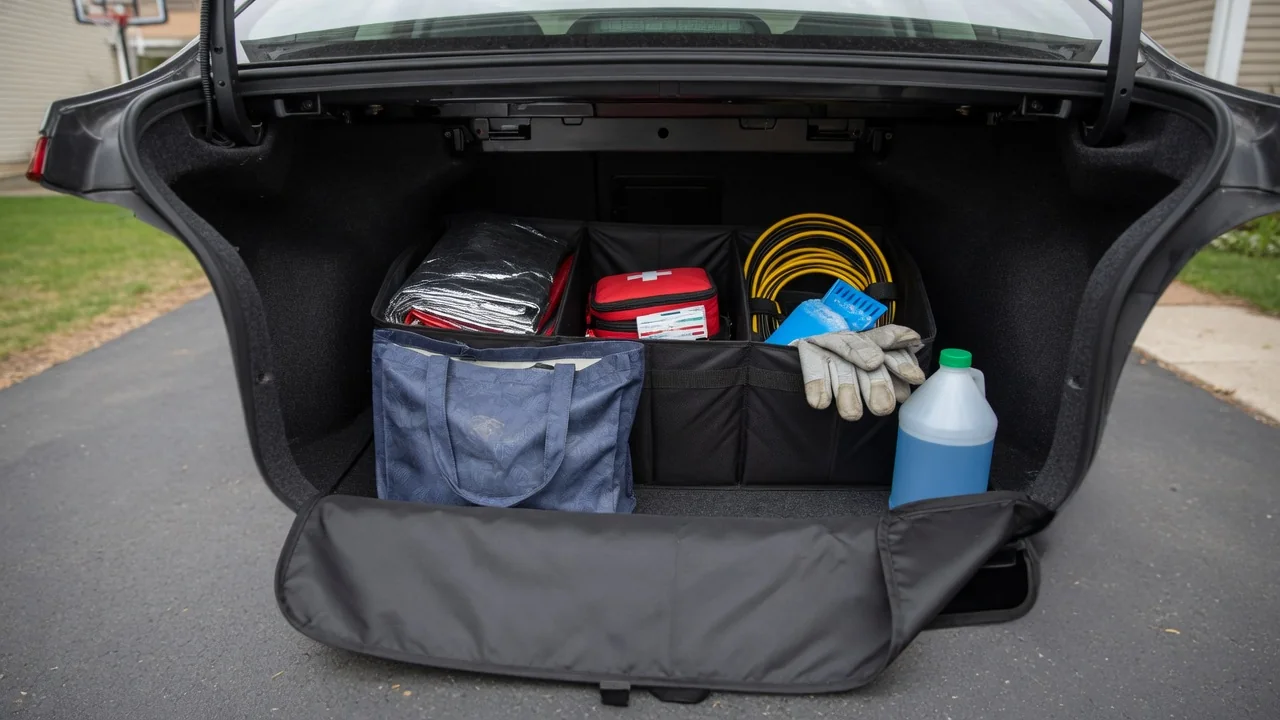
Learning how to organize a car trunk for everyday use is less about buying containers and more about deciding where things live. A trunk that carries groceries on Monday, sports gear on Wednesday and luggage on Saturday needs a layout that stays predictable while leaving open floor for whatever comes next. The approach below works in a sedan, hatchback or SUV without relying on exact measurements.
Sort by frequency
Start by emptying the trunk completely and grouping everything by how often you actually reach for it. Daily items, such as reusable shopping bags or a work bag, form one group. Weekly items, like a gym duffel or a folding stroller, form a second. Rarely used gear, including jumper cables, a tire inflator or a winter scraper in summer, forms a third. Anything that fits none of these groups probably belongs in the garage, since extra weight and clutter only make the space harder to use.
Placement then follows the sorting. Rarely used gear goes deepest, against the rear seatback or in side pockets and underfloor compartments if your vehicle has them. Weekly items sit in the middle, and daily items stay nearest the opening where you can grab them without leaning in. Trunk shapes differ considerably: a sedan has a deep, low cavity with a narrow opening, while a hatchback or SUV offers a taller, shallower cargo area. The frequency rule holds in each, but the reachable zone shifts, so test it by standing at the bumper.
Secure loose items
Loose objects are the main reason a tidy trunk falls apart within a week. Every turn, stop and acceleration slides unrestrained cargo across the floor, and a bottle of washer fluid or a stray tool can dent other items, leak or rattle loudly enough to be mistaken for a mechanical problem. In hatchbacks, wagons and SUVs, where the cargo area is open to the cabin, heavy unsecured objects can also travel forward in a hard stop, which makes restraint a safety matter rather than simple neatness.
Use what the vehicle already provides before adding accessories. Many trunks have tie-down rings, bag hooks, a cargo net or side recesses, though the number and position vary by model, and the owner's manual usually shows them. A collapsible organizer with a non-slip base, or a simple bin wedged against the seatback, keeps small things together. Place heavy items low and as far forward as practical, tight against a fixed surface, and stand liquids upright inside a tray or tub so a loose cap does not soak the carpet.
Keep essentials accessible
Some items earn a permanent, unobstructed position because you will need them at inconvenient moments. The spare tire or tire sealant kit, the jack and the wheel tools are often stored beneath the load floor, which means everything on top must come out before you can reach them. Keeping the cargo above that panel light, and contained in one or two bins that lift out quickly, turns a roadside tire change from a full unloading job into a minute of clearing space.
Other essentials should never be buried at all. A flashlight, gloves, a reflective triangle or vest, a first aid kit and jumper cables or a jump pack work best in a single pouch placed in a side pocket or near the opening, where you can find it in the dark by feel. Check where your vehicle's emergency trunk release, cargo light and any battery or fuse access panels are located, since some models place these in the trunk, and keep bins from blocking them.
Everyday Use and Observations
Once the layout is in place, a week of normal driving will tell you whether it works. Listen for thumps or rattles on turns and over bumps, which point to something that still has room to move. Notice which items you keep relocating to reach others, because that signals a group placed in the wrong zone. Watch the open floor space as well: if a normal grocery run no longer fits without stacking bags on top of gear, the permanent load has grown too large.
Seasonal change is the other thing to watch. Winter may justify an ice scraper, a small shovel and a blanket near the opening, while summer shifts the priority to beach gear, a sunshade or a cooler. Heat matters as well, since a closed trunk gets hot enough to spoil aerosols, medications, electronics and some food, so those should not live there permanently. A quick reset every few weeks, removing trash, returning strays to their bins and wiping the liner, keeps the system from drifting back toward clutter.
Limits and Next Steps
No layout overrides the limits of the vehicle itself. Every car has a maximum payload that covers passengers and cargo together, and the figure for yours is normally printed on the tire and loading placard in the driver's door opening and explained in the owner's manual. A trunk carrying heavy tools, bags of salt or cases of water full time eats into that allowance, can change how the car rides and brakes, and adds weight the engine or motor has to move on every trip.
Organizers have limits too. Fabric bins and elastic nets hold light items in place, but they are not rated restraints for heavy loads, and tall stacks in an open cargo area can block the rear view. Electric and hybrid vehicles may add a front trunk or lose underfloor space to components, so the zones need adjusting. From here, measure your own cargo area, note its anchor points and compartments, and choose containers that fit that space rather than a generic size, then revisit the arrangement as your routine changes.