How to Lubricate Car Door Hinges (and Best Grease to Use)
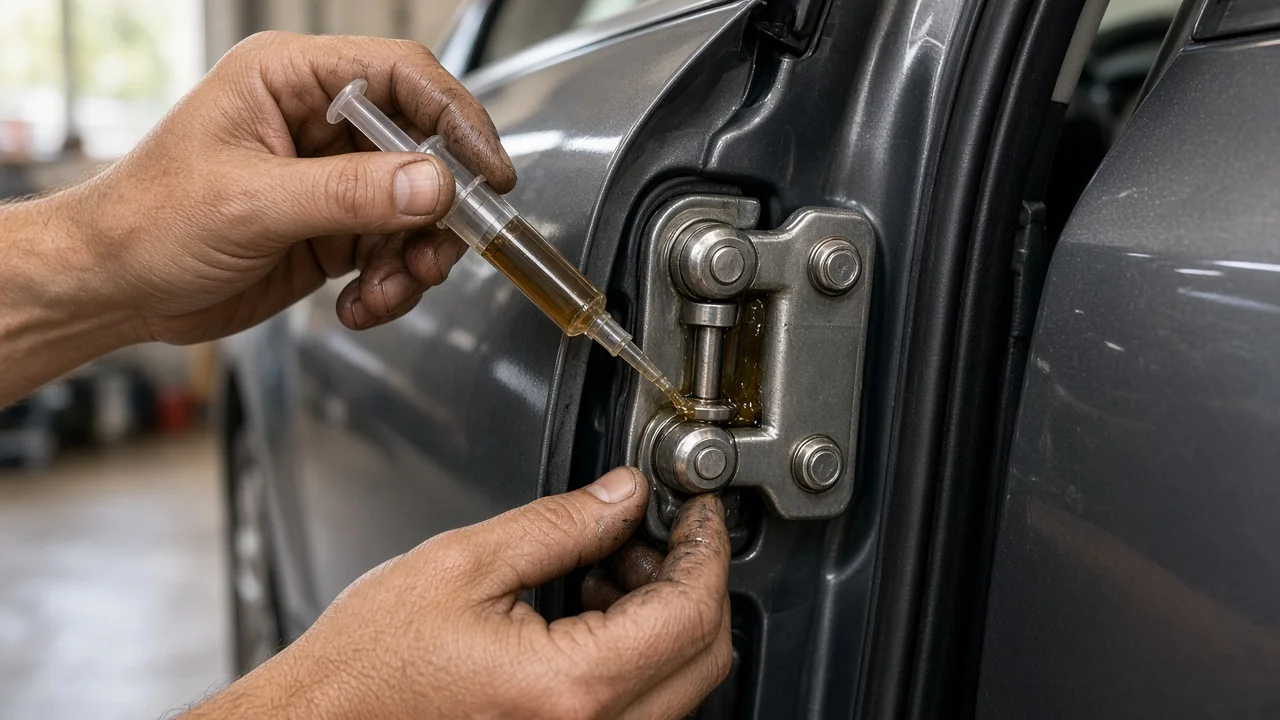
A squeaky or stiff car door usually means the hinge pins and door check have dried out or collected grit. The fix is simple: clean the joint, work in a lubricant that stays put, and wipe off the excess. Most mistakes happen when choosing the lubricant, or when a noise that has nothing to do with lubrication gets treated as one. This guide explains what the grease must do, how to match it to your vehicle, and how to apply it properly.
What the grease has to do on a door hinge
A car door hinge carries the full weight of the door on a steel pin, usually turning inside a bushing. It sits outside the cabin, where rain, road salt and car-wash detergents strip lubrication away. Next to the hinges is the door check, also called the check strap: the detented arm that holds the door open. It is a frequent source of creaks and pops and needs the same attention. The lubricant must cling to vertical surfaces, resist water washout, keep working in cold and heat, and stay inside a joint that pivots through a limited arc. It should also be clean enough to use near paint and interior trim.
Before buying anything, confirm what the problem is. A squeak or groan that follows the door's swing, or stiffness when opening, points to the hinge or the check. A door that drops when you lift the handle, has to be slammed, or rubs at the striker has an alignment or wear problem. A latch that clicks but won't unlock with the remote, or a buzzing inside the door, usually means the electrical lock actuator has failed, and grease will not repair it. Keep these three cases separate so you treat the right part.
Check compatibility with your vehicle
Hinge design varies by manufacturer and model year. Some doors use bolt-on hinges with replaceable pins and bushings, others use welded hinges, and some have coated pivots designed to need little service. The owner's manual or factory service information usually lists the body lubrication points, the service interval, and the lubricant specified for hinges, latches, the hood and the tailgate. Follow that guidance first. It accounts for bushing materials and coatings that a generic recommendation cannot know about.
Also check what sits near the joint. Hinges often share space with the rubber boot that carries the wiring harness for the locks, windows and mirrors, and the door's weather seal runs close by. Petroleum-based grease and penetrating oil can soften some rubber and plastic over time, so keep them off seals and harness boots. If the latch has a built-in actuator, look up whether your model's service procedure allows lubricating it and with which product. Don't flood it with spray.
Features that affect the choice
Lithium grease is the most common choice for car door hinges. White lithium grease in an aerosol with a straw goes on thin and flows into the pin. It then sets up into a paste that resists water and holds up under load. Grease from a tub or tube is better for exposed check straps and striker contact areas, where you can apply it with a brush or fingertip. Synthetic or PTFE-fortified multipurpose greases do the same job. The brand matters less than whether the product states water resistance and a temperature range suited to your climate.
Is silicone spray good for car door hinges? It quiets a squeak and is safe on rubber, which makes it ideal for weather seals. It is a thin lubricant, though, and tends to wash out of a loaded steel pin sooner than grease. Penetrating oil and general-purpose spray lubricants are useful for loosening dirt and rust before greasing, not as the final lubricant: they evaporate or drain away, and the noise comes back. Treat claims like 'lasts forever' or 'professional strength' as marketing. Useful evidence is the product's stated base, water resistance, temperature range and material compatibility notes.
Limitations, setup and ownership costs
To grease the door hinges on a car, open the door fully and protect the paint and interior with a rag or masking. Wipe old grease and grit from the hinge pins and door check. If they are crusty, spray a penetrating cleaner, swing the door several times, and wipe again. Apply lithium grease into the gap where the pin meets the hinge knuckle, at both the upper and lower hinges. Then coat the sliding surfaces of the check arm. Swing the door slowly through its full travel a number of times to spread the grease, then remove all visible excess. Exposed grease collects dust and stains clothing. Lightly lubricate the latch and striker only if your service information allows it.
Ongoing costs are low: a can of spray grease, some rags, and a few minutes per door at each service interval or after winter. Do it more often if the car sees heavy road salt or frequent washing. The limits are real, though. Grease cannot restore a worn pin or bushing. A door that sags or has visible up-and-down play needs a pin and bushing kit or a replacement hinge, followed by alignment. Hinge bolt adjustments and shims change door gaps and seal pressure, so follow your model's procedure or have a body shop do the work. Grease also won't fix a failed lock actuator, a broken check strap, or wind noise from a compressed weather seal.
Build a practical shortlist
Use a short checklist to compare lubricants for car door hinges. First, confirm what the owner's manual or service information specifies for body hinges and latches. Prefer a grease that states water resistance and a suitable temperature range, ideally with an applicator straw for reaching the pins. Check that it is safe near paint, plastics and rubber, or plan to mask those areas. Buy a separate silicone product for weather seals instead of using one product for everything. Keep a penetrating cleaner for prep work only.
Before buying, confirm where the noise comes from. Swing the door slowly, listen at each hinge and at the check, and look for sag or play. If the door drops or the latch has an electrical fault, budget for parts or diagnosis instead of another can of lubricant. If the problem is simply dry pivots, cleaning them and applying grease properly is the right repair.