How to Load a Small Utility Trailer
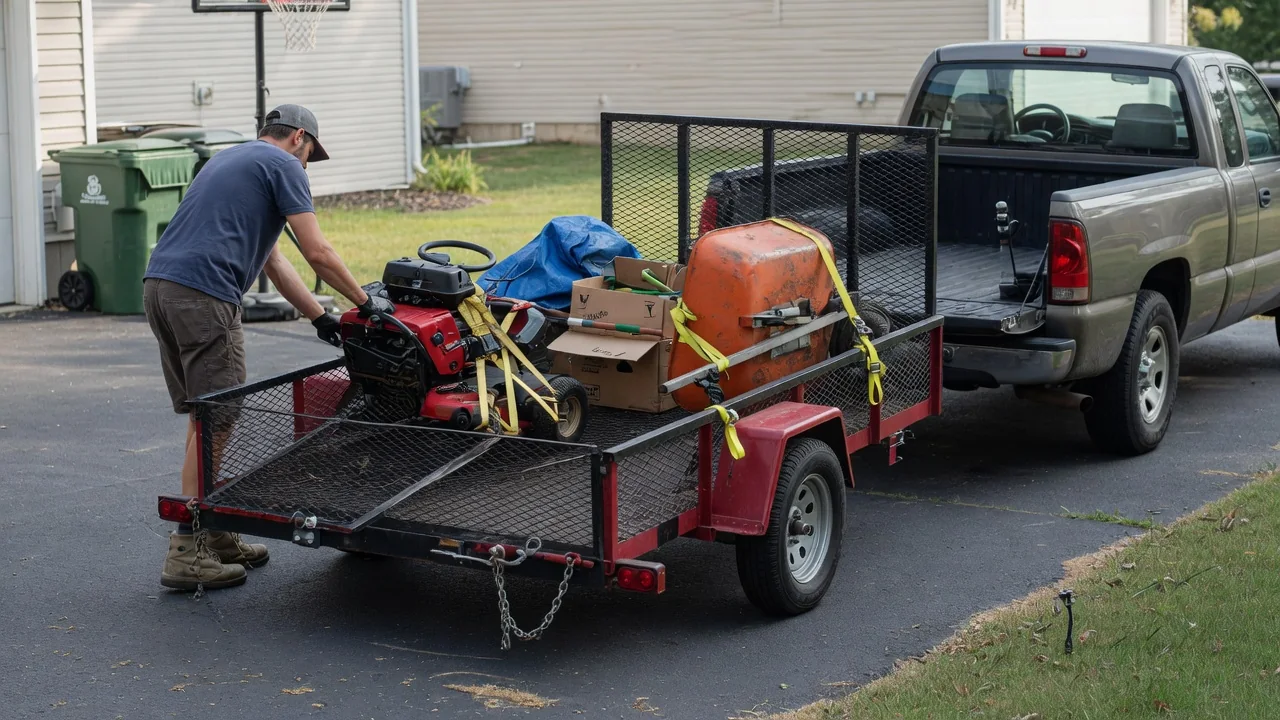
Learning how to load a small utility trailer comes down to three habits: putting the heaviest cargo in the right spot, tying everything down so it cannot shift, and checking the rig again before and during the trip. The details depend on your trailer, hitch and tow vehicle, so the ratings printed on your own equipment always take priority over general advice.
Place dense items
Heavy, compact items such as bagged concrete, a toolbox, paving stones or a lawn tractor belong low on the deck and slightly ahead of the axle. Placing the mass there keeps a steady downward load on the hitch ball, which helps the trailer track straight behind the tow vehicle. When dense cargo sits behind the axle, the tongue lightens and the trailer can begin to sway at speed, a motion that is difficult to correct once it starts.
Center the load side to side as well, so each tire carries a similar share and the trailer does not lean in corners. Lighter, bulkier things like brush, empty bins or furniture can fill the space around and behind the heavy pieces. How far forward is appropriate varies with axle position, tongue length and the hitch rating of your vehicle, so look at the trailer's identification plate and the tow vehicle's owner's manual rather than relying on a figure borrowed from another setup.
Secure cargo
A load that looks settled in the driveway can slide under braking or bounce over a railroad crossing, so every significant item needs its own restraint. Ratchet straps or cam straps anchored to the trailer's tie-down points, stake pockets or rails work well for most cargo. Wheeled equipment such as a mower or ATV is generally held at four corners, with the straps pulling outward and downward, so it cannot roll forward, backward or sideways.
Check that each strap carries a working load rating suited to what it holds, and look over the webbing for cuts, fraying or sun damage before trusting it. Loose material such as mulch, gravel or branches calls for a tarp or cargo net, and many states require covering it. Tie off the strap tails so they cannot flap into a wheel, and close and pin the tailgate or ramp. Anchor locations and strengths differ among trailers, so confirm what your frame actually provides.
Recheck balance
Once everything is tied down, step back and look at the rig from the side on level ground. The trailer deck should sit roughly level, and the rear of the tow vehicle should not squat noticeably or lift. A drooping hitch suggests too much load toward the front, while a tongue that feels light or lifts easily when the coupler is raised points to cargo sitting too far back. Either sign means moving items before driving, not after.
Compare the tires on both sides as well; a visibly bulging sidewall on one side indicates uneven loading or low pressure. Then stop after the first few miles in a safe place and inspect again, because straps stretch and cargo settles as the suspension works. Retighten anything that has slackened, feel whether the load has crept, and confirm the coupler latch, safety chains and wiring plug are still fully connected.
Everyday Use and Observations
On the road, a well-loaded trailer is almost unnoticeable: it follows in the same line as the tow vehicle, stays calm when a truck passes and does not tug at the steering. Wandering, a rhythmic side-to-side movement in the mirrors or a floating feel at the front wheels suggest the balance is off. Ease off the accelerator gently, avoid sudden steering, and pull over somewhere safe to rearrange the cargo.
Expect longer stopping distances and wider turns even with a modest load, since many small utility trailers have no brakes of their own and rely entirely on the tow vehicle. Routine trips, such as hauling yard waste, moving a couch or bringing home lumber, are good chances to notice how your particular combination behaves. Long boards overhanging the rear may need a flag or light depending on local rules, and tall items catch crosswinds more than low ones.
Limits and Next Steps
Every trailer has a maximum gross weight set by its manufacturer, usually shown on a plate or sticker near the tongue, and the tires, coupler, hitch ball and receiver each carry their own ratings. The lowest-rated component sets the real limit for the whole combination. The tow vehicle's manual lists its towing and tongue weight capacities, which can vary by engine, drivetrain and equipment package, so confirm the figures for your exact vehicle.
If you are unsure what a load weighs, a public scale at a truck stop, landfill or landscape supply yard can settle the question, and a tongue weight scale can confirm how it is distributed. When cargo approaches the ratings, splitting it into two trips is the safer choice. Before regular hauling, have a shop or trailer dealer look over the wheel bearings, tires, lights and hitch hardware so the equipment is as ready as the load.