How to Learn Car Detailing: Training, Lessons, and Schools
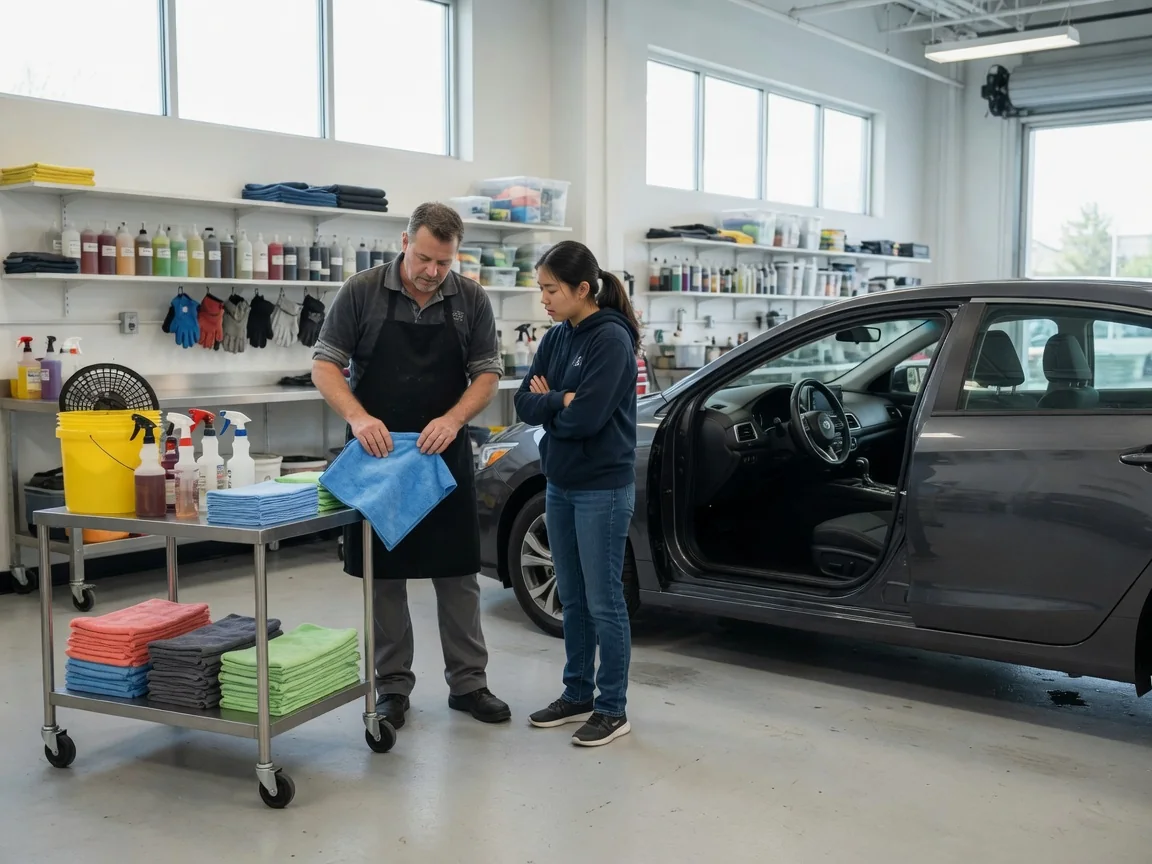
Learning car detailing starts with choosing how you will practice, whether through self-directed study, structured car detailing lessons, or enrollment at car detailing schools. Training for car detailing can cover paint-safe washing, interior surface care, and product handling, yet each path teaches different depths of skill. A clear goal, a repeatable process, and honest progress checks matter more than rushing toward paid work.
Start With a Clear Detailing Learning Goal
A useful first step is deciding whether you want to care for a personal vehicle, develop one skill such as glass cleaning or interior surface care, or prepare for paid detailing work. Those aims change how much time you spend on product dilution, microfiber towel handling, and documentation. Foundational skills include identifying painted metal, plastic trim, glass, leather, and fabric, then reading labels so you know dwell time, dilution, and surfaces the product is meant to contact. Organizing supplies by task and following a repeatable cleaning workflow reduces skipped steps and mixed towels.
Define a first project you can finish in one session, such as an exterior wash and dry on your own car, then show that you can rinse, wash paint-safe, dry without dragging grit, and inspect for missed spots. You should also be able to explain which towels and products you used and why. Completing a detailing course curriculum or earning a certificate does not mean you are ready for every finish, wrap, coating, or delicate interior material. Unfamiliar surfaces, unknown prior treatments, and aggressive correction still require extra instruction or a decision to decline the work.
Use Car Detailing Lessons to Build a Repeatable Process
Useful car detailing lessons, online or in person, should show preparation, tool handling, product use, common mistakes, and a final inspection rather than a highlight reel of finished paint. A sensible sequence starts with paint-safe washing and drying, then glass, vacuuming, and basic interior surface care before any correction. Lessons should name the surfaces and products involved, show dilution and dwell time, and explain when a method is unsuitable, such as using an aggressive chemical on untested trim.
Assignments, instructor feedback, and a chance to ask questions turn watching into skill. After a lesson, repeat the same workflow on your vehicle and note where the result differs from the demonstration. Feedback is most useful when it names a specific error, such as dirty rinse water, a contaminated drying towel, or product left to dry against label directions. Choose lessons that invite questions about material identification and stopping points, because unsupervised trial and error is a poor substitute for that conversation.
Practice Basic Skills Safely on Your Own Vehicle
Start with a small, low-risk task such as washing one panel or vacuuming floor mats, then record the process, products, dilutions, and what you observed. Follow the vehicle care guidance you have and every product label, including contact time and rinse requirements. Test suitability in an inconspicuous area before treating a large visible surface. Keep microfiber towels organized by task so a glass towel never returns to paint and a soiled wash mitt is not reused as a drying cloth.
Work with appropriate ventilation and protective equipment called for on the label, and never mix chemicals unless the manufacturer states that combination is intended. Do not let products dry on a surface contrary to directions, because residue can stain trim, haze glass, or etch finish. Stop immediately if you see unexpected discoloration, texture change, or you cannot identify the material. Abrasive paint correction training and other aggressive treatments belong in supervised practice, not as first experiments on a daily driver.
What Hands-On Training for Car Detailing Should Teach
Hands-on training for car detailing should include structured practice in surface inspection, preparation, cleaning order, contamination control, and a final quality check under good light. Watching an instructor once is not enough; you need to perform the same task under supervision and receive specific corrections on pressure, towel rotation, product dwell, and missed edges. That cycle of observe, do, and correct is how a detailing course curriculum turns into muscle memory instead of a stack of notes.
Before you enroll, ask how much actual practice time you will have, how often the instructor is on the floor, whether equipment and vehicles or panels are supplied, and what beginners must already know. Machine polishing and coating preparation need instruction on surface assessment, known limitations, and damage prevention before you work independently. Independent work on those steps should wait until you can explain why a finish is not a candidate for correction and what you would do instead.
Questions to Ask Car Detailing Schools Before Enrolling
Ask car detailing schools for a written syllabus that states prerequisites, practical exercises, learning outcomes, and how skills are assessed. Request class size, instructor experience, and whether you will work on practice vehicles or panels rather than only watching. After-course support, such as a chance to ask follow-up questions, matters because many mistakes appear after you return to your own garage. If the school cannot describe supervised practice hours in writing, the program may be more demonstration than training.
Clarify total enrollment costs, required product or tool purchases, travel and lodging needs, class dates, and cancellation terms without treating any quoted figure as current. Detailing certification is not a single national license, so ask who issues the certificate, what it represents, and whether it requires a demonstrated skill assessment rather than attendance alone. A certificate does not guarantee employment or prove you can handle every vehicle. Use it as a record of completed training, then keep practicing until your results are consistent.
Check Your Progress Before Taking on Customer Vehicles
Practical milestones include completing a basic detail consistently, choosing products that match the surface and soil, and recognizing when to stop. Keep practice notes on process, product dilution, towel assignment, and results. Consent-based photographs can document before-and-after appearance, but they are not proof of every surface condition, hidden damage, or long-term protection. If you cannot repeat a wash, interior clean, and glass result to the same standard on your own vehicle, you are not ready to sell that service.
Customer work requires an intake inspection, an agreed service scope, realistic expectations, and notes on existing damage, stains, and swirls before you touch the vehicle. That conversation protects both parties when a finish already has defects you will not remove. Signs that you need more instruction include inconsistent results, uncertainty about materials, or inability to explain product precautions. Pause paid work and return to lessons or supervised practice until you can describe limits clearly and stop when a job exceeds your current skill.