How to Keep Your Car From Overheating in Hot Weather
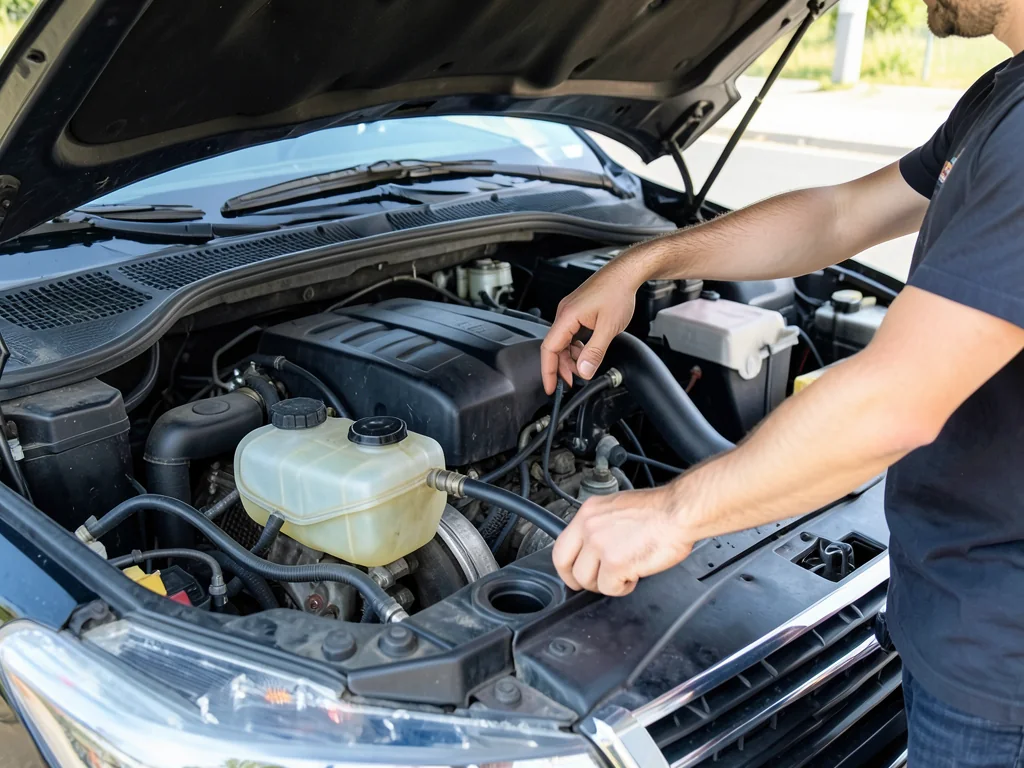
Hot weather, slow traffic, and extra engine load can push a cooling system past what it can shed. The surest way to keep a car from overheating is not a last-minute trick while driving, but coolant that is at the right level, parts that still circulate and dump heat, and habits that cut demand before the temperature gauge climbs. Prevention starts with checks you can do with the engine fully cool.
Check Coolant and Visible Warning Signs Before You Drive
With the engine fully cool, look at the coolant reservoir markings rather than guessing from the radiator neck. The owner's manual names the specified engine coolant and whether it is premixed or mixed with water in a stated ratio. Color is only a rough cue; dyes vary by brand and can look similar across formulas that are not interchangeable. Using the specified type and mixture protects metal and seals and is one of the simplest ways to prevent a car engine from overheating before you leave.
Walk around the parked car for puddles, dried residue near hose joints, or a reservoir lower than the last cool check. Stay clear of belts and the cooling fan even with the engine off, because some fans can still cycle. Repeated topping up points to a coolant leak or internal loss until a shop traces it. Adding fluid restores the mark briefly, but it does not stop car overheating if the system still loses coolant or cooling system pressure.
How Cooling System Components Control Engine Temperature
What keeps a car from overheating is a closed path that moves heat out of the engine instead of trapping it in the metal. Engine coolant absorbs heat in the passages, the water pump circulates that fluid to the radiator, and radiator airflow lets the heat leave into the air. The thermostat stays closed while the engine warms, then opens so coolant can flow through the radiator once temperature is in the normal range. If the thermostat sticks closed or the pump no longer moves fluid, heat builds even when the reservoir still looks full.
A cooling fan pulls extra air through the radiator when road speed is too low for enough airflow, which is why a car can overheat in hot weather at idle after it ran fine on the highway. Hoses carry the fluid, and the pressure cap helps hold cooling system pressure so coolant stays liquid at higher temperatures. Coolant in the reservoir does not prove the fan, thermostat, or water pump is working. Those parts can fail while the bottle still looks normal until the temperature gauge climbs.
Schedule Cooling System Care Before a Long Trip
Long-trip protection against overheating belongs on the vehicle's own maintenance schedule, not a one-size interval copied from another model. To prevent car overheating on a long drive, look up coolant service and cooling inspections in the owner's manual or service booklet and complete anything overdue before you leave. A practical pre-trip check includes coolant level with the engine cold, any existing temperature warnings, unresolved coolant leaks, and any recent overheating episode. Those items tell you whether the system is already struggling before highway heat and extra engine load add more demand.
If service history is unknown or hoses look swollen, cracked, or oil-soaked, a professional inspection of hoses, belts where the design uses them, the radiator, and cooling system operation is the safer step. Pressure testing can reveal leaks that do not leave an obvious puddle. Fan checks and circulation testing help show whether airflow and flow actually happen under load. A high temperature reading or a warning light is evidence to interpret, not proof that one part has failed, so replacing a thermostat or pump on guesswork can miss the real restriction.
Prepare for Summer Heat and Heavy Traffic
Car overheating during summer often happens because outside air is already hot, so the radiator has a smaller temperature difference to dump heat into. That extra strain does not mean every hot-weather trip will overheat a healthy system, but repeated overheating in the summer is a reason to investigate rather than treat heat as the only cause. Slow traffic cuts radiator airflow, and air conditioning adds heat that the cooling system must also reject. Neither condition by itself proves a failed part, yet both explain why a marginal system shows itself first in summer traffic.
For intense heat, plan cooler departure times, routes with fewer long idle stretches, and places you can stop if the temperature gauge climbs. From outside, look at the grille for leaves, bags, or mud that block radiator airflow; leave inner radiator cleaning and work near fans to proper service. Shaded parking can limit heat buildup before you start and help keep your car from overheating on the first miles. Shade will not repair a leak, a stuck thermostat, or a weak cooling fan.
Manage Engine Load and Watch Temperature While Driving
How to keep a car from overheating while driving starts with engine load you can control. Smooth throttle, fewer hard accelerations, and staying within towing and payload guidance keep extra heat from piling up in the coolant. Sustained climbs, a heavy load, and prolonged slow traffic shrink the margin between heat generated and heat the radiator can shed. Watch the temperature gauge through those stretches rather than assuming earlier highway speed still applies. Extra load is not a defect, but it will expose weak circulation or poor airflow.
Learn what your vehicle's temperature display and warning messages look like on ordinary days so a change is obvious. Displays differ, so there is no universal safe needle position. If the reading rises in traffic, turning off air conditioning can reduce demand while you move toward a safe stop. That can help stop car overheating from worsening in the short term, but it does not make continued driving safe after a high-temperature warning. Treat the warning as a reason to stop, not as a cue to keep testing the engine.
Respond Safely When Temperature Rises or Steam Appears
Prevention is what you do before the trip; an active overheating event is different. A high-temperature warning, a red-zone temperature gauge, or steam means reach a safe place, shut the engine down, and stay away from the bay. Never open a hot cooling system cap, add fluid to a hot system, or walk into escaping steam. Those actions can release scalding coolant under pressure. In that moment, you stop the car from overheating by shutting it down, not by servicing a pressurized system at the roadside.
No fixed wait proves the system is safe to open; follow the owner's manual and call roadside help when unsure. Persistent warnings, visible leaks, steam, or recurring overheating need professional diagnosis. A temperature gauge that falls after shutdown only shows the engine stopped making heat; it does not prove the cause is gone. Cabin heat is not a repair and is never permission to keep driving an overheating car. Summer heat may have revealed the problem, but the cooling system still needs diagnosis rather than another wait in the heat.