How to Keep Small Items From Sliding Around the Cabin
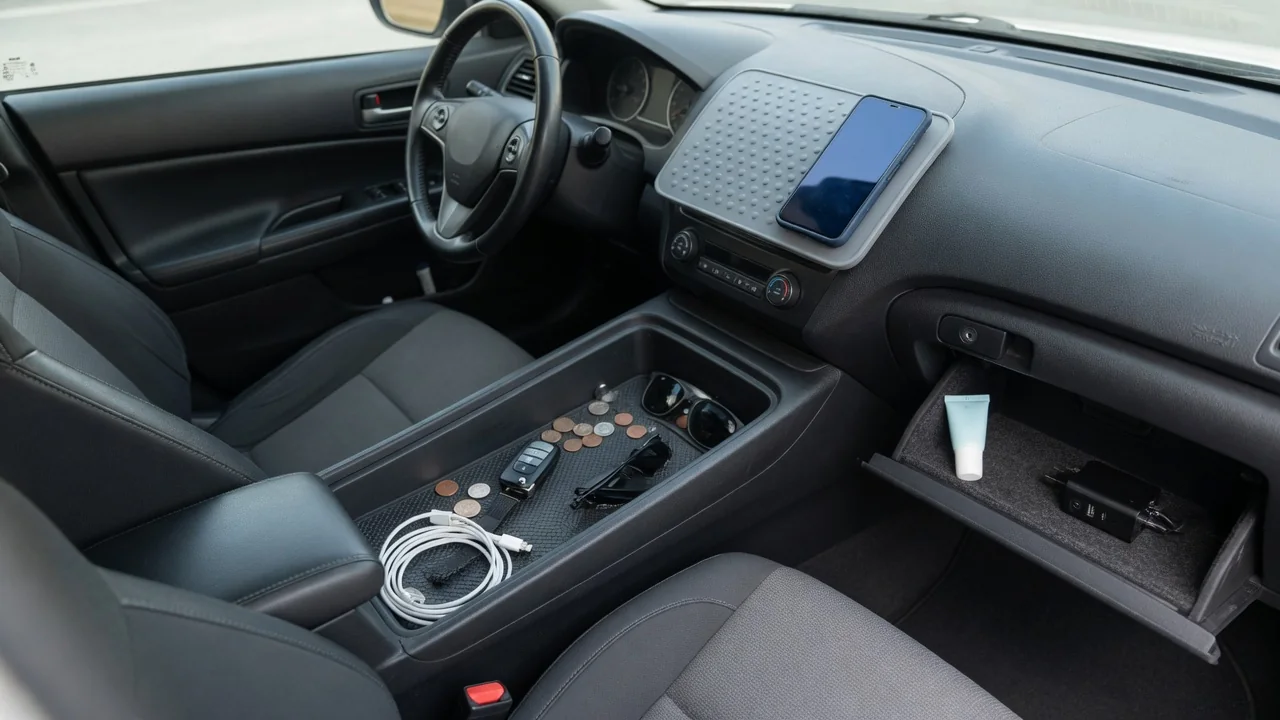
A phone that skates across the dashboard or a coin rattling in a door pocket seems minor until it pulls your eyes off the road. Learning how to keep small items from sliding around the cabin is mostly a matter of noticing what moves, giving each object a suitable home, and protecting the area around the pedals and controls from anything that can roll.
Identify loose items
Start with a slow look through the interior while the vehicle is parked. Check the dashboard top, the center console tray, cupholders, door pockets, seat gaps, and the floor under each seat. Typical offenders include phones, sunglasses, pens, loose change, charging cables, parking tickets, lip balm, and water bottles. Anything resting on a smooth, flat, or sloped surface without a lip around it is a candidate to move the first time you brake, accelerate, or take a corner with some pace.
Sound is a useful clue as well. A rattle from a door pocket, a thud from the footwell after a firm stop, or a scraping noise under the seat usually points to something that has escaped its original spot. Interiors differ widely: some vehicles have rubber-lined trays and deep bins, while others offer shallow, hard plastic shelves that let objects skate freely. Noting which surfaces in your own cabin are slick and which have grip tells you where items can stay and where they cannot.
Choose compartments
Once you know what moves, match each item to a space that actually contains it. Enclosed storage such as the glovebox, a lidded console bin, or an overhead sunglasses holder suits things you rarely need while driving, since a closed lid stops movement entirely. Open spaces work better for items you reach for often, provided they have raised edges or a snug fit. A bottle that fills a cupholder stays put, while a narrow can in a wide holder tips and rolls.
Fit matters more than volume. A deep door pocket may swallow a small flashlight, but it will slide the length of the pocket and knock against the panel on every turn. Grouping small objects in a pouch or a small organizer before placing them in a larger bin keeps them from scattering. Non-slip mats or liners can add grip to hard trays, though sizes and shapes vary by vehicle, so check that any add-on sits flat and does not cover vents, sensors, or airbag panels.
Keep controls clear
The most important area to protect is the driver's footwell. A bottle, a toy, or a tube of sunscreen that rolls forward from under the seat can lodge beneath or behind the brake pedal and limit its travel, or interfere with the accelerator. Keep nothing loose on the driver's floor, avoid storing objects under the driver's seat unless the vehicle has an enclosed tray there, and make sure the floor mat is the correct fit and secured on its retaining hooks or clips.
Higher up, the same thinking applies to the shifter, parking brake, steering column stalks, and touchscreen. A cable draped across a gear selector, a phone wedged beside the handbrake lever, or papers piled over climate buttons can all delay a simple action. Dashboard tops deserve particular caution because objects there can reflect in the windshield, slide into your sightline, or sit over a passenger airbag cover. Layouts vary, so the owner's manual is the best guide to where airbags and sensors are located.
Everyday Use and Observations
Daily habits do more than any accessory. Taking a few seconds before setting off to place the phone in a mount or tray, drop keys and wallet into the console, and tuck cables away removes most sources of movement. A phone mount should hold the device firmly without blocking the view ahead or an air vent you rely on. Passengers can help by keeping bags on the floor behind the front seats or in the cargo area rather than on an empty seat.
Pay attention to how the cabin behaves over a normal week. If the same item keeps ending up on the floor after a particular roundabout or driveway ramp, its storage spot is not working and a deeper or lined compartment is worth trying. Seasonal changes shift the load too, with gloves, ice scrapers, sunscreen, and umbrellas coming and going. A quick clear-out when refueling or charging prevents receipts, wrappers, and coins from building up into a layer of clutter that hides the objects most likely to roll.
Limits and Next Steps
Good organization reduces movement, but it does not make loose objects safe in a hard stop or a collision. Heavier items such as tool kits, laptops, and full drink containers carry considerable force when the vehicle decelerates suddenly, and a cupholder or open tray will not restrain them. Those belong in the trunk or cargo area, ideally secured with the tie-down points, nets, or dividers the vehicle provides. What is available differs by model and trim, so it is worth checking what yours includes.
If your cabin simply lacks useful storage, look first at accessories designed for your specific vehicle, since console inserts and tray liners made to fit tend to stay in place better than universal ones. Avoid anything that attaches near airbags, obstructs seat adjustment, or relies on adhesive that may fail in heat. Persistent rattles that continue after everything loose has been removed may come from trim or a component rather than cargo, and a technician can inspect that during a routine visit.