How to Keep Passengers Comfortable During Stop-and-Go Traffic
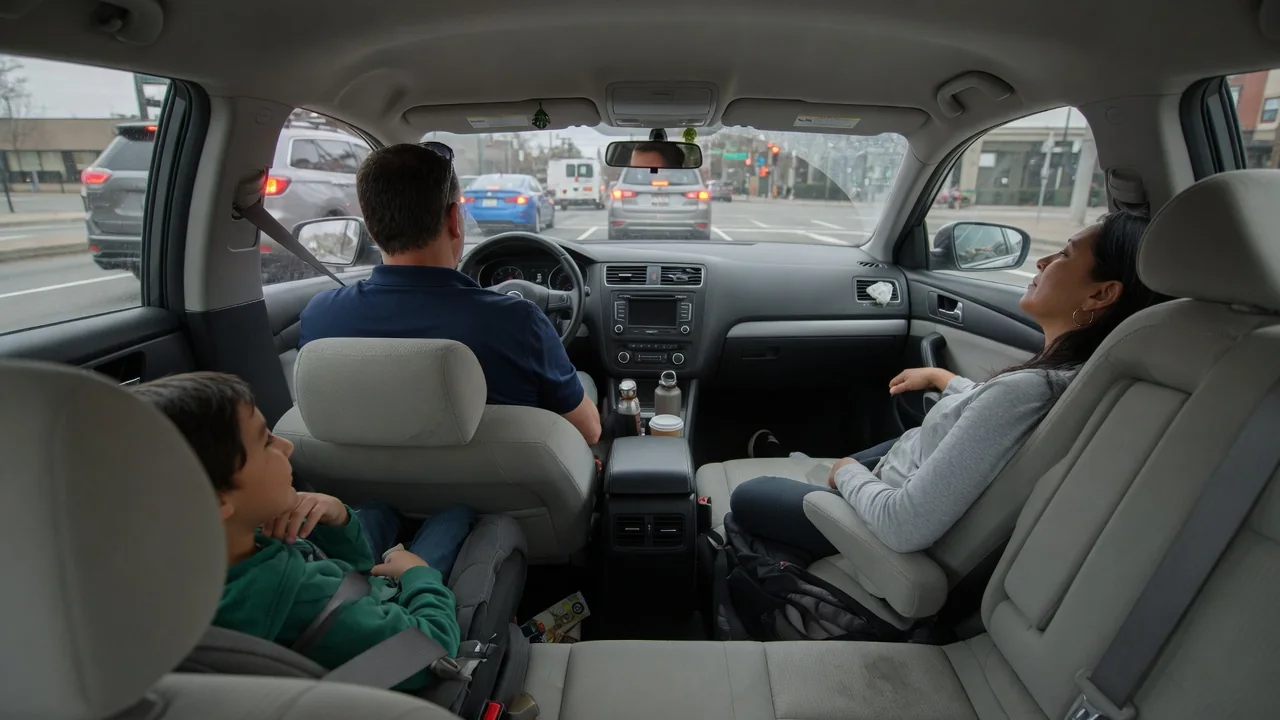
Slow, congested driving tests patience in every seat, not just the driver's. Learning how to keep passengers comfortable during stop and go traffic comes down to a few habits: managing cabin air, keeping useful items within reach, building slack into the schedule, and telling people what to expect. Small adjustments make a crawling commute far easier to tolerate.
Airflow and temperature
At low speeds there is little natural airflow through the cabin, so the climate system does almost all the work. A car that felt pleasant on the highway can turn stuffy within minutes of crawling, particularly with sun coming through the side glass. Raising the fan speed a notch and aiming the dash vents toward the upper body rather than directly at faces usually helps more than simply lowering the temperature setting. Rear passengers often feel changes later than those up front, so ask them rather than assume.
Recirculation mode is useful when you are sitting behind a truck or bus, because it limits the exhaust smell drawn in from outside. Left on for a long time, though, it can make the air feel stale and may fog the windows in damp weather, so switching back to fresh air periodically is sensible. Some vehicles have rear vents, separate rear controls, or automatic air quality sensors, while others rely on front vents alone. Check your owner's manual to learn what your system actually offers.
Easy access items
Traffic that barely moves makes people notice thirst, hunger, and boredom sooner than they would at a steady cruise. Putting water, tissues, a charging cable, and a simple snack where passengers can reach them without unbuckling removes a lot of small frustrations. Door pockets, the center console, and seatback pockets are the obvious places. Anything stored in the trunk or cargo area is effectively unavailable once you are boxed into a lane, so decide before departure what belongs in the cabin.
For passengers prone to motion sickness, a few specific items matter more. Repeated braking and accelerating can unsettle the stomach, and looking down at a phone tends to make it worse. Keeping a sealable bag, wipes, and plain water nearby is a quiet precaution that spares everyone embarrassment. Sunshades or sunglasses help when low sun hits one side of the car for a long stretch. Storage layouts differ widely between sedans, SUVs, and minivans, so a quick look around your own cabin shows which spots work.
Allow more time
Much of the discomfort in heavy traffic comes from the way a rushed driver handles the car. When you are late, the temptation is to close every gap quickly and brake hard when it shuts, which rocks heads forward and back over and over. Leaving earlier removes that pressure. With time in hand, you can let a larger space open ahead and roll forward gently, easing on and off the pedals so the car creeps instead of lurching. Passengers feel that difference immediately, especially those in the rear seats.
Extra time also makes communication easier. Telling passengers at the outset that the route is usually slow, and roughly how long the congested portion tends to last, sets expectations and reduces the anxious questions that add tension. If navigation shows a delay growing, saying so calmly is better than silent frustration, which passengers pick up on quickly. A margin in the schedule also leaves room for a short stop at a rest area or service station if someone needs a restroom, fresh air, or a few minutes out of the seat.
Everyday Use and Observations
Over repeated trips you will notice patterns in how your own vehicle behaves at a crawl. Some automatic transmissions shift noticeably between low gears, and some cars with engine stop-start systems produce a small shudder each time the engine restarts. Hybrids and electric vehicles are often smoother at low speed, though strong regenerative braking can feel abrupt to passengers if the accelerator is released suddenly. Many vehicles let the driver adjust or switch these features, but the options and their names vary by manufacturer and model.
Passengers give their own signals worth watching. Someone going quiet, cracking a window, or staring fixedly ahead may be feeling queasy, and a child who becomes restless may simply be too warm. Checking in with a brief question is easier than guessing. Noise matters too: lowering the audio volume, choosing calmer music or a podcast everyone agrees on, and keeping horn use to genuine warnings all make the cabin feel less tense. Adaptive cruise control with low-speed following, where fitted, can smooth out the pace, but the driver must remain attentive.
Limits and Next Steps
Good habits can only do so much if the vehicle itself is not working properly. Air conditioning that blows warm at idle but cools once you are moving, a musty smell from the vents, or weak airflow at high fan settings each suggest the climate system deserves a professional inspection. The cause could be anything from a clogged cabin air filter to a cooling fan or refrigerant issue, and it takes proper diagnosis to tell which. Likewise, harsh jerking, vibration through the brake pedal, or a rising temperature gauge in traffic should not be ignored.
If a warning light appears or a stored fault code is read, treat it as a clue for a technician to interpret rather than proof that a particular part has failed. Meanwhile, the practical next steps are simple: learn your climate and driver assistance settings from the owner's manual, stock the cabin before leaving, and plan departure times around known congestion. When a passenger feels genuinely unwell, pulling off at a safe, legal place to stop is the right call, since no setting replaces a break from the car.