How to Keep Garage Dust Off a Stored Car
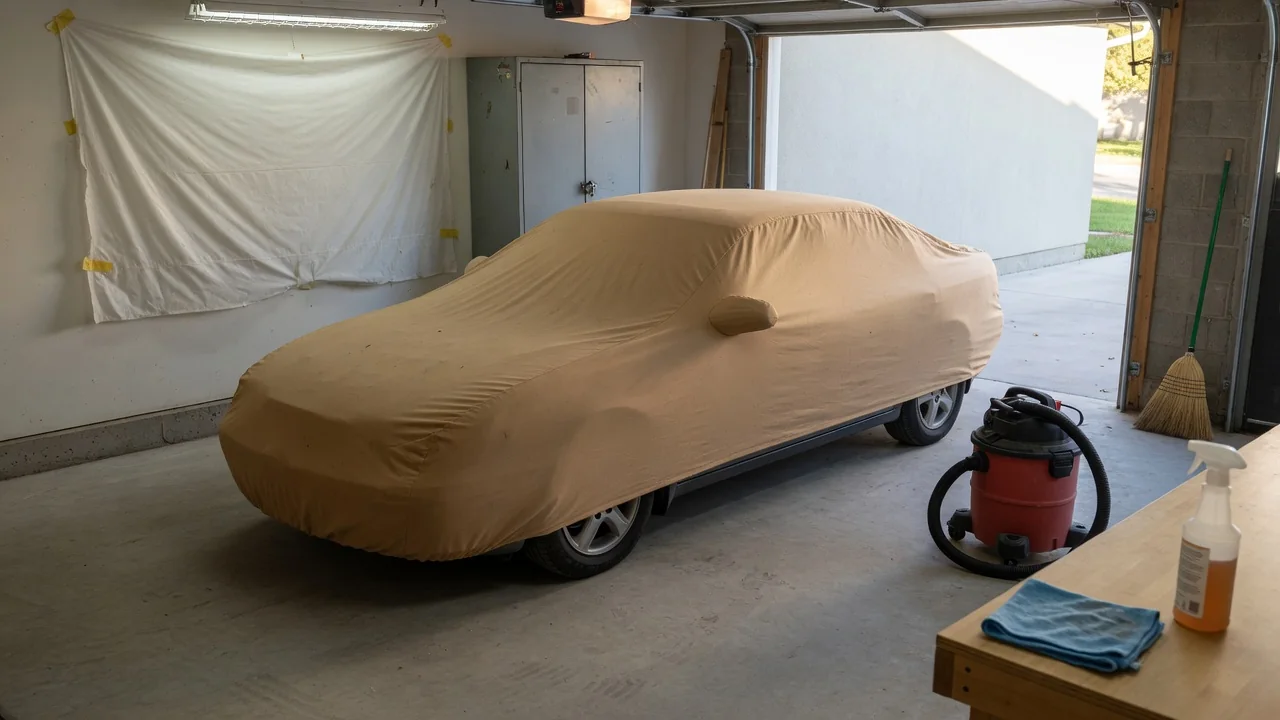
Learning how to keep garage dust off a stored car starts with understanding where the dust comes from. Concrete floors shed fine grit, open doors pull in pollen and road dirt, and workshop projects add sawdust or sanding residue. A clean car, a suitable indoor cover, and careful removal habits together protect paint, glass, and interior surfaces through weeks or months of storage.
Clean before storage
Dust alone is a nuisance, but dust layered over road film, bug residue, or bird droppings becomes a real problem. Those contaminants hold moisture against the clear coat and can etch or stain if they sit for months. Washing the car thoroughly before storage, including door jambs, wheel wells, and the lower rocker panels, removes the grit that a cover would otherwise press against the paint. Dry the vehicle completely, because water trapped in mirror housings, trim seams, and around badges can drip out later and leave spots under the cover.
A coat of wax or paint sealant gives the finish a slick surface, so any dust that does settle releases more easily later. Inside the cabin, vacuuming carpets and wiping the dashboard matters too, since crumbs attract rodents and leftover dust circulates when the ventilation system runs again. Closing the windows fully and setting the climate control to recirculate, where the vehicle allows it, limits how much airborne garage dust drifts in through the vents. Convertibles and older cars with worn weatherstripping usually admit more dust than tightly sealed modern vehicles.
Cover materials
An indoor car cover should be soft, breathable, and close fitting. Stretch-knit and flannel-lined fabrics drape gently over paint and block fine particles while letting moisture vapor escape. Plastic tarps and non-breathable sheets do the opposite, trapping condensation against the body as garage temperatures swing, which can encourage water spotting, mildew, and corrosion on bare metal parts. A heavy outdoor cover will work inside, but its stiffer weather-resistant layers are often harsher on delicate finishes than a dedicated dust cover.
Fit matters as much as fabric. A cover tailored to the body shape stays put and leaves little slack, while a loose universal cover can shift whenever someone brushes past, dragging trapped grit across the paint. Look at the inner lining before each use, because a cover that has been dropped on the floor picks up the same dust it is meant to block. Mirror pockets, antenna provisions, and hem elastic vary by cover and vehicle, so low sports cars, tall pickups, and cars with fixed spoilers need checking against the cover maker's sizing guidance.
Return cleaning
When storage ends, the way the cover comes off determines whether the dust lands on the paint. Fold each side up onto the roof first, then roll the cover from front to rear so the dusty outer surface ends up wrapped inside. Pulling it off sideways in one sweep drags the dirty exterior across the fenders. Shake the cover out outdoors and wash it according to its care label if it is washable, since a dust-loaded cover simply returns that dirt to the car the next time.
If a light film has reached the paint, resist wiping it with a dry cloth, because dust contains hard mineral particles that leave fine swirl marks. A proper wash with plenty of water, or a rinseless wash product used with clean microfiber towels, lifts the particles safely. Glass often shows a hazy film on the inside from interior plastics, which a dedicated glass cleaner clears. Running the fan with the windows open for a few minutes helps blow settled dust out of the vents before the first drive.
Everyday Use and Observations
The garage itself is the main source of the problem. Bare concrete slowly sheds a fine powder, which is why a pale gray film often appears on dark paint even in a closed garage. Sealing or coating the floor reduces it noticeably, and so does vacuuming or damp mopping instead of dry sweeping, which throws particles into the air to settle hours later. Worn seals along the bottom and sides of the garage door let in windblown dirt, leaves, and pollen, so daylight visible around a closed door is a useful clue.
Simple observation shows how well the routine is working. Run a clean fingertip along a shelf near the car after a few weeks; a heavy layer means the room is dusty enough that the cover is doing real work. Sawdust, drywall dust, and grinding residue from projects travel far, so cover the car before starting them or work elsewhere. For a car driven occasionally, put the cover back only when the body is clean and dry and the exhaust and brakes have cooled, since covering a dirty or damp car undoes the preparation.
Limits and Next Steps
A cover controls dust, but it does not manage humidity, pests, or mechanical needs. In damp garages, moisture can still collect beneath breathable fabric, so a dehumidifier or better ventilation may be worth considering if you notice musty odors or surface rust forming on brake rotors. Rodents sometimes nest beneath covers, so check periodically for droppings or chewed material. Battery maintenance, tire pressure, and fuel care during long storage follow separate guidance that differs by vehicle, and the owner's manual is the place to confirm it.
Some finishes need extra caution. Matte paint, vinyl wraps, fresh paintwork, and soft single-stage paint on older classics can react differently to waxes, covers, and cleaning products, so follow the advice of the paint or wrap supplier before applying anything. Recently refinished panels may need time to cure before they are covered at all. If swirl marks or etching appear despite careful habits, a professional detailer can assess whether polishing is appropriate. Otherwise, the next step is straightforward: clean the car, clean the room, cover it properly, and look under the cover from time to time.