How to Keep Essential Bags Accessible During a Road Trip
Keeping essential bags accessible during a trip depends on three decisions: what goes into the vehicle last, what each passenger needs within reach, and how everything else is held in place. Getting these right means fewer stops spent digging through luggage and less loose weight in the cabin. The approach below to road trip accessible luggage applies broadly to sedans, hatchbacks, SUVs and minivans, with vehicle-specific details left to your owner's manual.
Pack Order: Load Last What You Need First
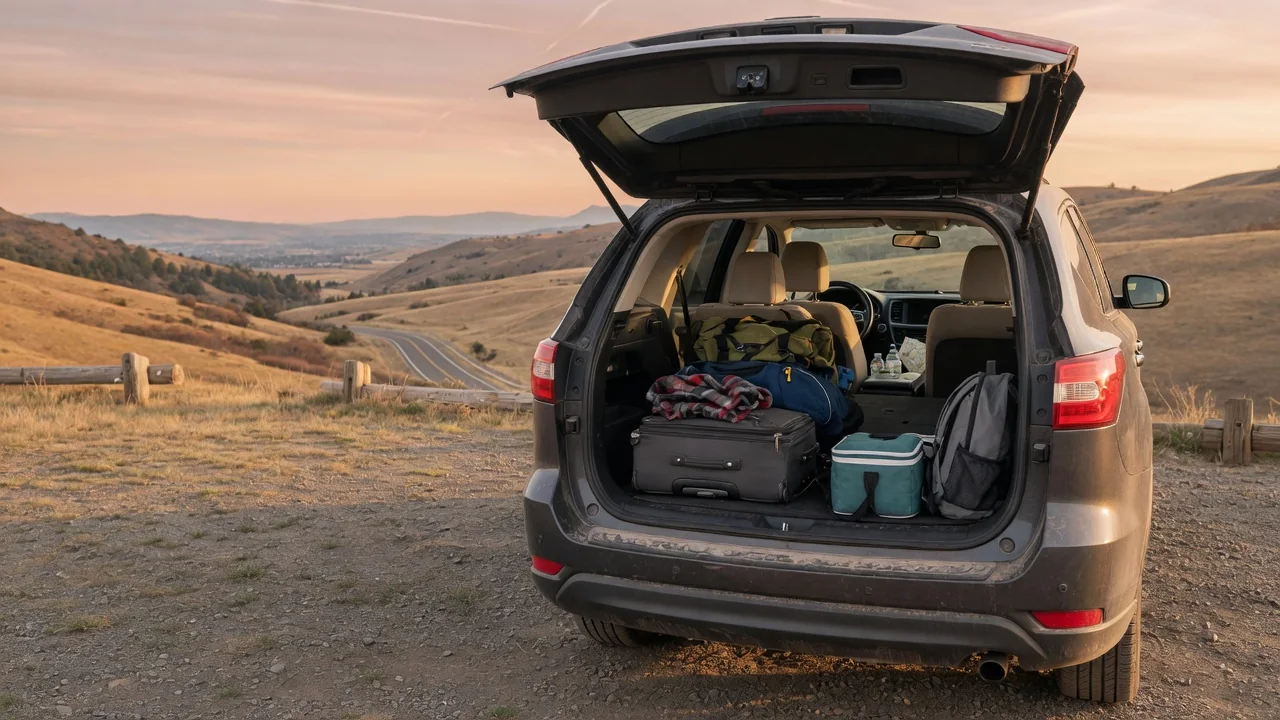
Accessible packing starts with sorting bags by when you will need them rather than by who owns them. A useful split is three tiers: destination luggage you will not open until you arrive, a stop bag for overnight or midday breaks, and in-cabin essentials you may need while moving. Load in reverse order of need. Destination luggage goes in first, placed low and pushed forward against the rear seatbacks. The stop bag goes in last, closest to the cargo opening, so it can be lifted out without disturbing anything else.
The stop bag does most of the work on a multi-day drive. Packing one change of clothes per person, toiletries, chargers and medications into a single bag means an overnight stop requires removing only that bag instead of the whole load. How easily you can reach it depends on the vehicle. A hatchback or SUV tailgate gives wide access to the top and rear of the load, while a sedan trunk opening is narrower and deeper, so the stop bag should sit directly under the lid edge. Color-coding or labeling bags also helps when you are unloading in poor light.
Pack order also affects the gear you hope not to need. In many vehicles the spare tire, jack or inflator kit sits under the cargo floor. If heavy suitcases cover that panel, a roadside tire problem means unloading everything onto the shoulder first. Keep the access panel clear, or at least place lighter bags over it. Your owner's manual shows where the tools and spare, if fitted, are stored.
Passenger Needs: What Belongs Within Reach
Each passenger should have a small kit that matches what they will reach for between stops. For adults this is usually a phone, charging cable, water, snacks, sunglasses, a light layer, and any time-sensitive medication. For the driver, these items should be reachable without leaning or taking eyes off the road. Center console bins, door pockets and a front passenger who can hand things over are better than a bag on the floor behind the seat. Toll payment, parking passes and vehicle documents fit the same rule: they should be retrievable in seconds, not buried in luggage.
Children and passengers with specific needs change the plan. A diaper or child-care bag, wipes, spare clothes and entertainment should sit where an adult can reach them at a stop without unbuckling a child seat or unloading the cargo area. Seatback organizers and soft bags in a rear footwell usually work better than hard cases, which shift and take up legroom. Passengers who rely on medication, mobility aids or medical devices should keep those items in the cabin rather than in the cargo area, in case the luggage becomes hard to reach after a delay or detour.
Two limits apply to every cabin kit. First, nothing belongs in the driver's footwell, where an object can roll under the pedals. Second, cabin kits work best when they stay small and are refilled from the main luggage at planned stops. A kit that keeps growing during the day ends up spread across seats and floors, which defeats the purpose of having one.
Secure Cargo Without Losing Access
The basic physics is the same in every vehicle. During hard braking or a collision, unsecured objects keep moving at the speed the vehicle was traveling until something stops them. A bag that seems harmless on a rear seat can strike an occupant or the back of a front seat with considerable force. For that reason, the heaviest items should sit low in the cargo area and against a rear seatback that is locked upright. Light, frequently used bags can then go on top or toward the opening without becoming the main hazard.
Many vehicles provide cargo tie-down points, hooks or rails, and many accept cargo nets, straps or cargo barriers. Where these exist, they let you hold the main load firmly while keeping the stop bag reachable, for example by strapping heavy luggage forward and leaving a net over the top layer. Number, location and load ratings vary by vehicle, so check the owner's manual rather than assuming. Avoid stacking cargo above the rear seatbacks. It can block rearward vision and is more likely to move into the passenger area under braking.
Accessible bags in the cabin need restraint too. A soft bag in a rear footwell is less likely to become a projectile than one sitting loose on a seat, and a bag on an unoccupied seat can be held by that seat's belt. If you use a roof box or roof rack for overflow, reserve it for items you will not need until arrival, and stay within the roof load and total payload limits shown in the owner's manual and on the tire and loading information placard, typically found on the driver's door pillar.
Practical Implications and Limits
Accessibility and security pull in opposite directions. Every item kept within reach sits closer to the occupants, and every item that is fully restrained takes longer to retrieve. The practical answer is not to compromise on everything but to limit how much needs to be accessible. A short, deliberate list of in-cabin and stop-bag items keeps the restraint problem manageable, while the bulk of the load can be packed tightly and largely forgotten until arrival.
General guidance only goes so far because vehicles differ in ways that matter. Cargo floor height, opening shape, split-folding seats, third-row seating that consumes cargo space, and the presence or absence of tie-down points all change what layout is possible. A fully loaded vehicle may also call for different tire pressures and will brake and handle differently than an empty one. The owner's manual and loading placard are the authoritative sources for those vehicle-specific limits, not a generic packing method.
Finally, any system is only as good as the routine behind it. Returning items to the same bag at every stop keeps the arrangement intact over several days. Visible bags in the cabin can attract attention in parking lots, so it is worth moving valuables out of sight before arriving at a stop rather than after parking. Treat the first day of a trip as a trial, then adjust the layout once you see what passengers actually reach for.