How to Keep a Parked Car Interior Cooler
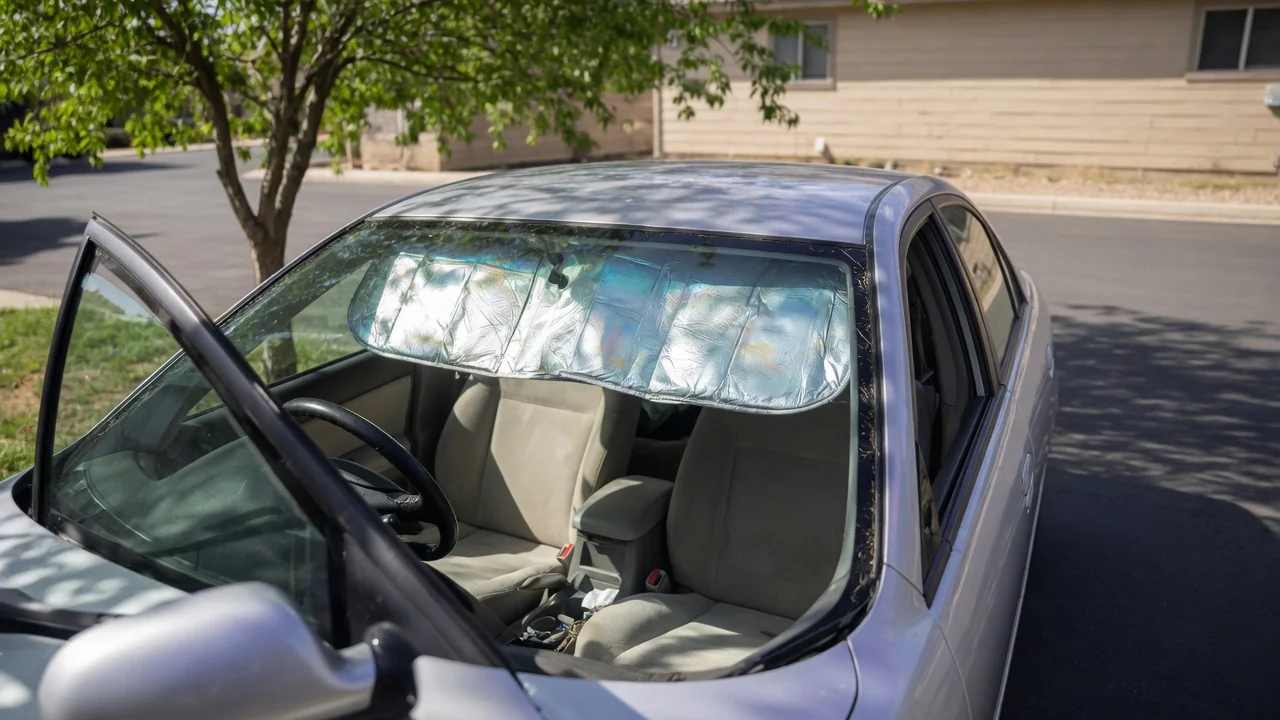
A car left in the sun acts like a small greenhouse: sunlight passes through the glass, warms the dashboard, seats and trim, and the trapped heat builds faster than it can escape. Learning how to keep a parked car interior cooler is mostly about limiting that solar gain and letting hot air out. None of these habits guarantees a comfortable cabin, but together they can help.
Parking choice
Where the car sits usually matters more than any accessory. A covered garage, a parking structure or the shadow of a building blocks direct sunlight before it reaches the glass, which is the main source of cabin heat. Tree shade helps as well, though it can bring sap, bird droppings and falling debris that affect paint. Because the sun moves, a spot that is shaded at arrival may be fully exposed by mid-afternoon, so it helps to think about where the shadow will fall when you return.
When no shade is available, orientation still makes a difference. The windshield is typically the largest and most steeply raked piece of glass, so pointing the nose away from the sun can reduce how much light lands on the dashboard and steering wheel. Surfaces count too: dark asphalt radiates stored heat upward, while a spot near grass or lighter concrete may feel less harsh. Results vary with body color, glass area and interior materials, so a dark cabin with a panoramic roof may respond differently than a light-colored sedan.
Window shades
A reflective windshield sunshade works by bouncing sunlight back out before it is absorbed by the dashboard. Fit matters; a shade that leaves gaps around the mirror or along the pillars lets light reach the surfaces you are trying to protect. Custom-cut folding shades tend to cover more completely than universal roll-up versions, yet either can make the steering wheel, shifter and seat surfaces more tolerable to touch. The air inside may still be hot, because the shade reduces radiant loading rather than cooling anything.
Side and rear windows admit heat as well. Mesh or cling-style side shades, factory rear-door blinds and retractable covers for a glass roof all cut direct exposure for seats and child restraints. Window tint is another option, but legal limits on darkness differ by state and by window position, so check local rules before having film installed. Some vehicles already use solar-absorbing or infrared-reflective glass, which may be noted in the owner's manual or marked on the glass, and that affects how much additional benefit an add-on shade provides.
Safe pre-cooling
Many newer vehicles can run the air conditioning before you get in, using a remote start function, a key fob sequence or a phone app. Electric vehicles and plug-in hybrids often condition the cabin from the battery without running an engine, and doing so while plugged in can spare driving range. How long the system runs, what temperature it targets and whether it works with the doors locked depend on the make, model and software, so the owner's manual is the right reference for a specific car.
Safety shapes how pre-cooling should be used. A combustion engine should never be left idling in a closed garage or other enclosed space, because exhaust gases can accumulate to dangerous levels, and some localities restrict unattended idling. Pre-cooling is also not a way to make a parked car safe for children or pets; systems can time out or shut down, and cabin temperatures can climb quickly afterward. Without remote features, opening the doors for a moment and driving off with the windows lowered pushes hot air out before the air conditioning takes over.
Everyday Use and Observations
Small routines add up. Cracking the windows a little lets some hot air escape, although the effect is modest and it leaves the car less secure and open to sudden rain. Window vent visors make a small gap less obvious on some vehicles. A light-colored towel or fabric cover over the steering wheel, seats and buckles keeps contact surfaces from becoming painfully hot, which matters most with dark leather or vinyl. A few models also offer solar-powered or scheduled ventilation that runs the fan while parked.
Paying attention to your own car shows what actually helps. Notice which surfaces are hottest when you return, whether the dashboard or the rear seat takes the most sun at your usual spot, and how long the air conditioning needs before the vents blow cold. Comparing a day with the sunshade to a day without, under similar weather, gives a more honest picture than any product claim. Heat-sensitive items such as phones, aerosol cans, medications and pressurized containers are better carried with you than left on a seat or in the console.
Limits and Next Steps
No combination of shade and ventilation keeps a sealed vehicle near outdoor temperature on a hot, sunny day. These measures slow heat buildup and lower surface temperatures, but the cabin can still become dangerous within minutes for a child, an older adult or an animal. For that reason, none of the steps described here should be treated as a way to leave anyone waiting inside. Humidity, wind, cloud cover and the length of the stop all change the outcome, so the same approach may feel effective one day and inadequate the next.
If the cabin stays uncomfortable long after driving off, the cooling system itself may deserve attention. Weak airflow, air that never turns cold, unusual odors or a compressor that cycles noisily are observations worth describing to a qualified technician, who can check refrigerant charge, the cabin air filter, the condenser and blend door operation with proper equipment. Refrigerant work requires specialized tools and handling, so it is not a casual driveway job. Start with the simple habits, watch how your vehicle responds, and seek a professional inspection when comfort does not return.