How to Judge Shock and Strut Brands for Your Vehicle
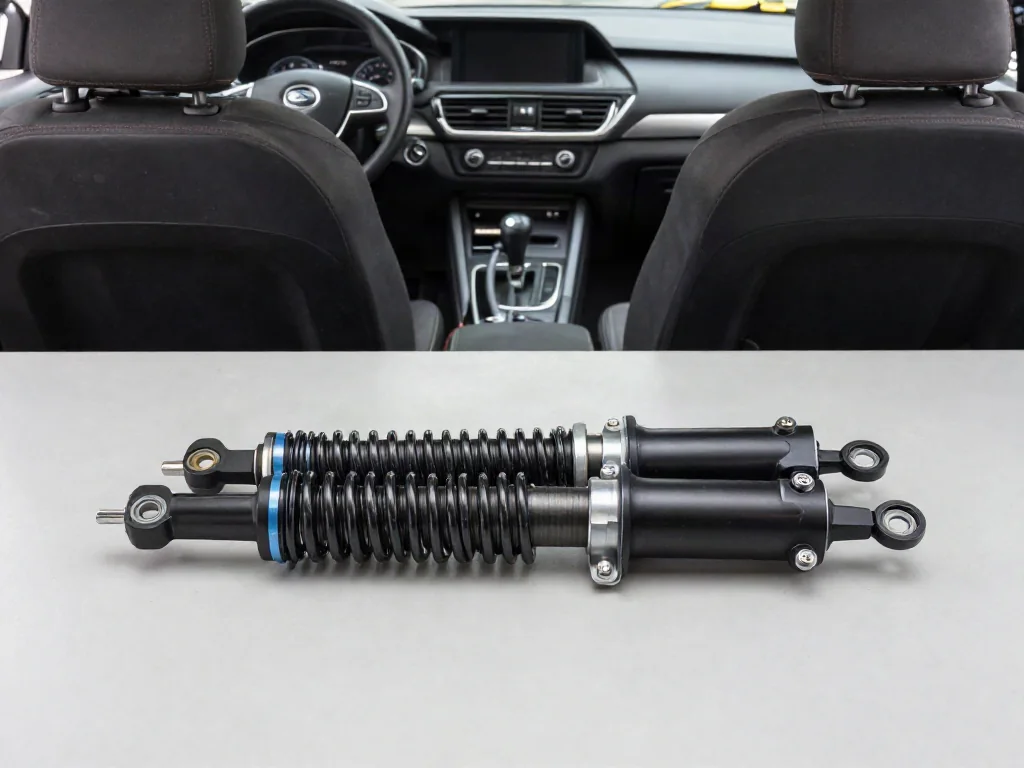
Judging aftermarket shocks and struts means matching damping control, vehicle fitment, and construction to how the vehicle is used, not chasing a single best brand. Questions about Monroe, Gabriel, FCS, Detroit Axle, Fox, Unity Automotive, ACDelco, and Duralast turn on the exact product line, mounting position, and ride you need. Brand recognition is a starting point, not a quality score.
What Quality Means for Aftermarket Shocks and Struts
Shock absorbers control suspension movement after a bump. Struts do that damping work and also serve a structural role, locating the wheel and supporting spring loads in many front suspensions. The vehicle determines which component belongs at each corner, so an aftermarket strut cannot substitute for a shock where the design uses a separate damper. Quality shows up as application-specific damping, consistent manufacturing, seal integrity, corrosion protection, and sound mounting hardware.
Budget, mid-range, and premium labels describe how aftermarket shocks and struts are marketed, not a guaranteed ranking of durability, ride comfort, or suitability. Twin-tube construction and monotube construction are internal layouts that affect heat handling and packaging; neither is automatically better for every car. OEM sourcing and aftermarket branding need product-level context. A supplier name does not prove original-equipment specifications, and a shock absorber brand on a box does not establish valving for your vehicle.
Choosing a Suitable Brand Starts With the Exact Application
A useful answer to what is the best shock absorber, the best shock absorber brand, or the best struts brand starts with the vehicle, suspension configuration, intended use, and desired ride. Good struts brands still must match model year, trim, axle position, and drivetrain. Electronically controlled or specialized suspension can rule out a conventional aftermarket damper even when mounting looks similar. Vehicle fitment is the first filter, not a search for a universal winner among shock absorber companies.
Product descriptions should name the line, part number, intended application, and included components. A complete strut assembly may include the spring and strut mount, while a bare strut or separate shock absorber does not. Assess specifications, traceable sourcing, warranty coverage, and technical support without treating brand recognition or price as a quality score. Installation quality matters because incomplete hardware or skipped alignment can undo a good damper. No single brand recommendation can guarantee comfort, handling, or service life, so the best shocks and struts on one vehicle may not be the best struts and shocks on another.
Monroe Struts and Named Shock Product Lines
Whether Monroe struts are good depends on the exact product line and vehicle, plus evidence about fit, ride behavior, noise, and support. Asking if Monroe is a good brand for struts is too broad because the company sells multiple damper families. A Monroe Gas-Magnum shock absorber and a Monroe Gas-Matic LT shock absorber are named products; those names alone do not establish suitability for a vehicle or payload. Reviews of one Monroe part should not stand in for every shock or strut under the brand.
A Monroe front shock absorber search first requires confirmation that the vehicle uses a shock at that location rather than a strut, and that the mounting matches the catalog listing. Gas charging does not independently prove damper quality; nitrogen pressure is one design choice among valving, piston design, and seals. Product specifications and the intended load range provide context that a model name cannot. Treat each Monroe listing as its own product, then compare ride comfort against how the vehicle is driven.
Reading FCS Strut and Shock Reviews With Useful Context
An FCS struts review is useful when it names the vehicle, exact part, installation date, and distance driven afterward. FCS struts reviews that skip those details mostly describe first impressions, not ownership. Clarify whether each comment concerns a bare strut, a complete strut assembly, or an FCS shock absorber, because those packages behave and fail in different ways. Asking whether FCS struts are good, or whether FCS is a good brand for struts, still requires that product-level context rather than a brand-wide verdict.
Initial fit and immediate ride impressions answer different questions from documented performance after sustained use. Noise, ride-height changes, or disappointing damping control need inspection before blaming a defective damper; the strut mount, spring, installation quality, and other suspension parts can produce similar symptoms. Any judgment about FCS quality should state the limits of the available evidence. Do not invent failure rates or expected lifespan from scattered comments, and do not treat one successful install as proof for every FCS listing.
Making Sense of Detroit Axle and Unity Automotive Reviews
Detroit Axle struts reviews and a Unity Automotive struts review become comparable when each names the part number, package contents, vehicle application, and where the comment came from. Detroit Axle reviews of struts often mix shipping complaints, missing hardware, and customer-service issues with observations about component fit and suspension behavior; those are different problems. Asking whether Detroit Axle struts are any good still requires that split. Unity Automotive struts reviews deserve the same filter so a warehouse delay is not scored as a damping defect.
Check whether reported ride-height or noise issues were professionally diagnosed and whether installation details are available, because a complete strut assembly with the wrong spring can sit low even when the damper is intact. Warranty coverage should be read for claim requirements, exclusions, and whether labor is included. Review counts and star ratings cannot establish how often faults occur or predict performance on another vehicle. Treat each Detroit Axle or Unity listing as application-specific evidence, not a brand score.
Product Details Behind Gabriel, Fox, ACDelco, and Duralast Searches
A Gabriel shock absorber search should identify the specific product line, mounting position, and catalog application before discussing suitability. Shock absorber Gabriel listings cover more than one family, so passenger-car ride comfort is not evidence for a truck damper from the same company. For a shock absorber Fox product, verify intended use, suspension travel, and any stated setup needs. Brand reputation cannot establish vehicle compatibility when a Fox damper is built for different travel or load than the stock mounts allow.
An ACDelco shock absorber may come from more than one product line, so do not assume every branded shock has original-equipment specifications. A Duralast twin-tube shock absorber uses twin-tube construction, which describes an inner working cylinder and outer reservoir; that architecture is not a standalone durability or ride-quality rating. Distinguish a shock absorber brand, a product line, a seller, and a manufacturer. Similar appearance does not prove shared construction, so aftermarket struts from different shock absorber companies should be compared by part number.
Safe Checks Before Blaming or Replacing a Damper
Persistent bouncing, unusual body movement, suspension noise, visible fluid leakage, and uneven tire wear can justify inspection, but they do not identify a failed damper by themselves. Tires, mounts, bushings, springs, and alignment can produce the same complaints. Safe observations include noting when symptoms occur and checking accessible areas while parked securely; do not crawl under an unsupported vehicle. A driveway bounce check cannot reliably establish damper condition because it misses speed, load, and travel.
Professional inspection can assess dampers, mounts, bushings, tires, and related suspension components together, which is more useful than replacing parts from a symptom list. Strut springs store substantial energy, so spring disassembly and suspension repair belong with trained technicians using appropriate equipment. Sudden instability, a visibly broken component, or a major change in steering behavior warrants stopping driving and arranging professional assistance. Choosing among aftermarket struts and shocks after diagnosis returns to fitment and the ride you want, not a generic best brand for struts.