How to Interpret Repeated Fuse Failure in a Car
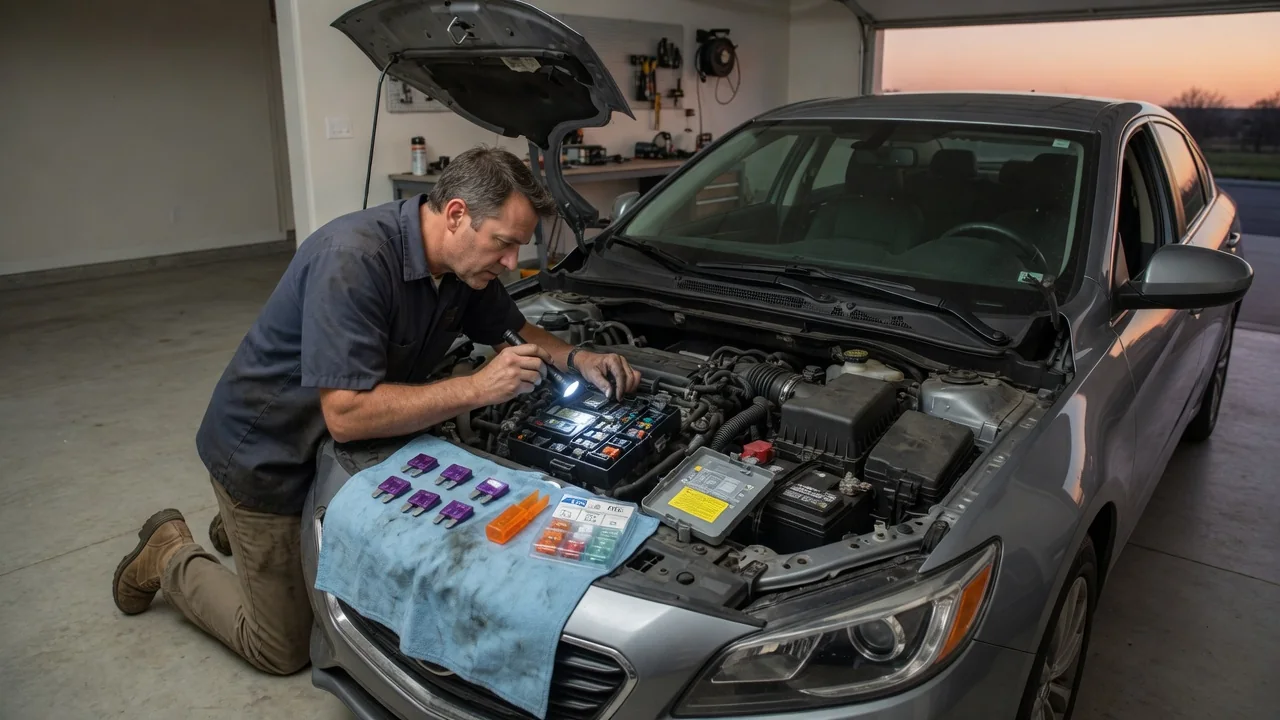
A fuse that blows once may be a one-off event. When a car fuse keeps blowing, the meaning changes: the fuse is working as designed, and something on the circuit it protects is drawing more current than that circuit should carry. Interpreting repeated fuse failure comes down to three questions asked in order: what the fuse actually protects, whether the cause behaves like a short or an overload, and how to service the circuit instead of simply installing another fuse.
Protected circuit
A fuse is a deliberate weak point. Its rating is chosen so that it opens before the wiring downstream overheats, which means it primarily protects the wire and connectors rather than any single component. When the current through it exceeds its rating for long enough, the metal element melts and breaks the circuit. Interpreting a repeated failure therefore starts with a complete picture of what sits after that fuse. The label on the fuse box cover or the fuse chart in the owner's manual is a starting point, but one fuse often feeds several loads. A position marked for accessories, for example, may supply a power outlet, a lighting circuit and a control module at the same time. A wiring diagram from the vehicle's service information shows the full branch, including connectors and splices that are easy to overlook.
It also helps to know what kind of protection is involved. Blade fuses, larger cartridge fuses and fusible links open permanently when they fail, while circuit breakers reset themselves. Many newer vehicles add electronic protection inside power distribution or body control modules, which may switch a circuit off and store a diagnostic trouble code rather than leaving a visibly blown fuse. That behavior is vehicle-specific, so an intact fuse does not always mean the circuit is free of faults. Whether the fuse is battery-fed and always live or switched by the ignition also matters, because it determines when the failure can occur.
Short or overload
Repeated fuse failure has two broad causes. A short circuit gives current a path that bypasses the normal load, usually to ground. Because resistance in that path is very low, current rises sharply and the fuse typically opens the moment power is applied. Common sources include insulation chafed through against sheet metal, a harness pinched by a panel or bracket, water in a connector, a screw driven through a wire during trim work, and a component that has failed internally. A fuse that blows instantly every time it is installed, sometimes with a blackened or vaporized element, points strongly toward a hard short.
An overload is different: current still flows through the intended loads, but more of it than the circuit was designed for. A blower motor with worn bearings, a power window regulator that binds, a cooling fan that drags, or extra accessories tapped into an existing circuit can all push current above the rating. These fuses tend to fail after a delay, during heavy use or in hot conditions, and the element may look stretched or sagged rather than blown apart. A related cause is heat at the fuse itself. A loose, corroded or spread fuse terminal creates resistance at the contact, and the resulting heat can weaken the fuse even when circuit current is normal. Discolored plastic around the fuse position suggests this. Visual clues are useful hints, not proof.
Timing narrows the search further. A fuse that blows only when a particular switch is used implicates that branch. Failure over bumps, when a door or liftgate opens, or when a seat moves points to wiring that flexes, such as harnesses passing through door hinges or under seat tracks. A fuse that fails with the vehicle parked and the ignition off belongs to an always-live circuit. Noting exactly when the fuse opens is often the most valuable information an owner can give a technician.
Service
The first rule of service is never to install a higher-rated fuse or bridge the fuse holder with wire, foil or any other conductor. Doing so moves the weak point from the fuse to the wiring, which can then overheat, melt insulation and start a fire. Replacements should match the type and rating marked on the fuse and in the fuse chart. Repeatedly feeding new fuses into a circuit that keeps blowing them only stresses the fuse holder and wiring without revealing anything new.
Effective diagnosis isolates the fault rather than guessing. Technicians commonly substitute a resettable test breaker or a dedicated short-finding tool for the fuse so the circuit can be powered repeatedly without consuming fuses. Loads on the circuit are then unplugged one at a time: if the fault disappears when a specific component is disconnected, that component or its wiring is the likely cause; if it remains with everything disconnected, the short is in the harness itself. Inspection then focuses on known stress points, recently disturbed areas and any aftermarket wiring, such as remote starters or added lighting. A fuse terminal that shows heat damage should be repaired or the affected part of the fuse box replaced, since a new fuse will not cure a poor contact.
Some circuits call for professional service from the start. Airbag and other restraint wiring, braking and stability systems, engine and transmission control, and module-protected circuits require the correct service procedures for that vehicle. Orange high-voltage cabling on hybrid and electric vehicles should not be handled by owners at all, because it uses different protection devices and carries a serious shock risk.
Practical implications and limits
Whether the vehicle is safe to drive depends on what the fuse feeds. A dead power outlet is an inconvenience, but repeated loss of headlights, wipers, the fuel pump or engine control power can leave a vehicle without essential functions at the worst moment. Carrying spare fuses is sensible for getting home after a single unexplained failure, but a fuse that keeps blowing should be treated as a fault in progress rather than a consumable to be replaced.
There are also limits to what the fuse alone can reveal. Fuse charts vary between model years, trims and markets, so the vehicle's own documentation outranks general descriptions. Intermittent shorts may not reproduce in the workshop, which is why recording the conditions of each failure matters. A circuit can also be faulty without blowing anything: high resistance from corrosion or a damaged wire reduces current, causing dim lights or slow motors instead of fuse failure. Finally, one blown fuse after an identifiable event, such as plugging in a damaged accessory, may not indicate an ongoing problem, but if the fuse fails again once that cause is removed, the circuit needs proper diagnosis.