How to Identify the Correct Diesel Glow Plug Voltage
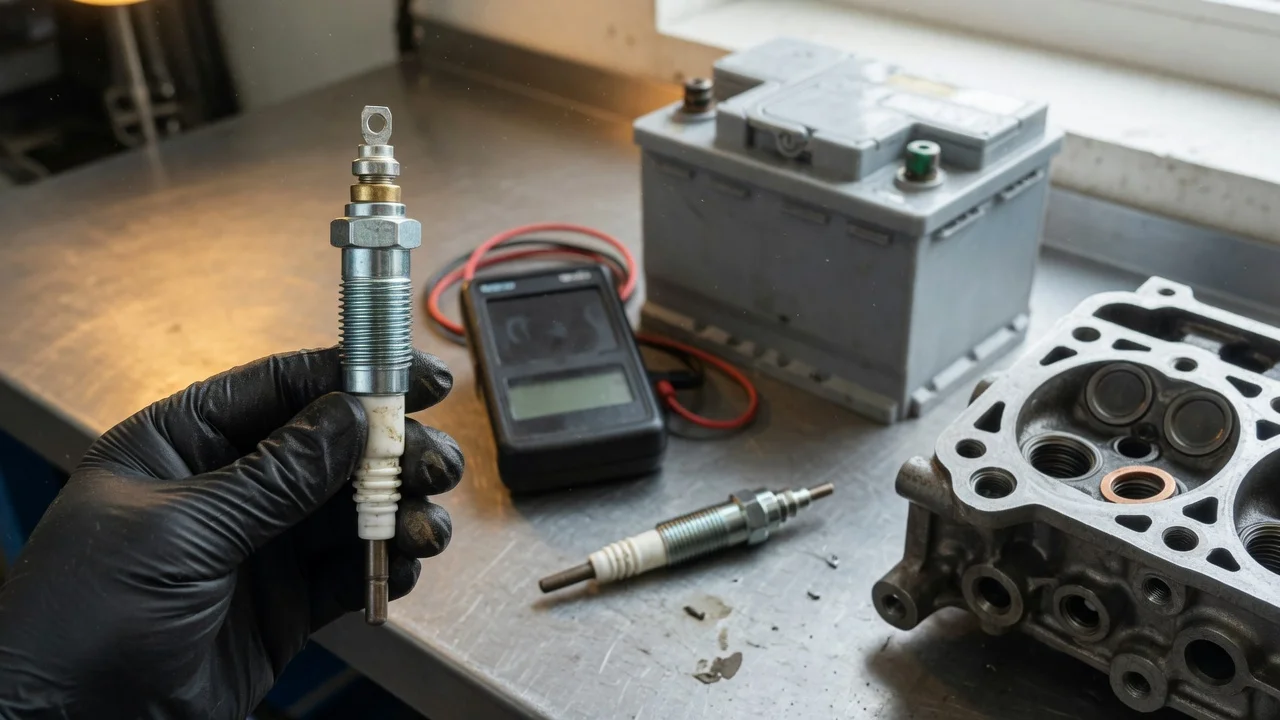
Before you start
Most light-duty diesel glow plug circuits operate at 6V, 7V, 11V, or 12V depending on the vehicle, engine, and control system. A 12V nominal plug is not a universal fit even when the vehicle battery is 12V, because many engines deliberately use a lower working voltage for rapid heating or longer service life. The only reliable way to identify the correct voltage is to check the specification for your exact engine and model year. If possible, have the existing plug type, engine code, and vehicle identification information available before removing parts.
You do not need an online lookup or paid diagnostic service to begin. The task is local to the vehicle: identify the fitted parts and confirm whether the circuit is supplied directly or through a glow control module. A replacement plug must be selected by application and specification, not simply by visual size.
Use a digital multimeter if you plan to test the circuit, and keep the ignition off until you are ready. Do not measure a plug installed in the engine as proof of its rated voltage without following the correct procedure; a cold resistance reading is not the same as a nominal operating voltage.
Step-by-step instructions
The process starts with documentation and ends with a controlled electrical check. Work in this order to avoid copying a previous owner's incorrect part choice into your diagnosis.
1) Find the glow plug specification for the exact vehicle. Check the owner's manual, workshop information, or an application-based parts equivalent list that shows the engine code and plug voltage. 2) Note the engine control method. If the engine has a glow control module or quick-start controller, write down the module's part number or marking before removing it. 3) Inspect the installed plugs while the ignition is off. Record any marking on the plug body, especially the nominal voltage stamped on the hex or body, but do not strip the plug based on a single unclear mark. 4) Compare the fitted plug marking with the replacement spec. If the values differ, treat the engine-application specification as the source when it is confirmed, but investigate why they differ before choosing a different voltage. 5) If a live test is appropriate, use a digital multimeter on the correct range. You can check harness-side supply during a glow cycle with the plug disconnected, or check continuity carefully, but do not rely on resistance alone to infer rated voltage. 6) Replace plugs as a matched set if the manufacturer specifies that, and avoid mixing nominal voltages on the same engine unless a validated application note says otherwise.
Check the output
A correct identification should agree across three signals: the engine-application specification, the marking on a removed plug, and the behavior or wiring of the installed circuit. If the vehicle uses a direct battery feed without a dropping resistor or control module, the nominal plug voltage is more likely to be near system voltage. If the supply passes through a control module or resistor, the applied voltage may be reduced before it reaches the plug.
Do not use a short glow time as proof that a higher-voltage plug is correct. Timing is controlled by the engine system and can be short even on properly matched plugs. Verify the stated rated voltage with a stable source before declaring a mismatch.
Common problems and next steps
A recurring mistake is selecting a glow plug by engine family or physical size while ignoring the rated voltage for the specific model year or emission package. The same basic engine may use different plugs across variants, so a visually identical plug can be electrically unsuitable.
If the measured supply does not match the specified plug, check the control path before changing the voltage. A shorted control module, damaged harness, or incorrect relay output can also affect the reading. When the plug itself is suspect, remove it, inspect the tip for swelling or damage, and compare its marking with the confirmed specification.
When the exact plug voltage cannot be determined from the available markings, stop and identify the engine application rather than guessing. A wrong-voltage plug can fail quickly, damage the controller, or be left broken in the cylinder head. In that case, seeking an application-specific replacement or a qualified diesel specialist is safer than continuing the test.