How to Flush a Car Radiator
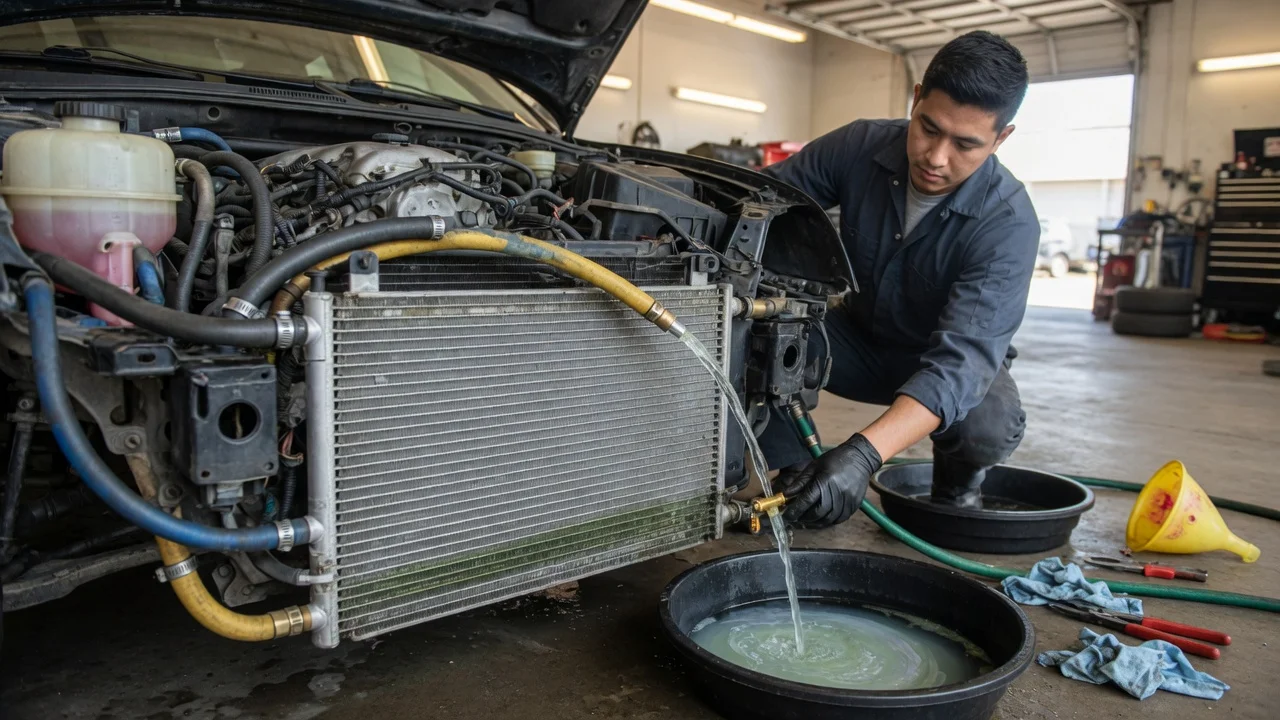
A radiator flush clears old coolant, rust particles, and sediment from the cooling system. The process is performed on the vehicle itself using a catch pan, fresh coolant or flushing product, and water. This guide covers a basic drain-and-rinse procedure; follow the vehicle owner's manual for model-specific steps, coolant type, and disposal rules.
Before you start
Let the engine cool completely before opening the cooling system. Warm coolant can spray and cause burns, and a hot engine gives an inaccurate coolant level reading. Park on a level surface, set the parking brake, and place a large drain pan under the radiator. Check the owner's manual for the correct coolant specification and capacity, because mixing incompatible coolant types can reduce cooling performance.
Step-by-step instructions
The basic procedure is similar across many vehicles, but radiator drain locations and air-bleeding steps vary by model. The process is reversible up to the point of disposal: drained coolant can be collected and, if still serviceable, reused only when it is clean and matches the required specification. Otherwise, treat disposal as a local regulatory matter.
1) Open the hood and inspect the radiator, hoses, and coolant reservoir. If the radiator cap is damaged, the hoses are cracked, or the coolant looks oily, stop and repair the cooling system before flushing.
2) Position the drain pan below the radiator drain valve or petcock. On vehicles without a drain valve, place the pan below the lower radiator hose connection.
3) Open the radiator cap slowly to release residual pressure, then open the drain valve or carefully disconnect the lower radiator hose. Let the old coolant drain into the pan.
4) Close the drain valve or reconnect the lower hose. Fill the radiator with clean water, start the engine, and let it reach normal operating temperature with the heater set to full hot so coolant circulates through the heater core.
5) Turn the engine off and let it cool. Drain the water, then repeat the water fill and drain cycle until the drained liquid runs clear. Use a radiator flush product according to its instructions if heavy deposits remain.
6) After the final drain, close the valve and fill the system with the correct coolant mixture. Add coolant to the radiator and reservoir to the levels shown in the owner's manual, then replace the cap.
7) Start the engine with the heater on and let it warm up. Watch the temperature gauge and check for leaks at the drain valve, hoses, and cap.
Check the output
A successful flush leaves clean coolant in the reservoir and stable engine temperature during warming. After the engine cools, recheck the radiator and reservoir levels and top up if needed. If the drained liquid was heavily rust-colored or contained sludge, a repeat flush may be needed; a basic flush cannot remove internal blockages or deep scale.
Common problems and next steps
Coolant should not be poured on the ground or into storm drains. Many auto parts stores and local waste facilities accept used coolant, so confirm the collection rules in your area before starting.
If the engine runs hot after refilling, the most likely causes are trapped air in the cooling system, a stuck thermostat, or insufficient coolant. Bleed air using the procedure in the owner's manual, then inspect the thermostat and water pump if the temperature remains high.
Persistent brown coolant shortly after a rinse may indicate internal corrosion or a leaking head gasket. Oily residue, white exhaust smoke, or unexplained coolant loss need professional diagnosis rather than another flush.