How to Fix Squeaky Car Door Hinges
A squeaking door hinge turns a routine drive into an annoyance, but the fix is usually simple and inexpensive. The noise typically comes from dry metal contact or wear at the pivot point, and understanding what to use on squeaky car door hinges helps you choose a lubricant that will last. With basic tools and the right product, you can stop squeaky car door hinges in a few minutes and confirm the door moves smoothly without stressing the latch, weather seal, or alignment.
Direct answer
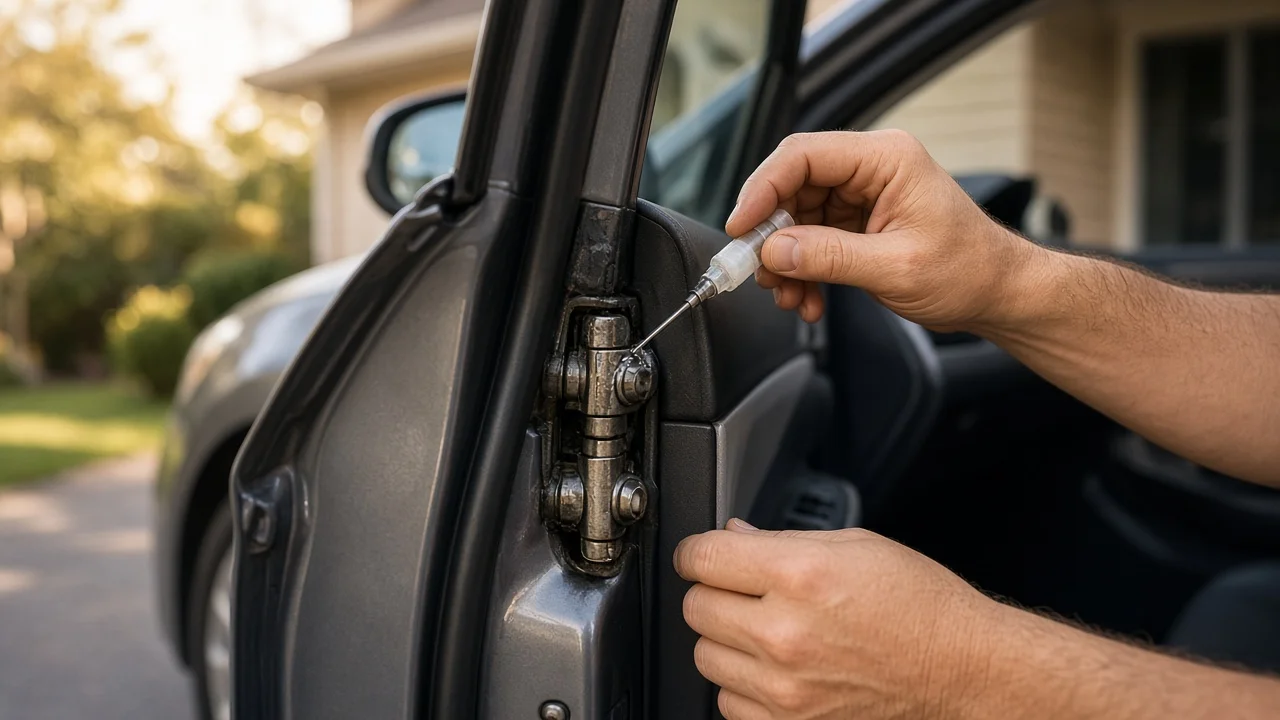
To fix a squeaky car door hinge, clean the pivot area and apply a suitable lubricant that penetrates the joint and leaves a lasting film. The best choices are white lithium grease, a heavy-duty spray lubricant, or a dedicated hinge grease. Light oils such as WD-40 can quiet the noise temporarily but often wash out quickly, so they are a short-term remedy rather than a durable repair for exposing the metal-on-metal contact.
The condition that changes the answer is hinge wear. If the door drops slightly when opened or the hinge pins show visible side-to-side movement, lubrication may reduce noise but cannot restore proper vehicle fitment. In that case the hinge or its bushing may need replacement. For most vehicles, however, a dry pivot is the cause, and the sound will respond to the correct product applied where the two hinge halves rotate.
How to proceed
Begin by supporting the door or opening it in stages so the hinge is accessible. Wipe the pivot pin and surrounding metal with a rag to remove loose dirt and old grease. Apply the lubricant directly to the pin where it passes through the hinge halves, and work the door slowly back and forth so the product draws into the joint. A spray with a straw helps reach the upper and lower pivots without spreading lubricant onto the weather seal or painted surfaces.
After a few cycles, wipe away excess lubricant from the outer hinge surfaces and the surrounding door jamb. Excess grease can collect dust and eventually create a thick paste that strains the hinge and latch. Confirm the squeak is gone by opening and closing the door at normal speed. Listen for any remaining click or groan that could indicate a worn hinge pin, a loose bolt, or a misaligned latch rather than simple dryness.
Understanding a problem
A squeak is a high-frequency vibration caused by two dry surfaces rubbing under load. On a car door, the lower hinge usually carries more weight and tends to become noisy first. The sound can change with temperature and humidity, often becoming louder in dry weather or after washing, which is consistent with lubricant breaking down or washing out of the pivot rather than a sudden structural failure.
To narrow the cause, open the door slowly and listen at the top and bottom pivot. A creak that changes when you lift the door handle may point to a worn hinge pin or bushing, while a noise that appears only near the closed position can come from the latch or striker. If lubricating the hinge does not stop the noise, inspect the latch and weather seal for dry contact or misalignment before assuming the hinge itself is damaged.