How to Find the Clutch Bite Point
Learning how to find the clutch bite point is the foundation of driving a manual transmission smoothly. The bite point is the place in the pedal's travel where the clutch disc begins to grip the flywheel and engine power starts reaching the wheels. Recognizing it by feel, sound, and vehicle movement turns jerky, stalled launches into calm, controlled starts.
Pedal movement
With the pedal pressed fully to the floor, the clutch is disengaged and the engine spins independently of the gearbox. As the pedal rises, the pressure plate gradually clamps the friction disc against the flywheel. The bite point is not the top or the bottom of the travel but a narrow band somewhere in between, where the first grip occurs. Raising the pedal slowly through that band, rather than letting it spring up, is what lets a driver feel the transition instead of being surprised by it.
Where that band sits differs from one vehicle to another. Some cars engage close to the floor, others near the top of the travel, and the position can shift as the friction material wears or after clutch components are replaced. Hydraulic and cable-operated systems can also feel different underfoot, with varying pedal weight and spring resistance. Keeping the heel resting on the floor and pivoting the ankle gives finer control than lifting the whole leg, which makes small pedal movements easier to judge.
Engine response
The engine gives the clearest signal that the clutch has begun to bite. At idle with first gear selected, slowly raising the pedal eventually loads the engine, and the revs dip slightly as it starts to work against the weight of the car. The engine note deepens, and the tachometer needle, if fitted, drops a little. At the same moment the nose of the car may lift slightly, or the body may strain gently forward against the brakes.
If the pedal keeps rising without any added throttle, the revs may fall far enough that the engine shudders and stalls. That is why a small, steady amount of accelerator is usually blended in as the bite arrives. How much is needed varies: a diesel or a larger engine with strong low-speed torque may pull away at idle with almost no throttle, while a small gasoline engine typically needs a few more revs. Many modern cars also raise idle speed automatically to resist stalling, which softens the cues.
Gentle practice
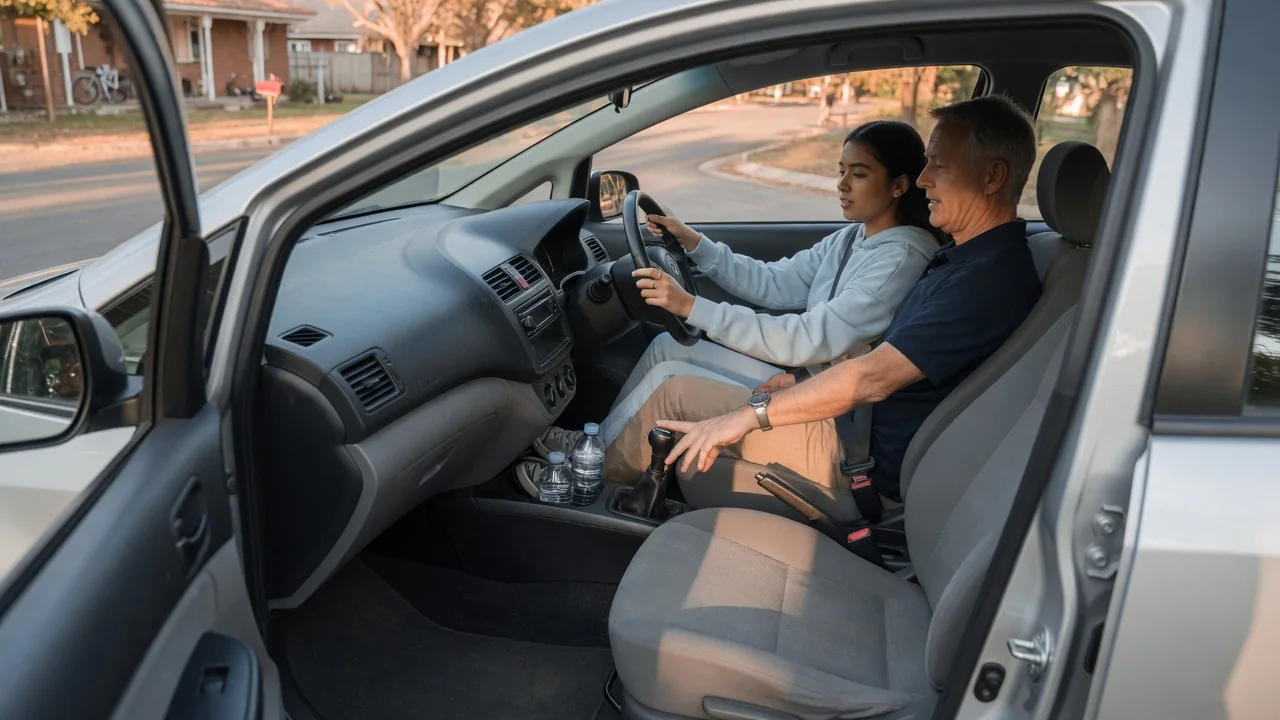
A flat, empty parking lot or quiet private area is the best place to learn, away from traffic and pressure. With the engine running, the clutch fully depressed, and first gear selected, the driver releases the parking brake and raises the pedal very slowly without touching the accelerator. When the car begins to creep forward, the pedal is at the bite point. Pressing the clutch back down and repeating this several times builds a memory of the exact foot position.
Once the creep is familiar, the next step is holding the pedal steady at the bite for a moment, adding light throttle, then continuing to release smoothly until the foot is completely off. Pausing at the bite, rather than rushing past it, is what prevents the lurch that beginners often experience. Stalling during practice is normal and does no meaningful harm when it happens occasionally at low speed. Short sessions work well, since tired legs tend to produce clumsy pedal work and a hot clutch can smell.
Everyday Use and Observations
In daily driving, the bite point becomes something felt rather than hunted for. Pulling away from a stop sign, creeping in slow traffic, and reversing into a parking space all rely on brief, controlled slip around that point. Hill starts add another element: the car is held with the parking brake or foot brake until the bite is felt taking the load, then the brake is released as throttle is added. Some vehicles include hill-start assist, which holds the brakes momentarily.
Drivers switching between vehicles should expect to relearn the engagement point each time. A rental car, a pickup truck, and a small hatchback can each bite at a different height with a different pedal weight, and footwear with thick soles can dull the sensation. A few slow practice launches before joining traffic are worthwhile. It also helps to avoid resting a foot on the pedal while cruising or holding the car on a slope with the clutch, since both keep it slipping and generate heat and wear.
Limits and Next Steps
Finding the bite point is a skill, but it also reveals something about the clutch's condition. An engagement point that moves noticeably over time, a pedal that feels spongy or unusually stiff, shuddering during takeoff, or engine revs rising without matching acceleration can all suggest that the system needs attention. None of these signs identifies a specific failed part on its own, since wear, hydraulic issues, adjustment, and contamination can produce similar feelings. A qualified technician can inspect the vehicle and confirm the cause.
The technique itself has limits too. Sitting at the bite point for long periods, such as inching uphill in traffic, wears the friction surfaces faster than clean, complete engagements. Once smooth level starts feel routine, sensible next steps include gentle inclines, tighter low-speed maneuvers, and smooth upshifts and downshifts, where the same sense of engagement applies in a shorter moment. The owner's manual may describe vehicle-specific features, such as a clutch start interlock or anti-stall behavior, that affect how the pedal responds.