How to Estimate Your Car’s Trade-In Value Before Buying Used
What trade-in value is
Trade-in value is the amount a dealer will credit toward another vehicle when you sell your current car to that dealer as part of the purchase. It is a wholesale-style offer, not a retail asking price. Dealers typically offer less than a private buyer would pay because they must inspect, recondition, and resell the car and still leave room for profit. Before you shop for a used car, that estimate is the figure that tells you how much cash or financing you still need after the credit, and whether you have positive equity or negative equity.
Positive equity means the likely trade-in credit is higher than the loan payoff on the car you are selling. Negative equity means you owe more than the car is worth; the shortfall is usually added to the next deal unless you pay it down. The same car can produce different trade-in offers from different dealers, and published guide values are ranges, not a guaranteed check. Mileage, mechanical and cosmetic condition, accident and title history, options and trim, local demand, season, and how you negotiate the trade separately from the purchase price all move the number.
What you need before you look up a number
An estimate is only as accurate as the description you feed into it. Gather the vehicle identification number (VIN), model year, make, model, exact trim, powertrain (engine, fuel type, and drive type), major options, and current odometer reading. Pull the latest loan payoff from the lender, including the “good-through” date, because payoff amounts change with daily interest. Collect service records, tire and brake condition notes, and any disclosure you already have about accidents, flood or salvage branding, or unresolved warning lights. If you cannot confirm trim, options, or title status, treat any guide figure as a wide range rather than a budget you can spend.
How to build a realistic estimate
Work in this order so the used-car budget is based on your car as it actually sits, not on a clean example in a guidebook.
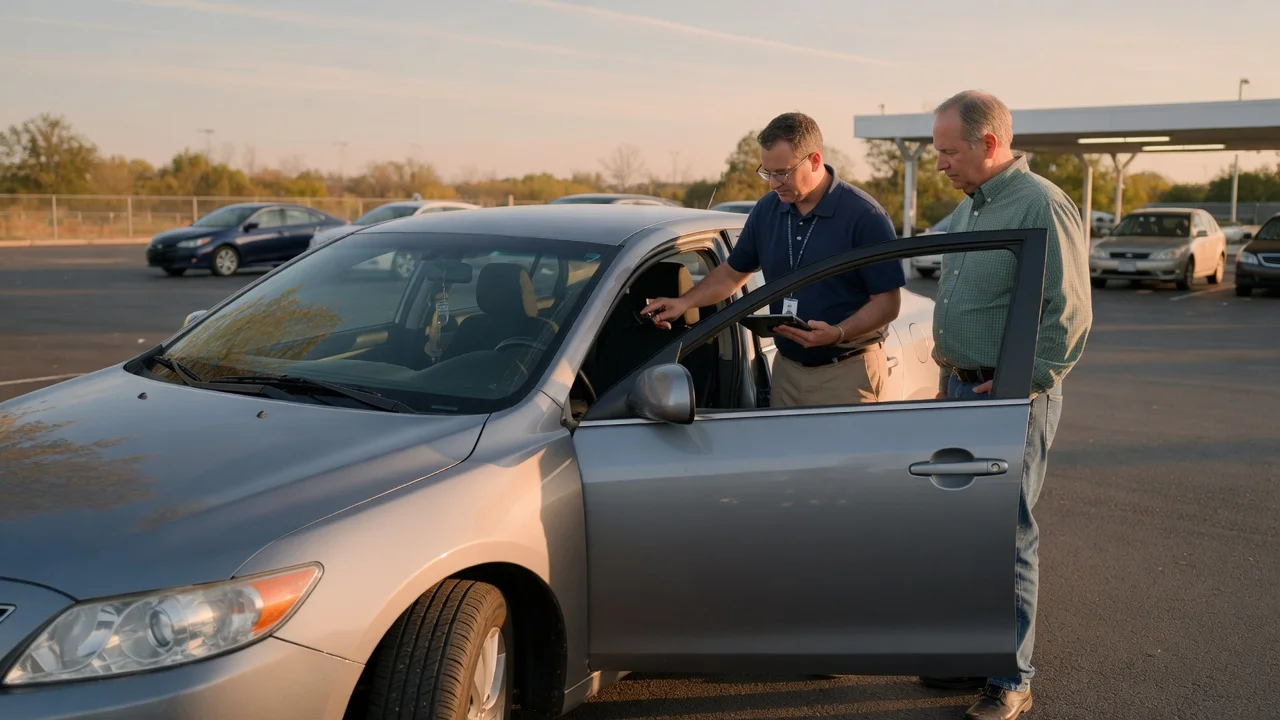
Identify the exact vehicle. Use the VIN and window sticker or build sheet if you have them. Wrong trim, engine, or drivetrain is the most common reason a published value does not match a dealer offer. Grade condition honestly. Typical guide categories run from rough through extra-clean and consider body, interior, tires, remaining brake life, odors, warning lights, and whether scheduled maintenance is current. Photograph all sides, the interior, the odometer, and any damage so your grade is consistent when you compare sources. Look up published trade-in ranges. Valuation guides such as Kelley Blue Book produce trade-in, private-party, and retail figures from year, make, model, trim, mileage, options, and condition. Use the trade-in column for a dealer credit, and note the private-party figure as the usual ceiling if you sold the car yourself. These tools give typical market ranges; they are not an appraisal of your specific car and they do not replace a physical inspection. Get live offers. Request written trade-in quotes from more than one franchise or independent dealer, and from any instant-offer program you are willing to use. Bring the same description and photos to each so the quotes are comparable. A dealer who has already inspected the car can adjust for issues a guide cannot see. Subtract what you owe. Equity equals the best realistic offer minus the lender payoff (and any taxes or fees your jurisdiction applies at payoff or transfer). If the result is negative, that amount is money you must bring to the used-car deal or roll into the next loan. Set the used-car budget from the credit, not from the sticker of the car you want. Out-the-door cost of the next car minus trade credit minus down payment is the amount you still have to finance or pay in cash.
Completion check: you can state a low-to-high trade-in range for your car in its current condition, you know the payoff and the resulting equity, and you can name the cash or loan amount still required for a used car in your price band. If a dealer’s offer sits far below every other quote and the published trade-in range, ask which defects or market factors they used; if you cannot verify those factors, keep shopping the trade rather than accepting the first number.
What usually moves the offer
Factor | Why it changes trade-in value; Year, make, model, and trim | Demand and typical wholesale prices differ sharply by exact configuration. Mileage | Higher miles generally lower the offer; unusually low miles can raise it if the rest of the car supports the reading. Condition and reconditioning cost | Paint work, interior repairs, tires, brakes, and warning-light diagnosis come out of the dealer’s bid. Accident, title, and history reports | Salvage, flood, odometer, or branded titles often cut value severely or make a dealer decline the car. Options and packages | Factory equipment that buyers still want can add value; damaged or missing equipment can subtract it. Local market and season | A truck in winter or a convertible in summer may bring more in some regions than the same car elsewhere. How the deal is structured | Mixing the trade allowance into the price of the next car can hide a weak offer; a separate written trade figure is easier to compare.
Limits of any estimate
A guide value is a snapshot of typical transactions, not a promise. It can lag a fast-moving used market, and it cannot see unrepaired collision damage, a failing transmission, a flood history that has not hit a report, or a trim your VIN does not actually have. Instant online offers may expire, may require an in-person inspection, and may be reduced after that inspection. This article cannot quote current dollar ranges for a specific model year, powertrain, or region; those figures have to come from a current valuation tool and from dealers who have seen the car.
Tax treatment of a trade-in, title and registration steps, and whether sales tax is charged on the full price of the next car or on the price minus the trade credit all depend on the jurisdiction where the deal is closed. Confirm those rules with the dealer’s paperwork and with the motor-vehicle agency that will issue the next title. Safety-critical defects found during a trade inspection—such as inoperative lights, unsafe tires, or unresolved airbag warnings—can both lower the offer and require repair before the car is retailed; those repairs belong to a qualified shop, not to a valuation worksheet.
Using the estimate when you buy used
Keep the trade negotiation separate from the price of the used car you want. Agree on the used car’s out-the-door price first, or at least obtain a written trade offer that stands on its own, so a higher allowance is not offset by a higher purchase price. If several trade offers cluster in a narrow band and one is much higher, read the high offer’s fine print for inspection contingencies. If private-party value is substantially above every trade offer and you can wait, selling the car yourself can raise what you take home, at the cost of time, showing the car, and handling title transfer. Once equity is known, shop used cars whose out-the-door cost still leaves a payment and cash-down amount you have already calculated, rather than stretching the next purchase to “use up” a trade credit.