How to Estimate Your Car’s Trade-In Value Before Buying a Used Car
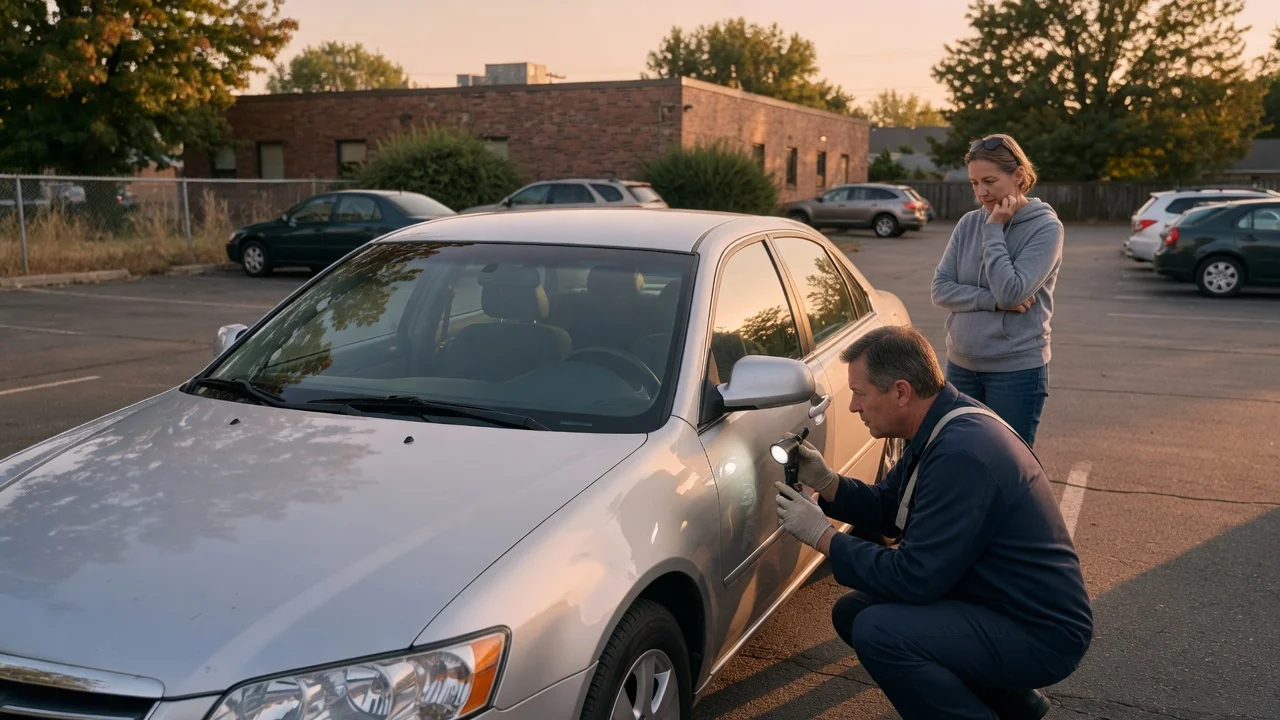
Trade-in value is the amount a dealer will credit you for your current vehicle when you apply it toward another car. Before you shop for a used car, that estimate is the practical budgeting figure: it is what you can reasonably expect a dealer to subtract from the next purchase after inspecting your car. It is almost always lower than a private sale of the same vehicle, because the dealer must recondition, hold, and resell it. The figure is not a single official price. It moves with the exact vehicle, its condition and mileage, local demand, remaining loan balance, and how the next deal is written.
What the figure actually represents
A trade-in is a sale to the dealer, paid as credit on another vehicle rather than as cash. Dealers and value guides use three related numbers that are easy to mix up.
Trade-in value: what the dealer will give you as credit if they take the car in on a purchase. Private-party value: what a typical private buyer might pay for the same car in similar condition. Retail value: what a dealer might charge a retail customer for that car after reconditioning.
Your planning number for a dealer purchase is trade-in value. Private-party value matters when you are comparing whether to sell the car yourself and buy the next one separately. If you still owe money on the vehicle, the credit is applied against that loan first. Positive equity is the trade credit minus the payoff; that remainder is what actually reduces the next car’s cost. Negative equity means the payoff is larger than the trade credit, and the shortfall is typically added to the next deal unless you pay it another way.
What changes the estimate
The same model year can appraise very differently. Claims about “average” value apply only to vehicles that match the listed year, market, powertrain, equipment, and condition. Material conditions include:
Exact identification: year, make, model, trim, engine, drivetrain, and factory options. A higher trim or a popular powertrain can move the appraisal more than a minor cosmetic extra. Mileage relative to the vehicle’s age and typical use. Mechanical and cosmetic condition, including tires, brakes, paint, interior wear, warning lights, and whether required maintenance is documented. Accident history, salvage, flood, or other title branding, and unrepaired damage. Local demand, season, and how many similar cars are for sale nearby. Remaining factory or certified warranty, and service records. How you structure the deal, including whether you have competing offers.
If a guide does not list your powertrain, market, or condition, treat any printed number as a starting range, not a quote. Current dollar values cannot be stated here; they depend on the vehicle and the market on the day of appraisal.
How to estimate the credit before you shop
You do not need special tools. You need the vehicle’s facts, an honest condition grade, the loan payoff if any, and more than one data point. Work through the steps in order so the range you take into a used-car store is based on the same car a dealer will inspect.
Identify the car precisely. Use the window sticker, owner’s manual, or the vehicle identification number (VIN) on the car’s documents to lock down year, make, model, trim, engine, and major options. Wrong trim is a common reason estimates miss. Record current mileage and recent work. Note tire condition, known brake or warning-light history, and the last major services. Gaps in records usually pull an appraisal down. Grade condition without optimism. Typical bands are rough, fair, good, and excellent, though wording varies by guide. Excellent usually means the car looks and runs like a well-kept example with no unrepaired issues. Most daily drivers sit in fair to good. Photograph the exterior, interior, wheels, and any damage so your grade matches what an appraiser will see. Get the loan payoff in writing from the lienholder, including an expiration date. An estimate that ignores the payoff overstates what you will have available for the next car. Collect several independent estimates. Use more than one published used-vehicle value guide for your exact configuration, mileage, and condition, and look at recent local asking prices for matching cars. Asking prices are not what you will be paid; they show whether the local market is stronger or weaker than a broad average. Obtain at least two dealer appraisals, ideally from stores that also stock the type of used car you want. An appraisal is an offer, not a guide number. It can change after a test drive, a scan for stored fault codes, or a review of the vehicle history report. Convert the credit into net position. Subtract the loan payoff from the likely trade credit. The result is the amount that actually comes off the next purchase, or the amount you still need to cover. Compare that with a realistic private-sale net after your time, selling costs, and the risk of waiting.
A usable estimate is a range, not a single dollar figure. You have enough to shop when you can state a low-to-high trade credit, the payoff, and the resulting equity, and you have at least one actual dealer number to check the range against. If the title is branded salvage, flood, or lemon, or the car has unrepaired structural damage, published averages often do not apply; rely on a dealer or specialist appraisal of that specific vehicle.
How the estimate should change the used-car purchase
Shop the next car with three numbers in view: the used car’s price, your likely trade credit, and your payoff. The amount to compare across dealers is the out-the-door cost of the next car after trade credit, taxes, and fees, not the monthly payment alone.
Ask the dealer to write the used car’s price and the trade allowance as separate lines. A high allowance paired with a high selling price can look generous while leaving you in the same place. If you already have an independent range, you can tell whether the allowance is weak, or whether the selling price is absorbing a strong-looking trade.
Whether a trade-in reduces the taxable price depends on the jurisdiction. Some places tax the difference after trade; others tax the full selling price. Treat any tax saving as a local rule, not a universal benefit, and confirm it where you will title and register the next car. That legal treatment is not verified here for any specific state or country.
If the used car you want is at a store that will not appraise your trade competitively, you can sell privately, or you can try to complete the trade and the purchase at different dealers if both will handle the paperwork that way. Those paths take more time and may not be offered.
What this estimate cannot tell you
No guide can promise what a specific dealer will pay on a given day. Wholesale demand, reconditioning cost, and the dealer’s own used-car mix all sit outside published averages. A clean history report and a pre-purchase inspection of the car you are buying are separate from the trade appraisal. A strong trade does not make a poor used car a good purchase.
Figures in this guide are qualitative. Current dollar values, tax treatment, and title-branding rules are vehicle-, market-, and jurisdiction-specific. Confirm them against a current payoff letter, a current appraisal of your car, and the motor-vehicle rules where you title the next car.