How to Dry a Car Interior After Water Gets In
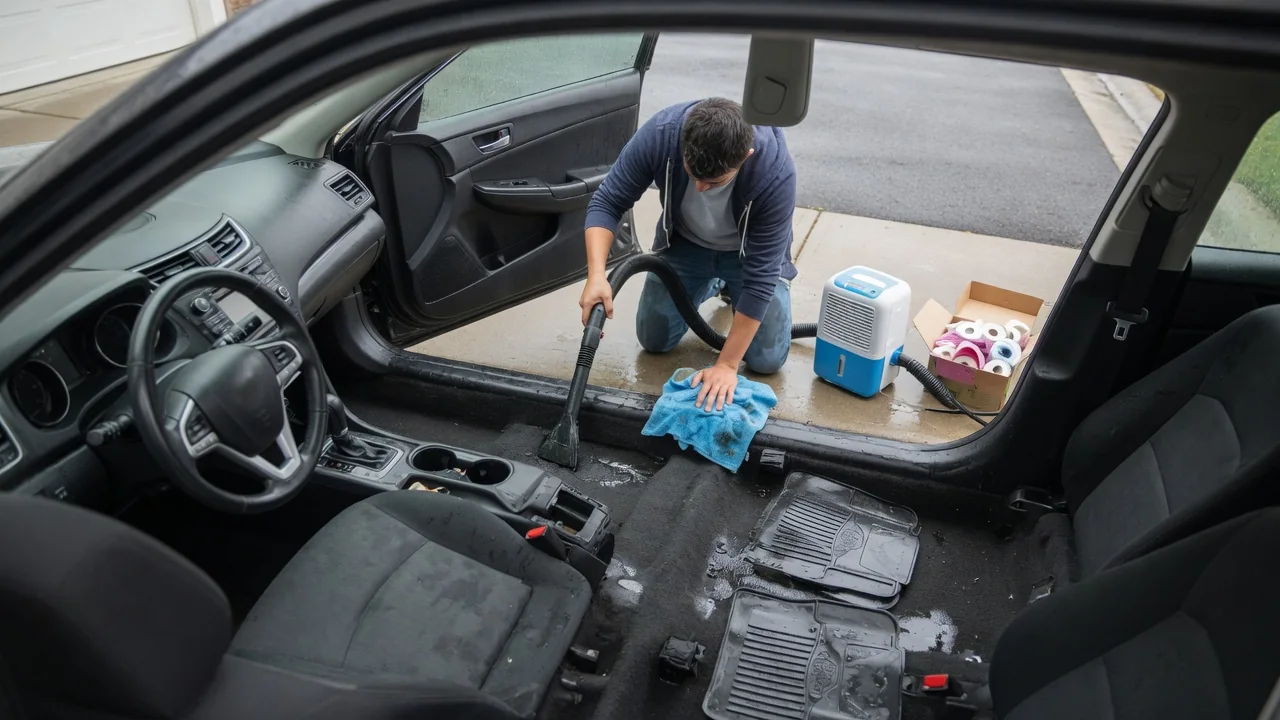
Knowing how to dry a car interior after water gets in matters because carpet, foam and sound insulation hold moisture long after the surface feels dry. Whether the cause was an open window in a storm, a spilled cooler or a leak, working in the right order, from bulk water to hidden padding to the source, limits odor, mildew and electrical trouble.
Remove water
Start with the water you can see, because every hour it sits lets more soak downward into padding. Pull out removable floor mats and let them drain and dry outside the vehicle. A wet/dry shop vacuum is the most effective tool for standing water and saturated carpet; press the nozzle firmly into the pile and work slowly, since slow passes pull water from deeper in the fibers. Absorbent towels pressed down with body weight help where a vacuum is not available, and should be swapped out as they saturate.
As you work, notice where the water collects. Floor pans have low spots, so water often pools in the footwells or under the seats rather than where it entered. Many vehicles have rubber drain plugs in the floor, but their location and accessibility vary by model, so check the owner's manual before prying at anything. Seats deserve attention too: cloth upholstery can be extracted with the vacuum, while leather and vinyl should be wiped promptly so water does not sit in seams and perforations.
Dry concealed materials
The carpet surface is only the top layer. Beneath it usually sits a thick pad of foam or fibrous jute-style insulation that behaves like a sponge, and it can stay wet for weeks while the carpet above feels dry to the touch. Pressing a dry paper towel hard into the carpet is a simple test; if it comes up damp, the padding is still holding water. Lifting the carpet edge at the door sill, where trim allows, lets air reach the underside and shows how wet the pad really is.
Airflow and dehumidification do the rest. On a dry, warm day, open doors and windows and aim a fan across the floor. In humid or cold weather, a closed car with a household dehumidifier or moisture-absorbing desiccant works better, because outside air may add moisture instead of removing it. Running the heater with the air conditioning on also pulls humidity from cabin air. Be careful around wiring: many vehicles route harnesses, connectors and control modules under the carpet or seats, so avoid soaking, tugging or directing high heat at those areas.
Identify entry point
Drying is wasted effort if the water returns with the next rain or wash. If the cause was not obvious, such as a window left down, look at where the dampness is concentrated. Wet front footwells can point toward a blocked cowl drain, a windshield seal, or a clogged air conditioning condensate drain, which lets clear water drip inside instead of under the car. A damp headliner or wet pillar trim suggests sunroof drains, while a wet trunk floor often traces to tail lamp gaskets or the trunk seal.
The type of liquid is a clue as well. Plain water that appears after rain points to a body leak, but a sweet-smelling, slightly oily dampness on the front floor, sometimes with a greasy film fogging the windshield, may indicate coolant from the heater core and deserves prompt attention. A careful check with a helper running a gentle hose over one area at a time, starting low and moving upward, can reveal the path. Door seals, the plastic barrier inside door panels and drain routing differ between vehicles, so results need model-specific confirmation.
Everyday Use and Observations
Over the following days, the car itself tells you whether drying worked. Windows that fog heavily on the inside each morning, especially when other cars nearby stay clear, signal moisture still evaporating from somewhere in the cabin. A musty or sour smell that grows stronger after the car sits closed in the sun is another sign, as is carpet that feels cool and clammy. Checking the same spots daily with a dry towel gives a simple, repeatable way to track progress.
Habits help during this period. Leave rubber mats out until the carpet beneath is fully dry, because they trap moisture against the floor. Use fresh-air mode instead of recirculation so humid cabin air is exchanged, and crack the windows when the car is parked in a secure, dry place. Avoid masking odors with air fresheners, since a smell that persists is useful information. Also watch for electrical oddities such as flickering warning lights or erratic power accessories, which can appear days later as connectors corrode.
Limits and Next Steps
Home drying has limits. If water rose above the door sills, reached the seat cushions, or came from flooding, sewage or salt water, the contamination and the amount of soaked material generally go beyond what fans and a vacuum can address. Professional detailers and body shops can remove seats and carpet, replace padding and dry the bare floor. Flood exposure can also affect airbag components, seat wiring and modules, and those systems should be inspected by a qualified technician rather than disturbed at home.
Seek help as well when moisture keeps returning despite thorough drying, when visible mold appears, or when the leak source cannot be found. A shop can perform a controlled water test or use smoke equipment to trace entry paths that are hidden behind trim. If the damage followed a storm or flood, photograph the interior before cleaning and contact your insurer, since coverage depends on the policy. Once the cabin stays dry through several rainy days and the smell is gone, the mats can go back in.