How to Drive a Manual Transmission Car: Step-by-Step for Beginners
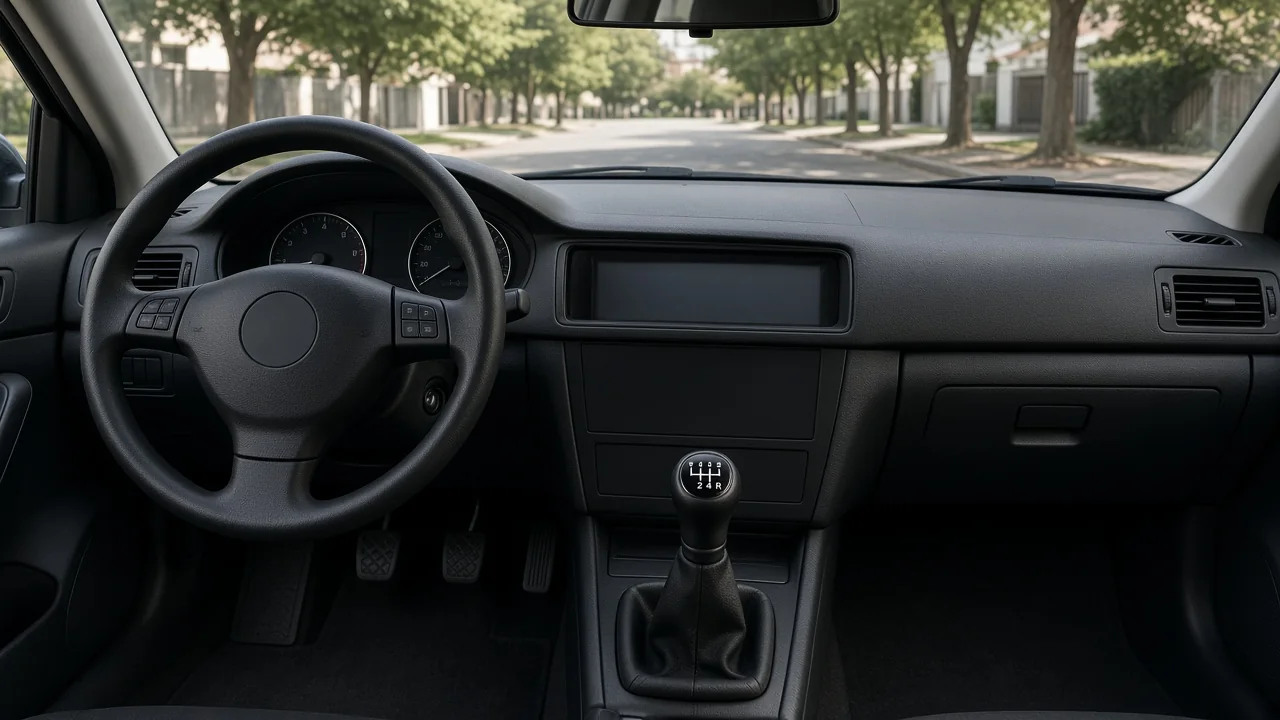
Learning to drive a stick shift comes down to coordinating the clutch, the accelerator, and the gearshift so power flows smoothly to the wheels. It feels awkward at first, but each skill builds on the last. Progress comes in stages, from sitting in a parked car to starting, shifting, stopping, handling hills, and judging when you are ready for real traffic.
Get Familiar With the Pedals and Gearshift Before Starting
A manual car has three pedals. From left to right they are the clutch, the brake, and the accelerator. Your left foot works only the clutch, which disconnects the engine from the transmission when pressed. Your right foot moves between the brake and the accelerator. Neutral is the position where no gear is engaged, and the lever usually rocks freely side to side there. The gearshift pattern, often printed on the knob, shows where each gear sits. Reverse engagement varies; some cars require lifting a collar or pressing the lever down, so check the owner's manual.
Adjust the seat so you can push the clutch all the way to the floor with a slight bend remaining in your knee, since a partly depressed clutch can cause grinding during shifts. Fasten your seat belt and set the mirrors as well. Choose a legal, open space such as an empty lot, with a qualified supervising driver if your license requires one. With the engine off, the parking brake set, and the car secured, rehearse pressing the clutch and moving the lever through each gear until the motions feel familiar.
Start the Engine and Learn the Clutch Bite Point
A typical start begins with the parking brake applied, your right foot on the brake, the lever in neutral, and the clutch pressed to the floor. Many cars will not crank otherwise, but starting procedures differ, so follow the owner's manual. Next comes the bite point, the part of the clutch travel where power starts reaching the wheels. You may notice engine speed dip slightly, the sound deepen, or the car begin to squat and creep. Where exactly it falls, and how clearly it announces itself, varies from car to car.
On level ground, select first gear, then raise the clutch slowly to the bite point while adding gentle throttle. Release the parking brake when you are ready to move, and continue lifting the clutch smoothly until it is fully engaged. Then take your left foot off the pedal entirely, because resting it there or lingering in the slipping zone wears the clutch. If the engine stalls, press the brake and clutch, select neutral, and apply the parking brake. Restart, check mirrors and surroundings, and try again with a little more patience.
Shift Up and Down Without Rushing the Controls
To upshift, ease off the accelerator, press the clutch fully, and move the lever to the next gear with a firm but unhurried hand. Then release the clutch smoothly while reapplying throttle so the car continues forward without a jerk. There is no single correct shift point for every car. Listen to the engine, watch road speed, and use any shift indicator or guidance your vehicle provides. Shifting too early leaves the engine laboring, while waiting too long makes it rev loudly for little gain.
Downshifting uses the same clutch motion, but slow to a speed suited to the lower gear before selecting it, then release the clutch progressively. Choosing a gear that is too low for your speed can overrev the engine and unsettle the car. Lugging, shuddering, or struggling to accelerate usually signals a gear that is too high, while racing revs suggest one too low; these are cues about gear choice, not proof of a mechanical fault. Look well ahead so shifts are planned, and return your hand to the wheel after each one.
Slow Down, Stop, and Secure the Car
When slowing, lift off the accelerator and brake while still in gear, which keeps the car stable and connected to the engine. As speed drops toward the point where the engine would begin to shudder, press the clutch fully so it does not stall. A normal stop does not require working down through every gear; you can often brake in your current gear and select a suitable one only if you need to pull away again. Traffic, grade, and your vehicle's guidance determine the best approach.
During a settled wait, hold the car on the brake, move to neutral, and release the clutch to rest your leg, staying ready to reselect first when traffic moves. Avoid coasting with the clutch pressed or in neutral while moving, because you lose engine braking and may struggle to pick the right gear quickly. When parking, set the parking brake and select the gear your owner's manual recommends for the slope. Never rely on neutral alone to keep a parked car from rolling.
Practice Hill Starts With Controlled Brake Release
Save hill starts until level-ground starts feel consistent. Begin on a gentle incline with a supervising driver and clear space behind you. In vehicles with a conventional parking brake, hold the car with it, select first, and bring the clutch to the bite point while adding somewhat more throttle than on flat ground. When you feel the car pulling against the brake, release it smoothly and continue lifting the clutch. Electronic parking brakes and hill-start assist systems behave differently from model to model, so learn how yours works from the owner's manual.
If the car starts rolling backward or the engine stalls, press the brake firmly and push the clutch fully down, then apply the parking brake before trying again. Rollback is usually a timing issue rather than a sign of failure, and a calm reset works better than a rushed second attempt. Resist holding the car stationary on a slope by balancing clutch slip against throttle. That habit generates heat in the clutch and accelerates wear, and a smell of hot friction material means you are overdoing it.
Build Confidence Through Short, Focused Practice
Progress in stages: stationary familiarization, then repeated starts and stops, simple shifts between first and second, gentle hills, and finally supervised road driving once basic control is dependable. Short, focused sessions tend to work better than long, frustrating ones. How long learning takes depends on practice opportunities, coordination, confidence, and the car itself, so no fixed number of hours guarantees mastery. The hard part is not mysterious: coordinating both feet, finding the bite point by feel, and still watching traffic while your hand works the lever.
Good milestones include repeated smooth starts, calm stall recovery, sensible gear choices, and reliable stops without looking down. Operating the controls in an empty lot is not the same as being ready for independent road driving, where intersections, hills, and other drivers add pressure. Pay attention to the car as well. Persistent grinding, difficulty selecting gears, burning smells, or a clutch that feels unusual should end the session; park somewhere safe and arrange a professional assessment rather than pushing on.