How to Diagnose a Duramax Glow Plug Control Module
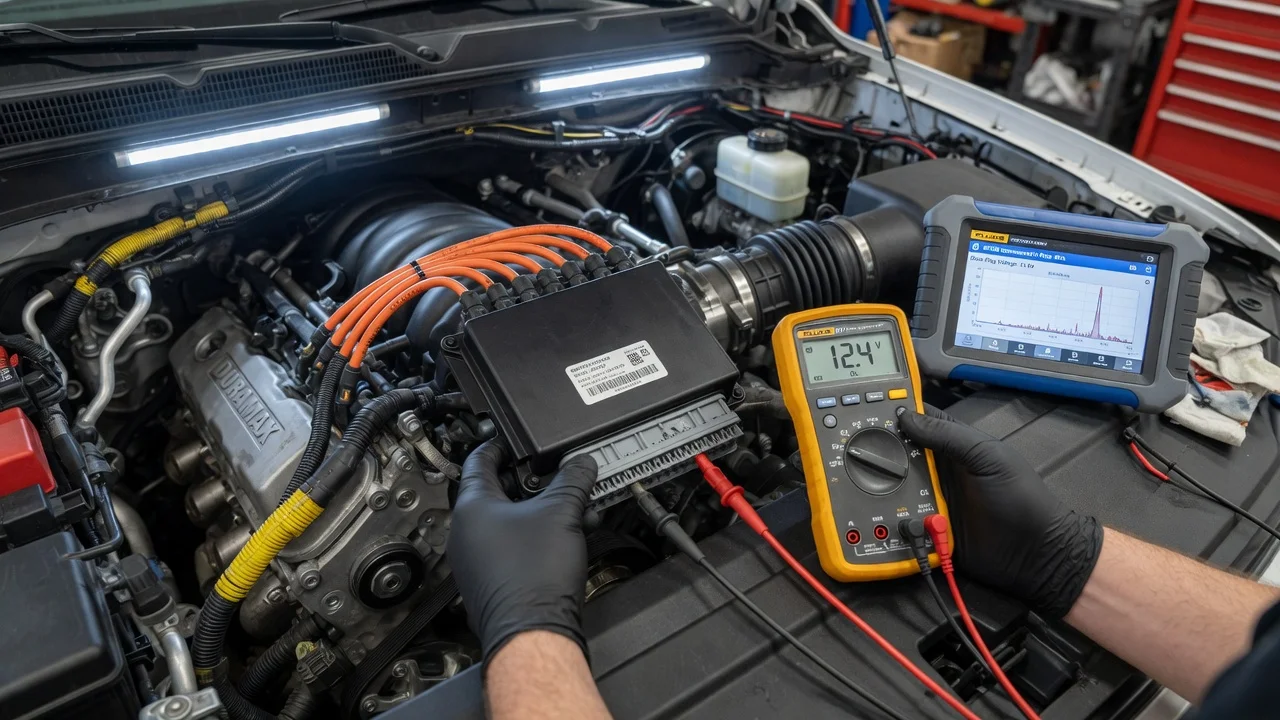
A failing glow plug control module on a Duramax diesel usually shows up first as a cold start problem: long cranking, rough running and white smoke until the engine warms. Weak batteries, burned-out glow plugs and fuel delivery trouble can cause the same complaints, so replacing the module on a hunch is an expensive gamble. This guide covers how to record the symptoms, separate likely causes, run checks in a sensible order and decide what to do next.
Establish the symptoms
Start by writing down exactly when the problem happens. Glow plug faults depend on temperature, so note the outside temperature, whether the block heater was plugged in, how long the wait-to-start lamp stayed on, how many seconds the engine cranked, and how long any rough idle or white smoke lasted. A truck that starts normally when warm or in mild weather but struggles on cold mornings points toward the glow system. A truck that cranks long in every condition points elsewhere.
Record the related signs as well. These include a check engine light, a wait-to-start lamp that flashes, stays on or never comes on, a rough idle that smooths out as the engine warms, and a raw fuel smell in the exhaust right after a cold start. Then list recent changes: new batteries, a jump start, wiring or engine work, a fuel filter change, a fill-up at an unfamiliar station, aftermarket tuning, or signs of rodents under the hood. A recent event often explains a new fault faster than any test.
Distinguish plausible causes
The control module can fail internally, lose its power or ground feed, or stop communicating with the engine control module. Several things point toward the module or its supply: glow plug circuit codes for several cylinders at once, a communication code such as P0683, no current reaching any plug when glow is commanded, and a cold start problem that affects all cylinders evenly. A code for a single cylinder, such as one in the P0671 to P0678 range, makes a module fault less likely because the module rarely loses just one output.
Individual glow plugs burn out, and harnesses chafe or corrode at their connectors. One or two cylinder codes, or a misfire on one cylinder that clears once the engine warms, point to a plug or its wiring rather than the module. Batteries and the starter matter too. Slow cranking cuts the heat available for compression ignition and drags down the voltage the glow system needs. The 6.6L Duramax uses two batteries, and one weak battery can pull down the whole system.
Fuel problems can look just like a glow fault. Summer-grade diesel can gel in cold weather. Other fuel causes include a restricted fuel filter, water in the fuel, air drawn in after a filter change, a weak lift pump, a high-pressure fuel pump that cannot build rail pressure, and injectors with excessive internal leakage. Suspect the fuel side if starting is hard even when the engine is warm, or if fuel pressure stays low during cranking. Anti-gel additives can help prevent waxing in winter, but they will not reliably clear a filter that is already plugged, and no additive repairs a failed module, plug or injector.
Checks in a useful order
Begin with checks any owner can safely do. Make sure both batteries are charged and their terminals are clean and tight, and have the batteries load-tested if you can. With the key off, inspect the glow plug control module connector and the visible harness for melted insulation, green corrosion, loose pins or chafing against brackets and hot parts. Confirm the fuel filter is within its service interval, look for a water-in-fuel warning, and consider whether the fuel was the right winter grade. Read and record any stored codes and freeze frame data before clearing anything.
The next tests need tools and the service information for your exact engine generation. A capable scan tool can show glow plug commands and status. An inductive amp clamp can show whether current flows to each plug feed. With the batteries disconnected as the service procedure directs, a meter can compare each plug's resistance against specification. A wiring diagram is needed to check the module's fuses, power feed, ground and data circuit. Engine configuration affects access. On the V8 some plugs are tight to reach and can break if forced out cold or seized, and the inline-six layout differs. On the fuel side, compare desired and actual rail pressure while cranking, check lift pump pressure against specification, and review injector balance rates, which work as per-cylinder fuel trim corrections.
Common-rail Duramax systems run at pressures that can exceed 20,000 psi. Never loosen high-pressure fittings to bleed air or look for a leak, and never run your hand along a line to find one, because escaping fuel can penetrate skin. Limit your leak check to a visual inspection with the engine off. Leave high-pressure testing and line work to a qualified technician who follows the manufacturer's procedure.
Interpret the findings
Read the results circuit by circuit. If the module delivers power to a plug but that plug measures open or far out of specification, the plug is the problem. If no plug receives power when glow is commanded, but the module has good power, ground and communication, the module becomes the main suspect. If the module is missing its own power or ground, look at the fuse, wiring or connector before condemning the module. A communication code with a good supply and an intact data circuit points to the module, though the engine control side still needs to be ruled out.
If the glow system tests good and the truck still starts hard, shift the focus to fuel delivery and compression. Low rail pressure during cranking, a restricted filter or weak lift pump output each call for further testing of that part. One cylinder with an abnormal balance rate may mean an injector problem or a compression problem, and a compression test is needed to tell them apart. Before buying parts, confirm the fix with a cold start after an overnight soak, check whether cleared codes return, and ask whether a replacement module needs setup with a scan tool for your model year.
Urgency and next action
A glow system fault on its own usually means poor cold starts rather than an immediate breakdown, but some signs mean you should stop driving and have the truck inspected: • a burning plastic or hot wiring smell near the module or harness; • smoke from the wiring; • a visible fuel leak or strong fuel odor; • a flashing check engine light; • stalling, or a severe misfire under load; Crank in short intervals as the owner's manual directs to avoid overheating the starter. No one can promise how far the truck can safely be driven with an unresolved fault.
Give the repair shop the model year, the engine (which 6.6L V8 generation or the 3.0L inline-six), the mileage, all codes with freeze frame data, and your notes on temperature, wait-to-start lamp behavior, cranking time and smoke. Add battery test results, the fuel grade and where you bought it, the date of the last filter change, any recent work and any aftermarket tuning. Ask the shop to show the measured module output and plug results before replacing the module, so the repair rests on evidence rather than a guess.