How to Diagnose Bad Sway Bar Links: Symptoms, Checks and Next Steps
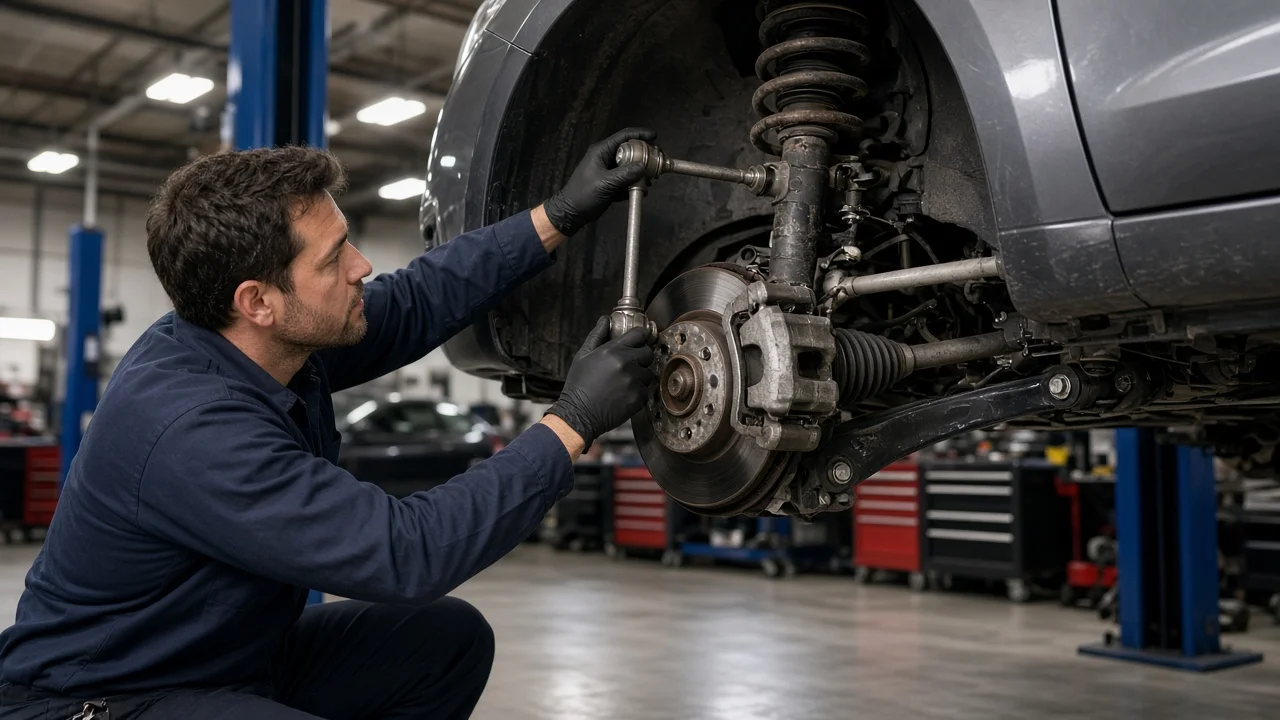
Sway bar links connect the stabilizer bar to the suspension. When they wear out, the usual results are noise and a change in how the vehicle leans through turns. Several other suspension parts make similar sounds, so a link should not be blamed on the noise alone. This guide covers how to record the symptoms, separate likely causes, check the links in a sensible order and decide what to do with the results.
Establish the symptoms
Start by writing down exactly when the problem shows up. The most common complaint with worn sway bar links is a clunk, knock or rattle from one corner when driving slowly over uneven pavement, speed bumps, driveway entrances or potholes. It is especially common when only one wheel hits the bump. The link moves whenever one side of the suspension rises relative to the other. As a result, the noise often appears on twisting, uneven surfaces and may fade on smooth, straight roads. Note whether the sound comes from the front or the rear and which side seems loudest. Also note whether it happens when turning, braking or accelerating, and whether cold or wet weather changes it.
Next, list any associated signs. Owners with a broken sway bar link often report more body lean in corners, a floaty or vague feel during lane changes, or a less settled ride on crowned or rutted roads. Some notice nothing beyond the noise until a link separates completely. Record recent changes as well, such as suspension or alignment work, new tires, a lift or lowering kit, a pothole strike, curb contact or off-road use. Recent work matters because a link that was not tightened correctly can make noise that looks like wear. Your service history and operating conditions, such as frequent rough roads or salted winter streets, help you judge how likely wear or corrosion is.
Distinguish plausible causes
Sway bar links are a frequent source of low-speed clunks, but other parts share their symptoms. Worn sway bar bushings are the rubber mounts that clamp the bar to the frame or subframe. They can creak or knock over bumps, and they often squeak in cold weather. Strut mounts and strut bearings can also clunk over bumps. They often make noise when the steering is turned while parked or at very low speed, which a sway bar link usually does not.
Lower ball joints, tie rod ends and control arm bushings can knock as well. These deserve particular attention because they locate the wheel and affect steering. Their wear may show up as uneven tire wear, steering wander, a clunk under braking or play when the wheel is rocked. Worn shock absorbers or shock mounts can also knock, often along with excessive bouncing. Some noise sources sit outside the suspension, including loose heat shields, exhaust hangers, brake caliper hardware and loose items in the cargo area. These typically rattle on any rough surface rather than mainly on alternating, one-sided bumps.
Use your notes to weigh each option. A noise that occurs mostly on twisting, uneven ground and from one side supports a sway bar link. A noise when turning the wheel while stationary weakens that idea and points toward strut mounts or steering components. A noise that appears only while braking points more toward ball joints, control arm bushings or brake hardware. Treat these patterns as leads, not conclusions, until a physical inspection confirms them.
Checks in a useful order
Begin with checks any owner can do safely. Park on level ground and use a flashlight to look at each link through the wheel well. Look for torn or missing rubber boots, grease leaking from a boot, a bent or cracked link body, a snapped stud, a nut that has backed off, heavily corroded hardware or a link that is visibly disconnected. Some links are bushing-style, with a long bolt and rubber grommets; on these, check for grommets that are flattened, cracked or missing. Compare the left and right sides, because a difference between them is often more revealing than either side alone.
Only do a hands-on test after the vehicle is properly supported. Never get under a vehicle held only by a jack. Use rated jack stands or ramps on firm, level ground, and chock the wheels. Ideally the suspension should sit at a similar height on both sides, for example on ramps. Lifting one wheel loads the sway bar and can hide play in loose sway bar links. Grab each link firmly and try to push, pull and twist it. A healthy link should not clunk or show free play at either end. You can also apply a pry bar gently against the sway bar to see whether a link joint moves or knocks.
Some checks need tools, manufacturer specifications or a qualified technician. To confirm that link nuts and bracket bolts are correctly tightened, you need the torque values from the service information for your exact vehicle configuration, because they vary by model, year and suspension design. Telling link play apart from ball joint, tie rod or strut mount wear may require a lift, an assistant or a technician's chassis listening tools. If you are not confident checking load-bearing suspension parts, leave the hands-on stage to a shop.
Interpret the findings
Some findings establish that a link is faulty and needs replacement: a broken stud, a separated end, a cracked body or clear free play at a joint. A torn boot with no play means the joint is exposed to dirt and water and is likely to wear. It does not by itself prove the link is causing the noise you hear. A loose nut on an otherwise intact link may only need tightening to specification. If the stud spins as you turn the nut, or the nut keeps loosening, the joint is probably worn or the threads damaged.
If the links pass inspection, the noise is probably coming from somewhere else, so do not replace them on suspicion alone. Re-check the bushings, strut mounts, ball joints and other suspects identified earlier. Even when a link is clearly bad, check the opposite side, the bushings and nearby joints, because worn parts often occur together. Replacing only one part may leave a second noise behind. After any repair, the most direct confirmation is a short road test over the same surfaces that produced the original symptom.
Urgency and next action
A worn sway bar link is usually less urgent than a failing ball joint or tie rod end, because the link does not hold the wheel in position. That does not make it harmless. A broken or disconnected link reduces roll control, so the vehicle can lean more and respond less predictably in sudden maneuvers. Stop driving and have the vehicle inspected if any of the following applies: • A loose link is contacting a tire, brake line, wheel speed sensor wire or CV boot. • A part is hanging or dragging. • The steering feels loose or pulls. • The inspection found wear in a ball joint or tie rod. There is no reliable way to say how many more miles a damaged link will last, so schedule the repair promptly.
Before booking the repair or ordering parts, gather the vehicle's year, make, model, trim, drivetrain and suspension package, plus the VIN if possible, since links can differ by configuration. Note the affected axle and side, the link style you saw, the symptoms and when they occur, and any recent suspension work or impacts. Share your inspection findings so the technician can confirm the diagnosis efficiently. Ask that the new parts be tightened to manufacturer specifications. Where the service information requires it, that is done with the suspension at normal ride height.