How to connect a subwoofer to a car stereo
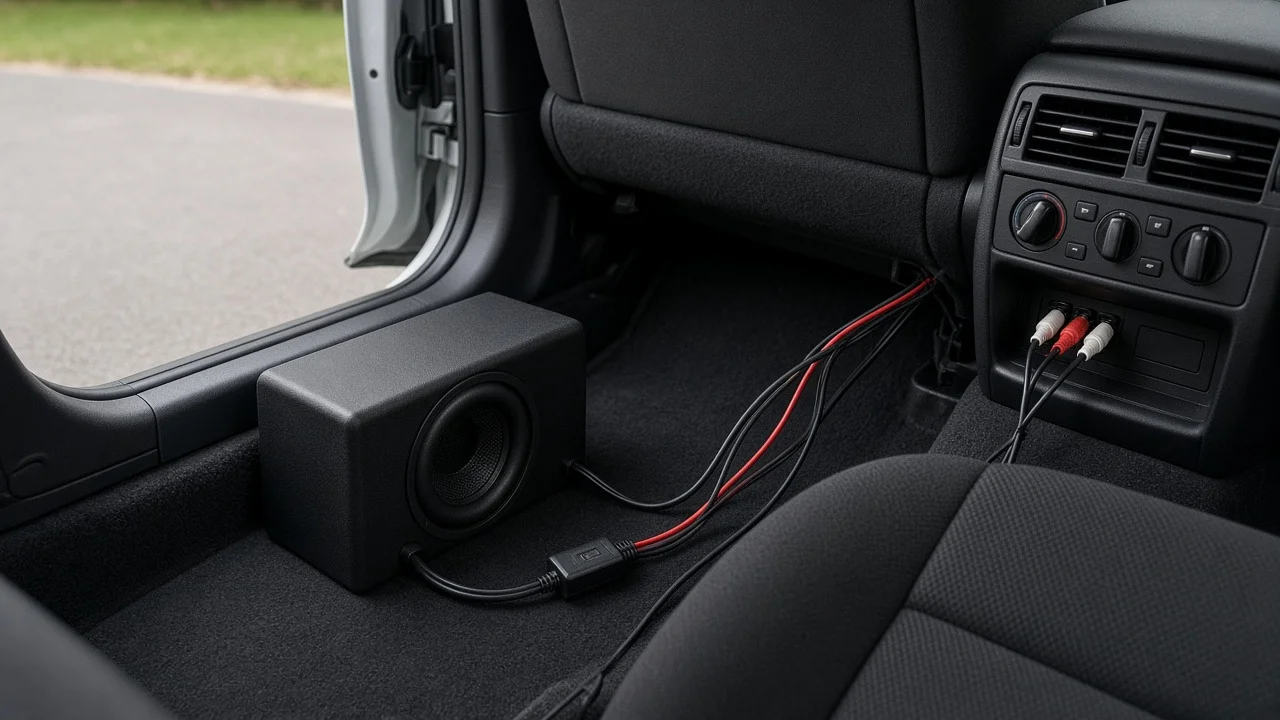
Connecting a subwoofer to a car stereo adds the low-frequency foundation that standard speakers often cannot reproduce. The basic answer is to route an audio signal from the head unit to an amplifier, then from the amplifier to the subwoofer, while providing clean power and a solid ground. The exact method depends on whether the stereo has dedicated preamp outputs or only speaker-level wiring. Understanding this distinction first prevents mismatched components and noisy operation.
Direct answer
The essential task is to get a usable audio signal from the audio source, which is usually the head unit, into a subwoofer amplifier. If the stereo includes RCA preamp outputs labeled subwoofer or rear, a shielded cable carries that low-level signal directly. Many factory and basic aftermarket units lack these jacks, so the alternative is tapping the existing speaker wiring. That high-level signal can feed an amplifier with speaker-level inputs or a line output converter, which reduces it to a safe voltage for standard RCA inputs.
The connection only works correctly when the amplifier turns on with the stereo. A remote turn-on lead from the head unit signals the amplifier to wake up, preventing battery drain when the car is off. The power side needs a fused positive cable from the battery and a secure chassis ground near the amplifier. Signal reception is not involved here; the goal is clean transfer of an existing audio signal. Confirm which output type the stereo actually has before buying any adapter or interface.
How to proceed
Start by disconnecting the negative battery cable to prevent shorts while working behind the dash or running cables. Identify whether the head unit has RCA preamp outputs. If it does, route a twisted-pair RCA cable away from vehicle power wiring to reduce induced noise, then plug it into the amplifier input. If it does not, identify the rear speaker wires and connect a line output converter or use the amplifier's high-level input. Make those connections with the correct polarity so the subwoofer moves in phase with the other speakers.
Run a fused power wire from the battery through an existing grommet in the firewall, keeping the fuse near the battery. Connect the amplifier ground to bare metal on the chassis with a short, thick cable. Attach the remote turn-on wire to the head unit's amplifier or antenna output so the amplifier switches with the key. After reconnecting the battery, set the amplifier gain low, play familiar music, and raise the gain only until the bass blends without distortion. If the result is weak or missing, recheck the input type, turn-on signal, ground, and in-line fuse before changing other settings.