How to Clean Pet Hair From Car Seats
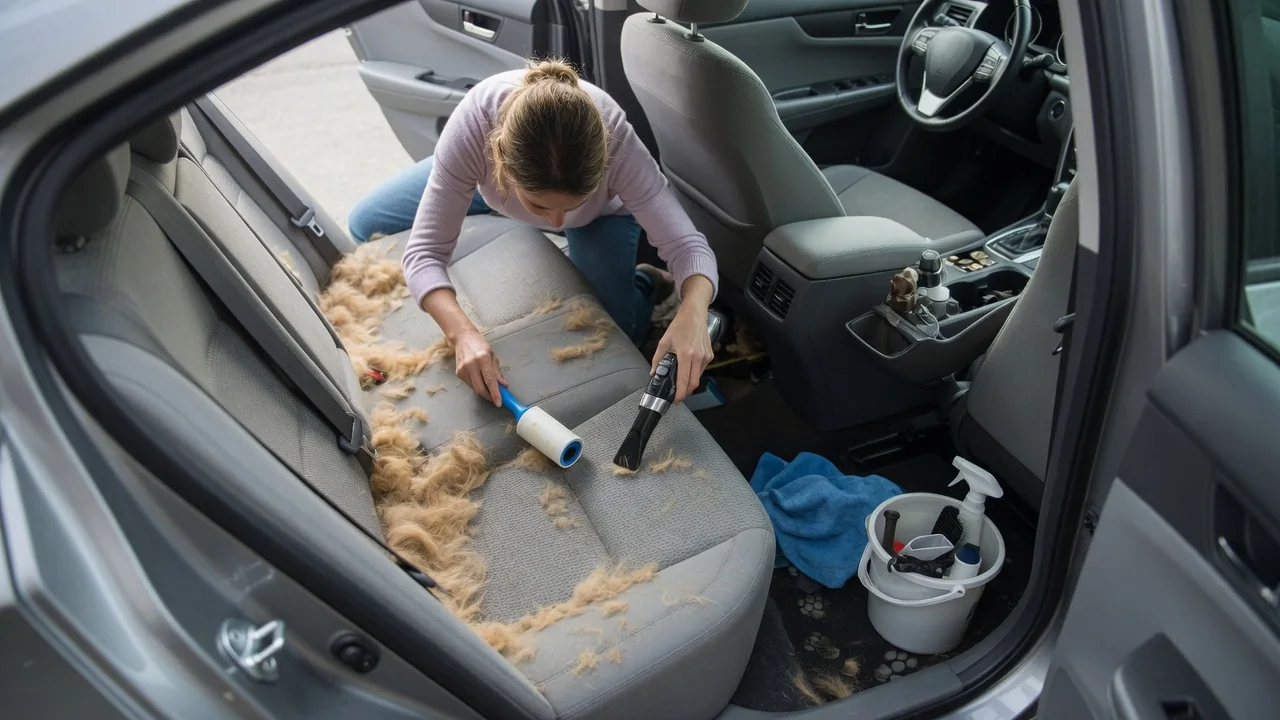
Dog and cat hair works its way into upholstery fibers and clings there through static and friction, which is why a quick pass with a vacuum rarely finishes the job. Learning how to clean pet hair from car seats comes down to sequence: loosen the hair first, collect it with suction, then deal with the seams and crevices where it hides. The right fabric tools make each step faster.
Loosen hair
Pet hair resists suction because individual strands weave into the upholstery and hold on with static charge. Before vacuuming, the goal is to break that grip and gather the hair into clumps. A rubber-bladed brush, a dampened rubber glove, or a squeegee dragged across the seat in short strokes creates friction that rolls strands into visible lines and balls. Working in one direction, from the top of the seatback down toward the cushion, keeps loosened hair moving toward a spot where it can be collected.
Seat material changes how much effort this takes. Woven cloth and carpet-like fabrics trap short, stiff hairs deeply, so a pumice-style detailing stone or a firm upholstery brush may be needed, used with light pressure to avoid fuzzing the fibers. Leather and vinyl release hair far more easily, and a slightly damp microfiber cloth is usually enough. Suede-like synthetic materials deserve a gentle touch and a soft brush only. Testing any tool on a hidden area first shows whether it pills or marks the surface.
Vacuum
Once the hair has been raised and gathered, suction can actually remove it. A vacuum with strong airflow and a narrow upholstery nozzle works better than a wide floor head, because it concentrates suction on a small patch of fabric. Slow, overlapping passes matter more than speed, since the airflow needs a moment to lift strands out of the weave. Nozzles with a rubber or bristle edge help by agitating the fabric as they move, combining the loosening and collecting steps in one stroke.
A cordless handheld is convenient for quick cleanups, though its smaller motor and dust cup may struggle with a heavy shedding coat, while a shop-style or household canister vacuum generally pulls more from dense cloth. Whichever type is used, a filter clogged with fine hair and dander cuts suction noticeably, so emptying the bin and checking the filter partway through is worthwhile. If the nozzle stops leaving clean tracks in the fabric, that is usually a sign airflow has dropped and the machine needs attention.
Clean seams
Seams, piping, and the gap where the seatback meets the cushion collect more hair than flat panels, because strands slide into the stitching and get pressed in by passengers. A crevice tool on the vacuum reaches these channels, and gently spreading the seam with a hand exposes what is hidden inside. A soft detailing brush or a clean, dry paintbrush flicked along the stitch line lifts hair out toward the nozzle, which should be held close by to catch debris before it resettles.
Vehicle design affects how much access there is. Folding rear seats often reveal a hinge area and a strip of carpet packed with hair, and seats with removable bottom cushions or sliding tracks hide more underneath. Perforated or ventilated leather needs care, since hair and grit can lodge in the tiny holes; light brushing and suction are safer than anything wet or abrasive. Around seat belt buckles, side airbag tags, and seat adjustment switches, stick to gentle brushing and vacuuming rather than prying or pushing tools into openings.
Everyday Use and Observations
Regular habits reduce how much deep cleaning the seats need. A washable seat cover, hammock-style rear protector, or simple blanket catches most shedding and can be shaken out or laundered instead of vacuumed. Brushing a pet before a trip removes loose undercoat that would otherwise end up in the cabin. Keeping a lint roller or a rubber brush in the door pocket allows a quick pass after each ride, when the hair is still sitting on the surface rather than worked into the fibers.
Owners often notice patterns worth acting on. Hair tends to build up where the animal lies down, along the door-side edge of the cushion, and in the cargo area of wagons and SUVs. Light-colored hair shows on dark cloth and the reverse, so a flashlight held at a low angle helps reveal what normal light misses. Hair also migrates to floor mats and into the ventilation intake area near the footwells, so a thorough cleaning should include the carpet around and beneath the seats.
Limits and Next Steps
Mechanical removal has limits. Vacuuming and brushing take out hair but do little for odor, dander, or oils that pets leave behind, and those may call for an upholstery cleaner suited to the specific material. Product labels and the owner's manual are the best guide here, because cloth, leather, and synthetic suede respond differently to moisture and chemicals. Heated, ventilated, or occupancy-sensing seats contain electrical components, so soaking the cushion is a poor idea regardless of how stubborn the mess appears.
When hair remains embedded after several careful passes, or the fabric begins to look worn from repeated scrubbing, a professional detailer may be the sensible next step. Shops often use compressed air, specialized brushes, and extraction equipment that reach deeper than household tools. Persistent smells after cleaning can also point to hair and dander in the carpet padding or cabin air filter rather than the seats themselves. Checking those areas, and consulting the vehicle's maintenance guidance on filter replacement, helps finish the job properly.