How to Clean Fabric Floor Mats in a Car
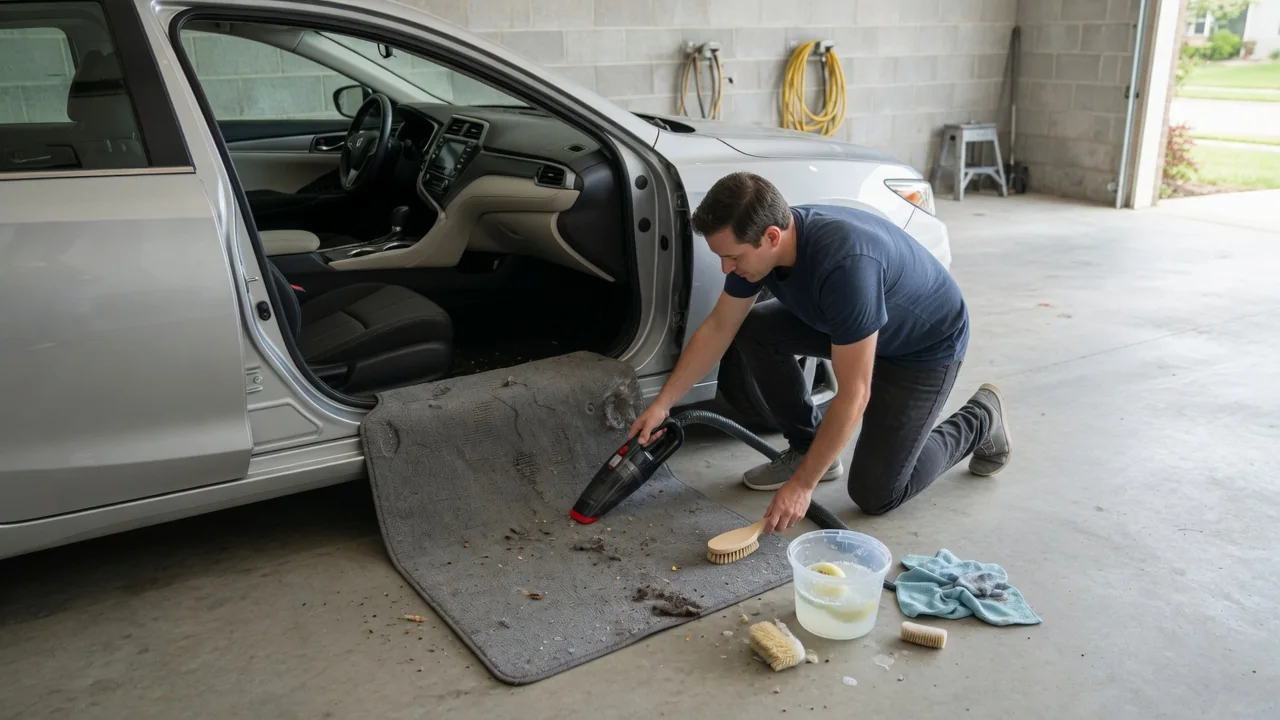
Learning how to clean fabric floor mats in a car comes down to three stages: taking the mats out, washing the carpet pile without soaking it more than necessary, and letting everything dry completely before it goes back in. Each stage matters, because trapped grit wears the fibers and trapped moisture leads to odors and fogged windows inside the cabin.
Vacuum
Start by removing the mats from the vehicle rather than cleaning them in place. Many driver's mats are held by hooks, twist locks, or posts on the floor, so release those retainers before pulling the mat free, and lift it flat so loose debris does not spill onto the carpet underneath. Outside the car, shake each mat or knock it against a solid surface to dislodge sand, gravel, and dried mud that the vacuum would otherwise have to pull out of the pile.
Vacuum slowly in overlapping passes, working from several directions so the nozzle lifts fibers that have been flattened under heels. A stiff brush run across the pile ahead of the nozzle loosens embedded grit and pet hair that suction alone leaves behind. Pay attention to the heel pad area on the driver's mat, where dirt is ground in deepest. Flip the mat and vacuum the backing too, since rubber nibs and felt-style backings hold dust that would transfer straight back to the floor carpet.
Wash
With dry soil removed, washing targets what is bonded to the fibers: road salt, spilled drinks, grease from shoes. A carpet or upholstery cleaner diluted according to its label, or a mild detergent mixed in warm water, is usually enough for woven and tufted mats. Apply it to the pile, work it with a medium-bristle brush in short strokes, and watch the foam; when it turns gray or brown, soil is lifting. Test an inconspicuous corner first, because dyes and edge bindings vary between mats.
Rinsing matters as much as scrubbing. Detergent left in the pile dries sticky and attracts new dirt quickly, so flush the mat with a garden hose or use a wet extractor until the runoff looks clear and no suds appear when you press the fibers. Keep high-pressure spray at a distance, since a concentrated jet can fray the pile or separate the backing. Machine washing suits some thin mats but can warp heavier ones with molded backings, so check any care label or the owner's manual first.
Dry before reinstalling
A fabric mat holds far more water than it appears to, particularly in the dense backing layers. Press or roll the mat to push out excess water, or pull it out with a wet vacuum, then hang it over a railing or lay it on a clean sloped surface where air can reach both sides. Moving air and moderate warmth do the work; depending on humidity and mat thickness, drying can take a few hours or most of a day.
Check for dryness by pressing a hand firmly into the thickest part of the pile and feeling the backing, not just brushing the surface. A mat that feels cool or leaves moisture on your palm needs more time. Putting it back damp traps water against the vehicle's carpet and underlying padding, which can produce a musty smell, mildew, and persistent interior window fogging. When reinstalling, seat the driver's mat on its retainers and confirm it lies flat and clear of the pedals.
Everyday Use and Observations
Between washes, the mats themselves tell you how they are doing. A gray, matted track where the driver's heel rests, white crusty rings after winter driving, or a stale smell when the cabin warms up all indicate soil the vacuum is no longer handling. Vehicles used on gravel roads, at beaches, or for carrying children and pets will reach that point much sooner than a commuter car that sees mostly dry pavement, so cleaning frequency is best judged by condition instead of a fixed calendar.
Small habits stretch the time between deep cleanings. Knocking shoes together before getting in, shaking the mats out during a fuel stop, and blotting spills right away keep contaminants from settling into the base of the pile. Blot rather than rub, since rubbing spreads the stain and roughens the fibers. Mat design also plays a part: plush, light-colored pile shows dirt early and holds onto it, while low, dark loop pile hides soil that still needs to be vacuumed out.
Limits and Next Steps
Cleaning has limits. Oil, tar, dye transfer, and old coffee stains may fade without disappearing, and repeated aggressive scrubbing can do more harm than the stain. Fibers worn through at the heel area, a backing that has cracked or lost its grip, or edges that curl toward the pedals are wear problems, not dirt problems, and replacement is the sensible answer. A mat that slides or bunches up is a safety concern on the driver's side regardless of how clean it looks.
If a musty odor returns soon after the mats are cleaned and dried, look beneath them. Floor carpet that feels wet without an obvious spill may point to water entering the cabin, with possible sources including door seals, blocked drains, or a leak in the heating and air conditioning system, and the cause differs from vehicle to vehicle. That situation deserves a professional inspection, because padding under the carpet can stay saturated for a long time. For stubborn stains on sound mats, a professional detailer with hot water extraction equipment is a reasonable next step.