How to Clean Fabric Car Seats After a Spill
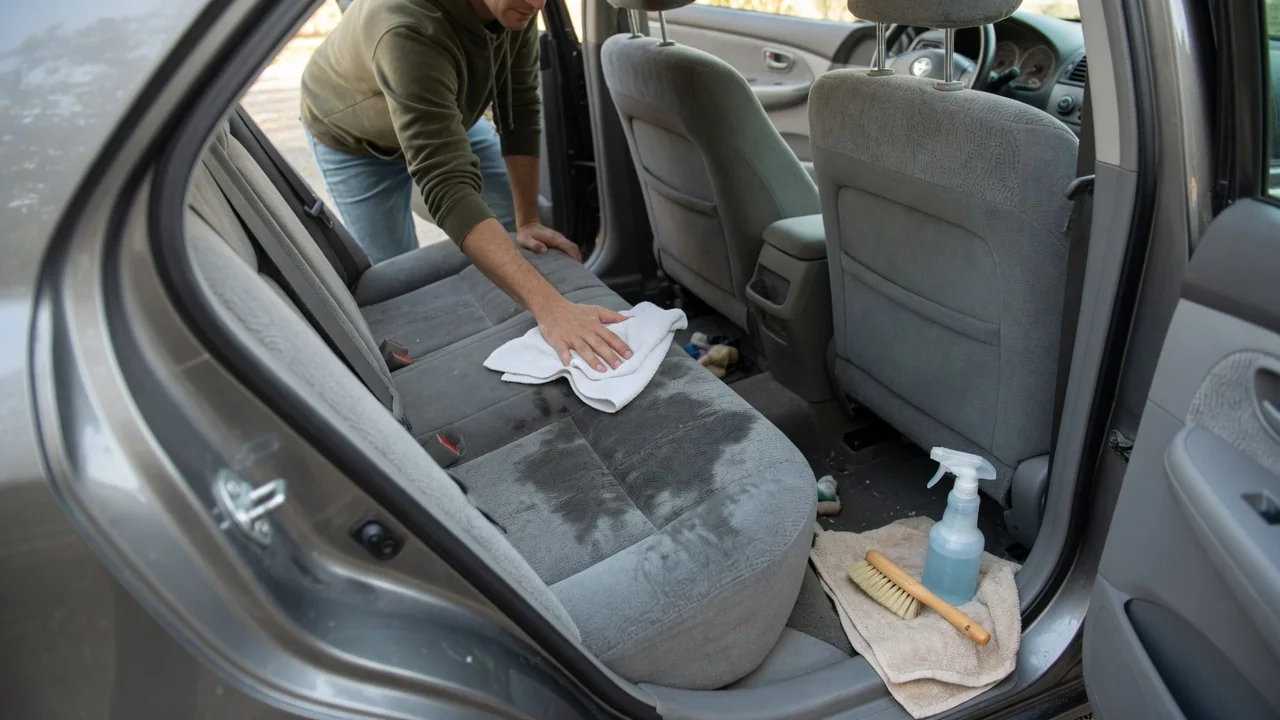
Knowing how to clean fabric car seats after a spill comes down to speed and restraint. Cloth upholstery sits over thick foam that soaks up liquid quickly, so the first minutes matter more than any product you reach for later. Blot early, clean gently, and dry thoroughly, and most everyday spills never become permanent stains or lingering odors.
Remove liquid
The first job is getting liquid out of the fabric before it reaches the foam cushion underneath. Press a clean, dry microfiber towel or plain paper towels firmly onto the wet area and hold for several seconds, then lift and move to a dry section of the towel. Work from the outer edge of the spill toward the center so the wet patch does not spread. Rubbing or scrubbing at this stage pushes coffee, soda, or juice deeper into the weave and roughens the fibers.
You can judge progress by watching the towel. When a fresh section comes away nearly dry and without color transfer, most of the free liquid is gone. Pay attention to seams, stitching channels, and the gap between the seat bottom and backrest, where liquid tends to run and collect. Seats with deep bolsters or perforated inserts can hide pooled liquid, so press along those contours as well. A wet and dry vacuum, if one is available, pulls out far more than towels alone.
Use appropriate cleaner
Once the excess is blotted away, a cleaner suited to automotive cloth handles what remains. A dedicated fabric upholstery cleaner is the safest choice, while a small amount of mild dish soap mixed into cool water works for many fresh food and drink spills. Apply the solution to a cloth rather than pouring it on the seat, then dab the stain and blot again with a dry towel. Using as little liquid as possible keeps the cleaning step from creating a new soaking problem.
Seat materials vary between vehicles, and some trims combine cloth with synthetic suede, vinyl, or leather panels that react differently to cleaners. Test any product on a hidden spot, such as the lower side of the cushion, and watch for fading or a change in texture before treating the visible area. The owner's manual often lists upholstery care guidance for your specific interior. Avoid bleach, harsh solvents, and hot water on protein spills such as milk, since heat can set those stains into the fibers.
Avoid trapped moisture
A seat that feels dry on the surface can still hold moisture in the foam below, and that hidden dampness is what leads to musty smells and mildew. After cleaning, press a dry towel hard into the cushion with your palm; if it comes up damp, there is still liquid deeper down. Keep blotting, then open the doors or windows to move air through the cabin. Running the climate system with the fan directed at the seat helps, as does parking in a shaded, breezy spot.
Be careful with what sits beneath the upholstery. Many vehicles have seat heaters, occupancy sensors, ventilation fans, or side airbag components built into the seat, and saturating the cushion risks reaching that hardware. This is another reason to use light, repeated applications rather than flooding the fabric. Avoid closing up a damp car overnight, and hold off on fitting seat covers or setting a child seat back in place until the area is fully dry, because covering wet fabric traps moisture against the foam.
Everyday Use and Observations
Different spills behave differently in daily driving. Water usually dries without a trace, though it can leave a faint ring on some fabrics if minerals or existing dirt migrate to the edge of the wet patch. Coffee and cola leave tannin or dye discoloration, sugary drinks dry sticky and attract dirt, and milk or other dairy can sour inside the foam even when the surface looks clean. Greasy food marks tend to darken the fabric and resist plain water, so they usually call for a proper upholstery cleaner.
A few habits make quick response easier. Keeping a couple of microfiber towels in the door pocket or trunk means you can blot within moments rather than after the drive. Check the spot again the following day in good light, since stains and rings often show only once the fabric has fully dried. Light-colored and loosely woven cloth tends to show marks more readily than dark, tightly woven material, and some seats carry a factory stain-resistant finish that makes liquid bead briefly before soaking in.
Limits and Next Steps
Home blotting and spot cleaning have limits. A large volume of liquid that has soaked through to the foam, a spill that sat unnoticed for days, or a persistent sour or musty smell usually means the contamination is deeper than surface cleaning can reach. Repeatedly wetting and scrubbing the same spot can spread the stain, wear the fabric, and leave the cushion damp for longer. If a mark returns after drying, residue is likely wicking up from below, which points toward extraction rather than more surface work.
At that stage, a professional detailer with hot water extraction equipment can flush and recover liquid from the cushion far more effectively. Mention any spill involving bodily fluids, fuel, or chemicals, as these need specific handling. If a warning light appears after a heavy spill, or a heated or ventilated seat stops working normally, have the vehicle inspected rather than assuming the seat will dry out on its own. For future protection, a fabric protectant or washable seat covers can buy valuable blotting time on a fully dry seat.