How to Clean a Turbocharger: Sprays, Cleaners and Carbon Removal
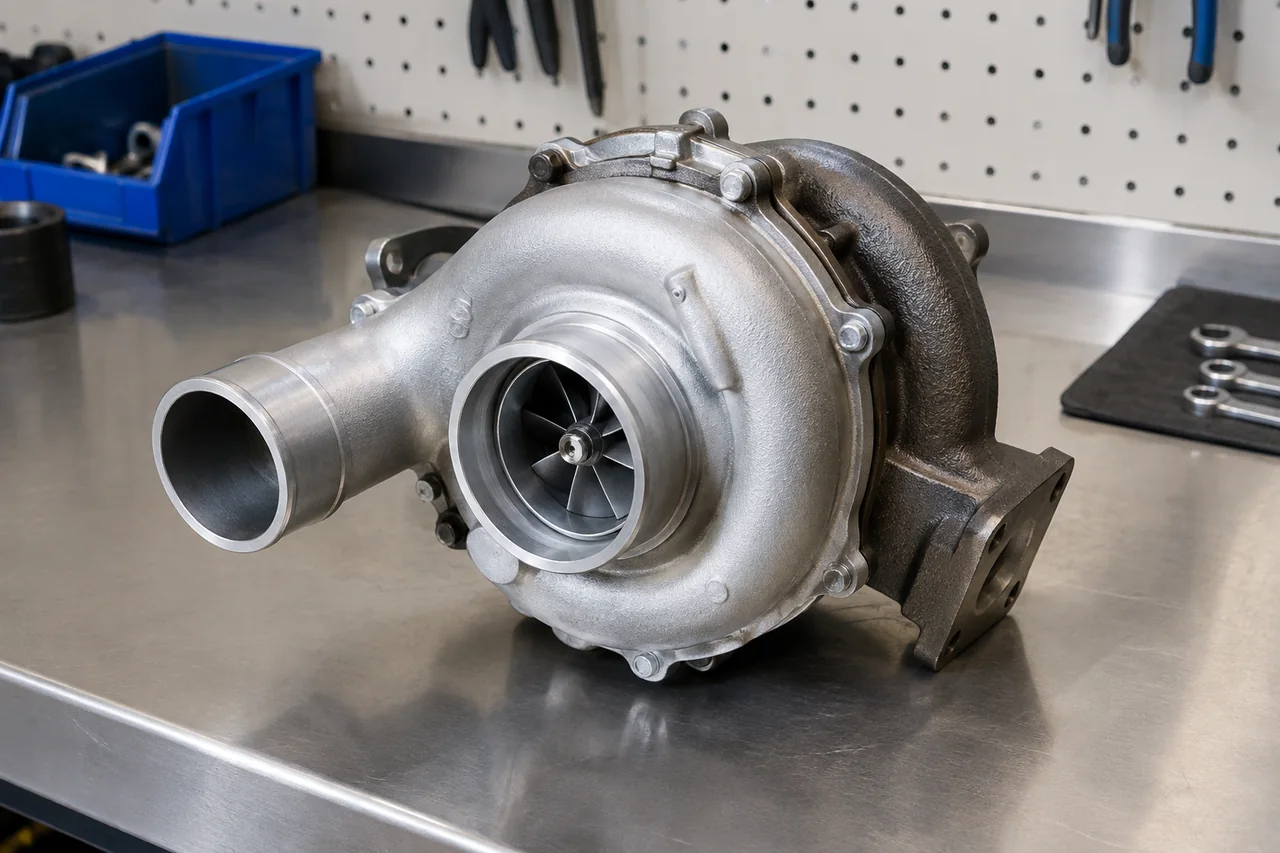
Turbocharger cleaning can reduce some carbon deposits, but the useful method depends on where contamination sits and whether the hardware is still sound. Anyone asking how to clean a turbocharger, or shopping for a diesel turbocharger cleaner or turbocharger cleaner spray, should separate exterior housing dirt from deposits that affect variable turbine geometry, the turbo actuator, or the intake tract. Cleaning does not replace diagnosis.
What Turbocharger Cleaning Can Address
Wiping the exterior housing is not the same as treating deposits inside the compressor, turbine, or variable-geometry mechanism. Exterior grime is usually oil film and road dirt, and it does not show what is happening in the intake tract or on the turbine side. Internal carbon deposits sit where boost pressure is generated and where vanes or a turbo actuator must move. Those areas need different access and precautions that protect seals, sensors, and exhaust aftertreatment. A turbocharger cleaner limited to the outside of the casting cannot free restricted vanes.
On some variable turbine geometry turbos, carbon can slow or stick the vanes so the unit cannot meter exhaust energy as designed. Loss of power or unstable boost pressure can follow, but those symptoms also appear with leaks, actuator faults, and oil contamination, so deposits cannot be assumed from feel alone. Cleaning also cannot restore worn bearings, nicked compressor or turbine wheels, cracked housings, or the oil-feed problem that caused leakage. If the mechanical parts are already damaged, a cleaning product will not return the turbo to serviceable condition.
Checks to Make Before Choosing a Cleaner
Reduced power, inconsistent boost, and visible smoke are reasons to investigate, not proof that turbocharger cleaning is the fix. The same pattern can come from an intake leak, a sticking turbo actuator, or oil contamination that has already reached the turbine. Note when the symptoms appear, any dashboard warnings, and recent oil, filter, or aftertreatment service so a technician can compare that history with live data. A stored fault code is evidence to interpret against those observations; it does not by itself prove a turbo part has failed.
Intake leaks, actuator faults, and oil-supply problems often need professional testing before anyone chooses a diesel turbocharger cleaner. Boost pressure readings, actuator movement, and oil feed and drain condition can show whether deposits are even the likely restriction. Heavy smoke, rapid oil loss, or a new harsh mechanical noise from the turbo area are reasons to stop driving as soon as it is safe and seek assistance. Continuing to load a turbo that may be starved of oil or shedding debris can turn a serviceable unit into scrap.
Understanding Diesel Turbocharger Cleaner Labels
Products sold as a diesel turbocharger cleaner, turbocharger cleaner, or turbocharger cleaning spray are not interchangeable just because the label mentions a turbo. Some are fuel-system additives, some are intended for specific intake or exhaust paths, and some are general solvent aerosols. The product name does not prove it matches your engine, turbocharger configuration, or exhaust aftertreatment. Confirm the exact vehicle and engine application, follow the manufacturer's service guidance, and read the product instructions, including any restrictions around catalysts, filters, or sensors, before use.
A fuel additive can only act where treated fuel and combustion products travel; it does not wash every turbocharger surface. Carbon deposits on compressor wheels, oil-coked bearing housings, or vanes that never see that chemistry will not be reached. Effectiveness depends on where the deposits formed and whether the treatment actually contacts them. No cleaner should be counted on to restore boost pressure, clear a fault code, or follow a fixed calendar interval. Those outcomes belong to diagnosis and inspection, not to the marketing claim on the bottle.
Turbocharger Cleaning Sprays and Application Risks
A turbocharger cleaner spray in an aerosol can does not tell you where the chemistry belongs or whether it can reach the affected part. Packaging convenience is not an application map. Solvent that lands on mass-air or pressure sensors, painted connectors, or rubber boots can damage those parts. Liquid that is drawn into the intake tract in the wrong quantity can upset combustion, wash oil from cylinder walls, or load exhaust aftertreatment with residue the system was not designed to process.
Do not spray cleaner into a running engine, bypass sensors, open hot turbo parts, or invent an application point the product and vehicle maker never approved. Those shortcuts create fire, ingestion, and control-system risks that outweigh hoped-for deposit removal. If treatment requires engine operation, or the turbocharger must be removed to reach vanes or the turbine, leave that work to a qualified technician using an approved method. How to clean turbocharger hardware safely is a service process, not a guess at the intake hose.
How to Approach Turbocharger Cleaning Safely
Start by identifying the vehicle, engine, and turbocharger configuration, then check the service guidance that applies to that combination. Variable turbine geometry, a wastegate, and different actuator types are not cleaned the same way. With the engine off and fully cool, an owner can look at accessible housings, clamps, and oil lines, but visible exterior dirt does not prove internal contamination. Heat, spinning wheels, and residual exhaust energy make live inspection unsafe. Manufacturer-dependent codes and procedures also need vehicle-specific confirmation before any cleaner is selected.
Professional turbocharger cleaning, at a high level, begins with assessment, then removal when access or inspection requires it, then an approved deposit treatment, and inspection of wheels, vanes, seals, and the actuator before reassembly. That sequence exists so carbon is treated without hiding cracks or bearing play. Do not scrape or blast internal parts, spin the wheel with compressed air, soak an assembled turbo in unspecified solvents, or adjust calibrated mechanisms. Those actions can unbalance the rotating assembly, destroy residual oil films, or change actuator geometry that the control system expects.
When Cleaning Is Appropriate and When Repair Is Needed
Cleaning may be appropriate when diagnosis confirms treatable deposits and inspection finds the compressor, turbine, vanes, and bearings mechanically sound. If carbon is restricting variable turbine geometry and the hardware still meets service limits, an approved treatment can be part of the repair. Damage, excessive wear, cracked housings, or unresolved oil-supply faults point instead to professional repair or replacement assessment. Oil contamination that continues to feed the turbo will rebuild deposits even after a thorough clean, so the feed, drain, and filtration path must be part of that decision.
The source of contamination has to be corrected or turbocharger cleaning only resets the clock. Causes can include overdue oil, a blocked drain, crankcase pressure, or exhaust aftertreatment conditions that change how soot and oil mist collect. After treatment, verify stable boost pressure, actuator response, and the original symptoms under the same driving conditions. Temporary improvement or a cleared warning light is not enough. If the code returns, or noise, smoke, or lag remains, the unit still needs diagnosis rather than another can of cleaner.