How to clean a throttle body
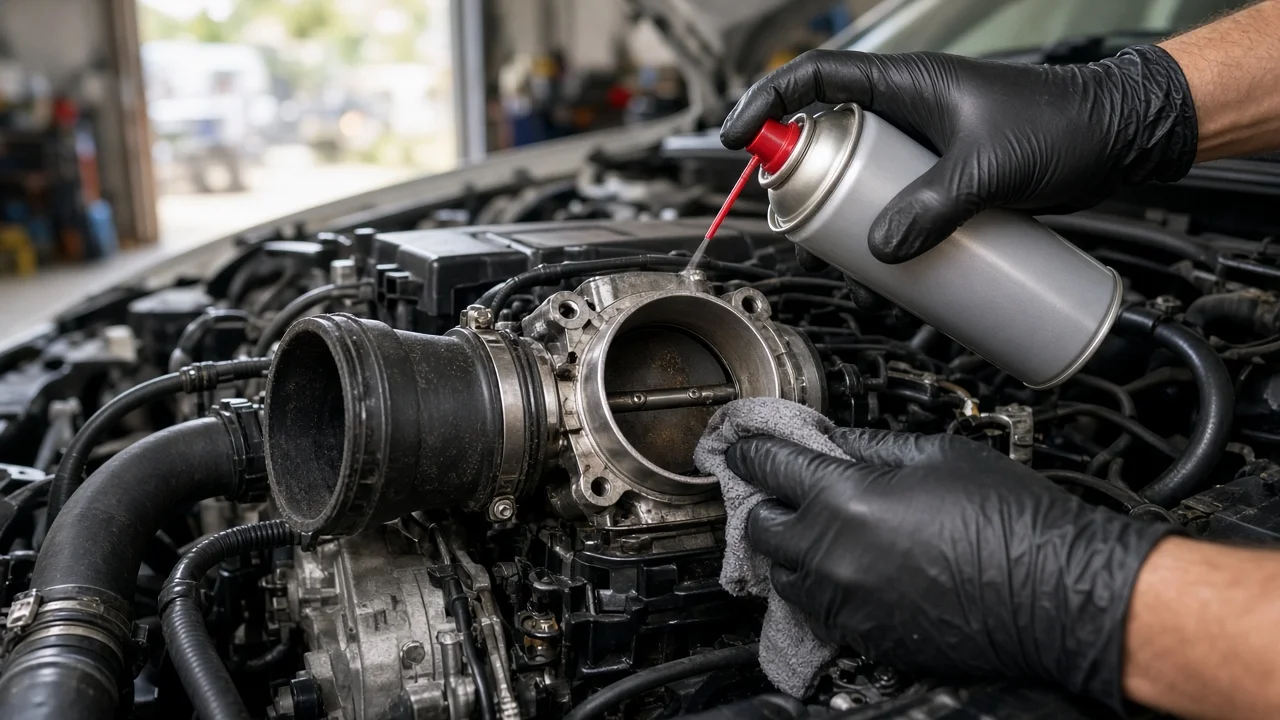
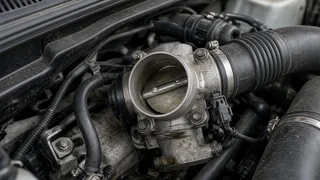
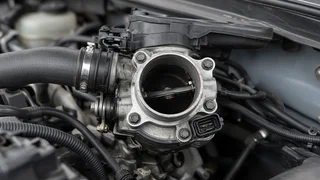
A dirty throttle body disrupts the precise balance of air entering the engine, often causing a rough idle, hesitation, or a hanging rev condition. The throttle plate and bore gradually collect a gummy mix of crankcase vapor and dust. Cleaning this assembly restores an unrestricted intake passage and allows the position sensor to report a stable control signal. This guide explains how to clean a car throttle body and what that service should accomplish.
Direct answer
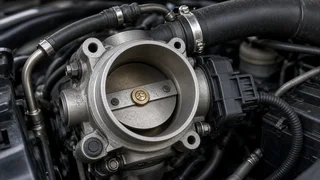
A car throttle body cleaning removes carbon and varnish from the throttle plate and surrounding bore. The plate must open and close smoothly against the housing, while a sensor reports its angle to the engine computer. When deposits accumulate, the plate can stick slightly or hold an unintended gap at idle. The computer then tries to correct a perceived air leakage, and the result may be an unsteady idle, sluggish tip-in, or a check engine light.
The related service is worthwhile when symptoms point to airflow disruption, not as a routine repair for unrelated faults. Cleaning the throttle body on a car often helps if the plate has visible residue or if the idle adaptation values are struggling to compensate. However, codes related to a throttle position sensor or electronic throttle control require diagnosis. A fault code is evidence to interpret, not proof a part has failed. On many vehicles, the component is fairly accessible and responds well to careful cleaning.
How to proceed
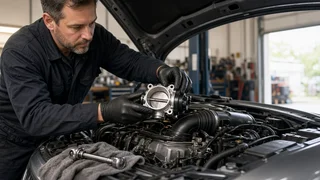
Begin by confirming the engine is off and the key is removed. On an electronic throttle body, avoid forcing the plate open with your fingers; moving it manually can damage the gears or motor that control it. Disconnect the intake duct after loosening the clamp, then inspect the position of the throttle plate. Use a cleaner formulated specifically for throttle bodies. Apply it to a lint-free shop towel and wipe the bore and the edge of the plate where the deposit is thickest.
For heavier residue, spray the cleaner into the bore and allow it to soften the coating before wiping again. Do not pour cleaner into the intake or aim it directly at the shaft bearings, because excess solvent can wash away internal lubrication. Many modern cars also respond well to an idle adaptation or throttle recalibration after reassembly, though not every engine requires it. Reconnect the duct tightly, start the engine, and let it idle until the speed stabilizes. One caution: do not spray throttle body cleaner while the car is running unless the specific product and vehicle instructions clearly allow it, as the intake path may draw an uncontrolled amount of solvent through the sensor.