How to Clean a Car Seat Belt Safely Without Weakening the Webbing
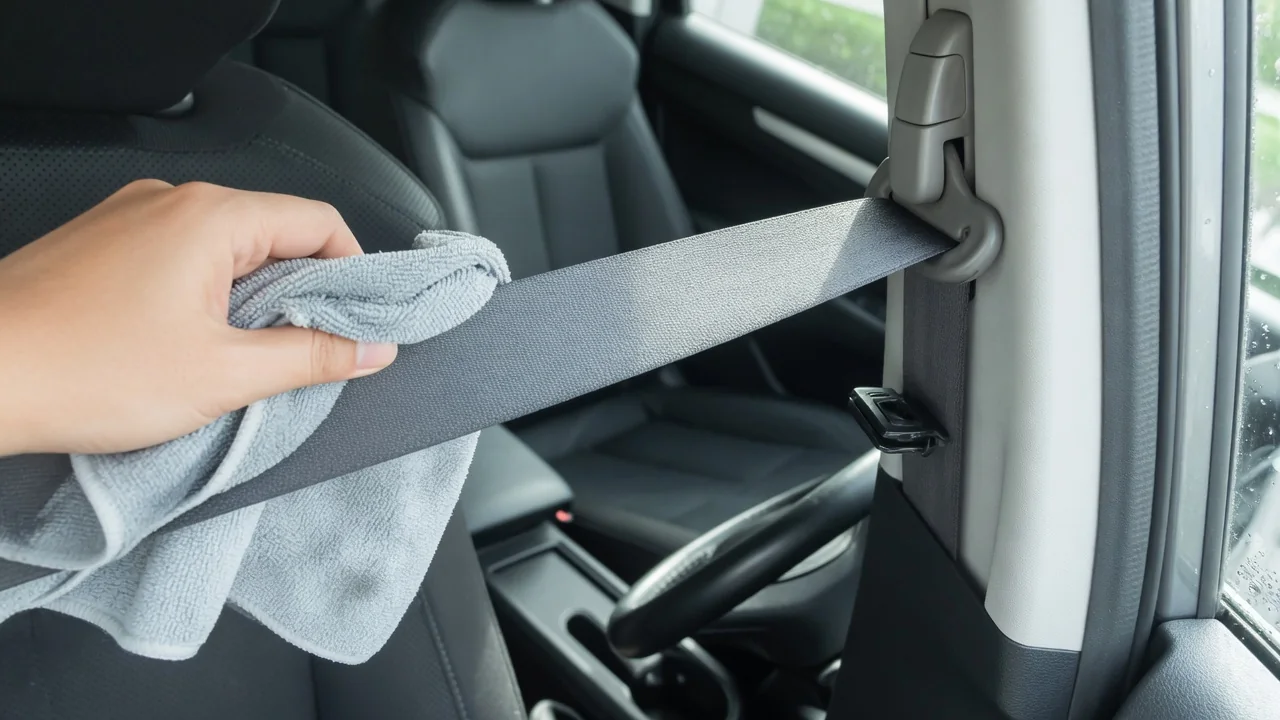
Cleaning seat belt webbing is a small interior detailing job that pays off every time you buckle up. Sweat, spilled drinks and body oils leave belts sticky, stained and sometimes slow to retract. Knowing how to clean a seat belt safely matters because the webbing is a restraint component, so the right method lifts grime without harming fibers, stitching or the retractor.
Why a Clean Seat Belt Needs a Gentle Approach
Seat belt webbing is a tightly woven strap engineered to stretch in a controlled way and spread crash forces across your body. Its strength depends on intact fibers and stitching at the anchors and loops, so any seat belt clean-up should focus on removing dirt rather than chasing a showroom look at any cost. Over time, sweat, body oils, sunscreen and spilled drinks soak into the weave, leaving a tacky surface that drags against the trim and can make the belt retract slowly.
That buildup tempts people to reach for strong products, but bleach, solvents, aggressive degreasers and stiff scrubbing brushes can weaken fibers, fade dye or leave residue that attracts more dirt. A gentle approach works better and protects the material. Before starting, check the owner's manual, since some automakers publish their own care guidance for belts and interior fabrics, including which cleaners to avoid. Following that advice keeps your fabric care consistent with how the manufacturer expects the restraint system to be maintained.
Supplies for Cleaning a Seat Belt at Home
You don't need specialty tools for cleaning a seat belt at home. Gather mild soap or a gentle fabric or upholstery cleaner, a bowl of warm water, a soft-bristle brush, several clean microfiber cloths and a clip, clamp or sturdy clothespin. A cleaner formulated for automotive fabric is a reasonable choice because it is designed for synthetic interior materials and tends to rinse out without heavy residue. Whatever you use, spot-test it on a hidden section of webbing near the lower anchor to confirm it doesn't discolor or stiffen the strap.
The clamp does an important job. Once the belt is pulled out, placing a clip or clothespin on the webbing right at the retractor opening keeps it extended without forcing the mechanism or straining the spring. Wrap the clamp jaws in a cloth if they have sharp edges so they don't mark the fabric. Lay towels over the seat cushion, console and door panel, or use a seat cover, to catch drips and protect leather, plastic trim and nearby switches from moisture.
How to Clean a Seat Belt Step by Step
Start by pulling the belt out slowly to its full length, letting it unwind smoothly rather than yanking, which can trigger the locking mechanism. Secure it with the clamp so it can't retract while wet. Lightly mist or dab cleaner onto the webbing instead of soaking it, working in short sections of several inches at a time on both sides. Brush gently in the direction of the weave to loosen grime, then blot with a damp microfiber cloth to lift soap residue, repeating until the cloth comes away clean.
Keep liquid away from the retractor housing, the buckle and any wiring or connectors near the seat base, since some buckles contain sensors for seat belt reminder systems. Hold a dry cloth beneath the area you're working on to catch runoff. Do not unbolt the belt, open the retractor or pull trim panels to reach more webbing. These are safety systems, and some belts include pyrotechnic pretensioners that should be handled only by trained technicians. Clean what you can reach with the belt fully extended.
Removing Stains, Odors and Mildew From Seat Belt Webbing
Common stains such as coffee, soda, makeup and food usually respond to patience more than force. Apply a small amount of cleaner, let it sit briefly, then blot and brush lightly, repeating the cycle several times instead of scrubbing hard. Sugary drinks are a frequent cause of sticky belts, so thorough blotting with clean water helps remove the residue. For odors or mildew spots, gentle cleaning followed by complete drying is the core of effective stain removal on seat belt webbing.
Mildew also signals a moisture source, so look for leaking door or sunroof seals, damp carpets or wet gear left in the cabin, and fix that cause or the smell will return. Avoid bleach, ammonia, solvents and household stain removers that aren't labeled safe for automotive fabric, because they can attack fibers in ways you can't see. If a mark remains after several gentle passes, accept it as a cosmetic issue. A faint stain doesn't affect belt function, while harsh chemicals might.
Drying the Belt Fully Before Letting It Retract
Leave the belt fully extended until it is completely dry, which may take hours depending on humidity and temperature. If damp webbing winds back onto the spool, moisture gets trapped inside the retractor, where it can create musty odors, encourage mildew and potentially contribute to a sticky or slow retracting seat belt. Speed things up with airflow: park in a shaded, ventilated spot, open the doors or windows, or run the cabin fan. Avoid heat guns, hair dryers on high or other direct heat, which can damage synthetic fibers.
To confirm it's ready, run your fingers along the full length of the exposed webbing on both sides, paying attention to thicker areas near the stitching and the section closest to the retractor, where moisture lingers. It should feel uniformly dry, not cool or damp. Then remove the clamp and guide the belt back slowly by hand rather than letting it snap in. Watch that it retracts smoothly, lies flat without twists and seats properly in the guide at the pillar.
Signs a Seat Belt Needs Inspection Instead of Cleaning
Cleaning gives you a close look at the webbing, so use it as an inspection opportunity. Watch for fraying edges, cuts, burns, stiff or glazed spots, heavy fading and broken or loose stitching at the loops and anchors. Also note function problems you can check safely: slow or incomplete retraction after the belt is dry, a buckle that won't latch or release cleanly, or a belt that doesn't lock when you pull it sharply. Any of these deserves attention beyond routine interior detailing.
Cleaning cannot repair damaged webbing or a faulty retractor, and the cause of a problem usually isn't obvious from the outside. A slow belt might be dirty, twisted or mechanically worn, and only proper diagnosis can tell which. Have a qualified technician inspect or replace the belt, particularly after any collision, since belts and pretensioners may need replacement even without visible damage. Avoid attempting repairs on the restraint system yourself, and keep your own work limited to careful cleaning and observation.