How to Clean a Car Quickly After a Road Trip
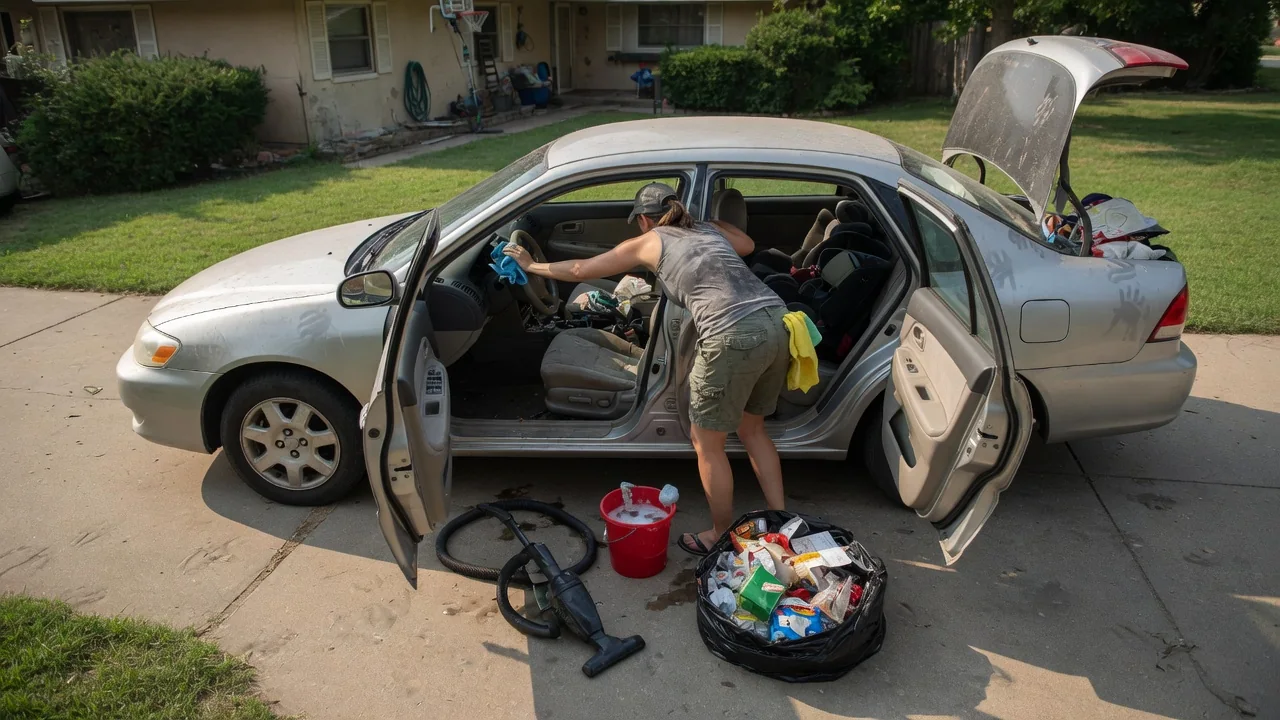
Knowing how to clean a car quickly after a road trip comes down to priorities rather than thoroughness. A long drive leaves behind food scraps, damp gear, bug residue, and road film, and some of that causes odor or lasting damage if it sits. Handle those items first, and the cosmetic detailing can wait for a free afternoon.
Remove waste
Start with anything that can rot, leak, or attract pests. Fast-food bags, fruit peels, half-finished drinks, and used napkins begin to smell within a day in a closed cabin, especially when the car sits in sunlight and interior temperatures climb. Carry a trash bag through each door opening and work from front to back, checking door pockets, cup holders, seatback pockets, and the gaps beside the seats where wrappers and crumbs tend to migrate during hours of driving.
Storage layouts differ, so think about where your particular vehicle hides things. Three-row SUVs and minivans often have cup holders and bins in the rear quarters that are easy to forget, while trucks may have under-seat storage and sedans a deep trunk well. Pull out coolers, wet towels, muddy shoes, and damp camping gear as well, since trapped moisture feeds mildew. An empty cabin also makes it far easier to see what actually needs cleaning next.
Check spills
Once the clutter is out, look for liquid that soaked in during the trip. Spilled milk, coffee with cream, juice, and soda are the common culprits; dairy sours quickly, while sugary drinks leave sticky residue that keeps collecting dirt. Press a dry towel onto seat cushions and carpet near the cup holders and footwells. Dampness, a tacky feel, or a darker patch tells you where to blot first and then clean with a product suited to that surface.
Material matters here. Cloth upholstery and carpet absorb liquid into the padding beneath, so blotting firmly matters more than scrubbing, which can spread the stain. Leather and vinyl resist absorption but can stain or dry out along stitching and perforations, and perforated seats may let liquid reach the foam or ventilation components below. Lift the floor mats too, because rubber mats can trap a puddle against the carpet underneath, where it stays wet unnoticed and eventually produces a musty smell.
Wash high-exposure areas
Outside, the front of the vehicle takes the worst of a highway run. Bug splatter on the bumper, grille, hood edge, and mirror housings is acidic and bakes onto the clear coat in heat, and bird droppings and tree sap behave similarly. These deserve attention before a full wash is convenient. Soaking the residue with water or a dedicated bug remover and wiping gently with a soft microfiber cloth lifts it without the hard scrubbing that scratches paint.
The windshield, headlights, and camera or sensor lenses come next, since film there affects visibility and can interfere with driver assistance features on vehicles equipped with them. If the route included winter roads, coastal air, or gravel, rinse the wheel wells, lower body panels, and underside, because salt and caked mud hold moisture against metal. Wheels also collect brake dust that is easier to remove early. How much rinsing you need depends on where you drove and how the vehicle is built.
Everyday Use and Observations
The first few days back in the commute are a useful inspection period. Odors that were hidden when the windows were down tend to show up after the car has sat closed overnight. A sour smell points toward a missed spill or forgotten food, while a musty one suggests moisture in the carpet or cargo area. If a stale smell arrives mainly when the fan runs, the ventilation system or cabin air filter may be holding dust and debris from the trip.
Pay attention to the glass and surfaces you touch most as well. A hazy film on the inside of the windshield becomes obvious when driving toward low sun or oncoming headlights, and a quick wipe with glass cleaner fixes it. Steering wheels, shift levers, touchscreens, and door handles pick up sunscreen, snack grease, and hand lotion; screens and coated trim usually need a gentle cleaner, so check the owner's manual for what the manufacturer recommends on those finishes.
Limits and Next Steps
A fast cleanup has limits. It removes the sources of smell and the contaminants most likely to harm paint, but it will not extract liquid that has reached seat foam or carpet padding, and it will not reverse etching where bug residue or droppings sat for days in the sun. If an odor persists after the obvious sources are gone, or carpet stays damp, deeper extraction or professional interior detailing is the sensible next step rather than masking the smell with air freshener.
Plan the thorough work for when time allows: a complete hand wash, a full vacuum including under the seats, and paint protection if the finish feels rough. A long drive is also a reasonable prompt to glance at tire condition, washer fluid, and wiper blades, which work hard on highways. Anything beyond cleaning, such as a new noise, a warning light, or a fluid spot under the parked car, belongs with a qualified technician, since the right response depends on the specific vehicle.