How to Clean a Car Engine Bay Safely
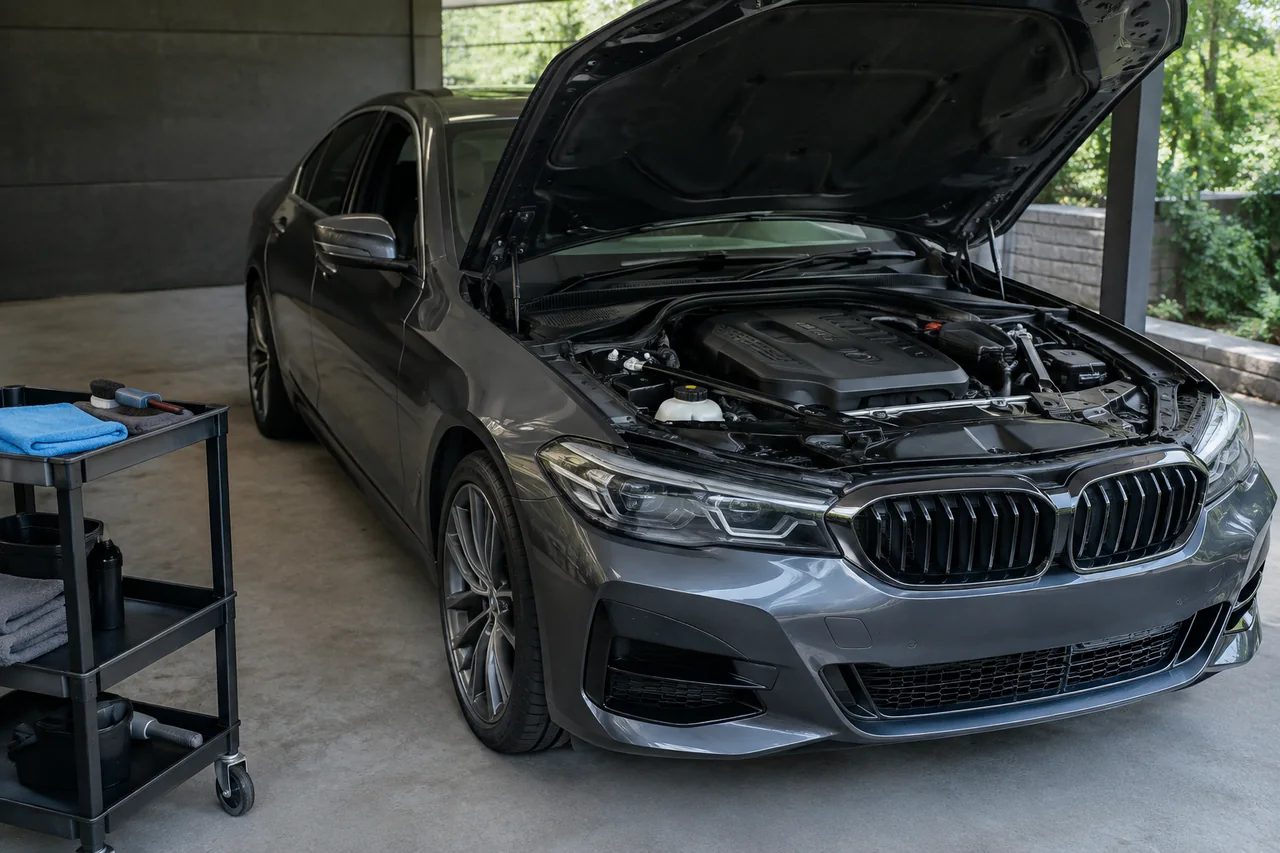
Cleaning a car engine is surface work, not internal service. Exterior engine bay detailing targets accessible covers, brackets, and nearby plastics so dirt does not hide leaks or damaged wiring. Car motor cleaning still has to protect electrical connectors, air intake openings, and residual moisture, whether you use an engine-safe degreaser or consider steam cleaning. A careful plan for degreasing, controlled rinsing, and runoff containment keeps car cleaning engine work from creating new problems.
What Exterior Engine Cleaning Can Accomplish
Cleaning the car engine, in this sense, means washing accessible engine-bay surfaces rather than flushing internals or cleaning the intake tract. Those are separate procedures with different tools and risks. Removing film, dust, and road grime from covers and nearby hardware can make visual inspection easier, but it does not restore compression, improve fuel economy, or prove that a noisy accessory is healthy. This exterior work is cosmetic and observational, not a substitute for diagnosis or a tune-up.
Some dirt can be cleaned cautiously: dry leaves, light dust, and old, dry film on painted covers or plastic shrouds. Pause first if you smell fuel, see damaged wiring, or notice fresh fluid accumulation on the block, pan, or undertray. Cleaning car engines cannot diagnose or seal a leak, and washing away a wet trail can erase useful evidence. Photograph or note the color, location, and freshness of residue before detailing car engine bay surfaces so a technician can still interpret what was there.
Prepare a Cool Engine Bay and Contain Runoff
Check the owner's manual for engine-bay cleaning restrictions before choosing products or introducing moisture. Some vehicles discourage wetting certain modules, and that guidance should lead the plan. Park securely in shade, switch the vehicle off, keep the key away from the ignition or start button, and allow belts, manifolds, and heat shields to cool fully. Electric cooling fans may still operate with the engine off, so keep hands, cloths, and a soft detailing brush clear of fans and other moving components.
Wear chemical-resistant gloves and eye protection, and keep extra microfiber cloths ready for blotting. A soft detailing brush can lift grime from textured covers without scraping coatings. Plan runoff containment before any cleaner leaves the bottle: oily wash water from cleaning a car engine should not reach storm drains or soil. Use absorbent pads, a shallow tray, or another contained setup suited to your workspace, and dispose of captured waste according to local rules rather than rinsing it into the street.
Identify Electrical Components and Openings Before Cleaning
Before cleaning car motor surfaces, map vulnerable areas: air intake openings, the alternator, fuse boxes, ignition coils or distributors, sensors, and any damaged or exposed electrical connectors. Factory splash resistance is meant for road spray, not for deliberate soaking, high-volume rinsing, or steam cleaning car engine bays. Water or steam forced into a connector can cause corrosion or intermittent faults later. Treat every open boot, cracked loom, and missing cover as a reason to keep moisture farther away, not as a challenge to clean around more aggressively.
If the vehicle maker describes temporary shielding, follow that guidance exactly and confirm every covering is removed before the engine is started. Bags or tape over a fuse box do not make direct spraying safe; they only reduce incidental splash while you work nearby. Hybrid and electric vehicles add a stricter limit around high-voltage components: do not touch, disconnect, or clean them without applicable manufacturer instructions and qualified assistance. Cleaning near orange cabling or inverter housings is not a casual wipe-down job.
Loosen Grime With Compatible Degreaser and Gentle Agitation
Start by lifting loose debris from accessible surfaces with a dry cloth or soft detailing brush, working so material does not fall into air intake openings or get shoved under wiring. Then read the engine-safe degreaser label for compatibility with metals, painted coatings, plastics, and rubber. A product meant for wheels or household degreasing may stain or swell engine-bay materials. Test a small, inconspicuous area first and watch for discoloration, softening, or haze before committing to a wider pass.
Where the label allows, apply cleaner to a microfiber cloth or brush instead of flooding the bay. Work in small sections, keeping product away from electrical connectors, the alternator, and any opening you already flagged. Follow dilution and dwell-time directions, and do not let the degreaser dry on surfaces; dried cleaner can leave film that is harder to remove. Avoid harsh solvents and never mix cleaning chemicals. Car detailing engine bay work stays safer when agitation is gentle and the chemistry stays within what the product and the vehicle both allow.
Remove Residue, Dry Surfaces, and Check Before Restarting
Remove residue with lightly dampened microfiber cloths when that matches the product instructions. Use a water rinse only when the owner's manual or maker guidance permits it. Where rinsing is allowed, a controlled low-pressure flow is enough to carry loosened film toward your containment setup. Keep the stream away from electrical connectors and air intake openings. Pressure washers concentrate force that can drive water past seals and boots, so they do not belong in this process for cleaning the car engine bay.
Blot accessible moisture with dry cloths, look into recesses for pooled water, and remove every temporary covering before you consider a restart. Residual moisture in a connector or on a coil pack can cause a misfire or a no-start even if the bay looks tidy. Allow thorough drying; there is no single wait that fits every climate or engine layout. If you suspect water intrusion, see a new warning light, notice rough running, or fail to start, stop. Repeated cranking is not a drying method, and professional assessment is the next step.
Understand Steam-Cleaning Risks and Professional Service Limits
Car engine steam cleaning introduces both heat and moisture, which can stress seals, dull coatings, and drive vapor into electrical connectors that a wipe never reaches. Steam cleaning a car engine is therefore not a default upgrade over cloth work. Confirm whether the vehicle manufacturer permits steam in the bay at all; some designs pack electronics tightly enough that steam is a poor match. If permission is unclear, skip steam rather than treating it as universally suitable for every engine bay.
If you hire a shop, ask about vehicle-specific restrictions, how they protect connectors and openings, how they handle runoff containment, and what drying checks they perform before returning the car. Steam cleaning car engine bays still leaves residual moisture that needs attention. Seek inspection before any cleaning when wiring is damaged, leaks persist, residue is heavy and unidentified, or you cannot tell a sensor from a cover. Those conditions change the job from detailing to diagnosis, and cleaning first can hide the evidence a technician needs.